Published on 6/28/2026
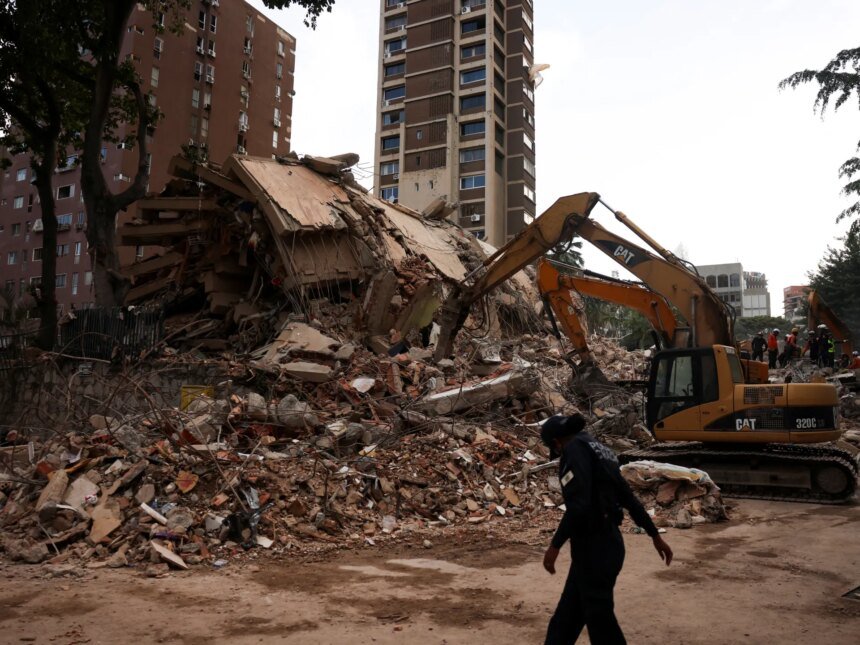
Although Venezuela lacks a national earthquake early warning system, millions of residents received warnings on their Android phones seconds before the earthquakes hit the country on Wednesday, June 27, 2026.
The New York Times started its report from the story of Jose Flores, who was driving his car with his family in the capital, Caracas, heading to watch a movie when suddenly a loud alarm sounded from his wife’s Android phone, and after only about 6 seconds he began to feel the ground shaking.
Read also
list of 2 itemsend of list
At first, Flores thought the uneven road was causing the shaking, which is common in Venezuela, but when he saw the lampposts swaying, he realized that a real earthquake had occurred. This was the first time he and his family had received a warning of this kind through the Google Earthquake Alerts system.

The newspaper reviewed how Google’s earthquake alerts system works, and said that it relies on motion sensors built into Android phones to monitor initial seismic waves and send the data to Google servers, where it is analyzed within seconds to determine the location and strength of the earthquake, and then warnings are sent to users in threatened areas.
According to Google, warnings reached about 11.4 million people before two successive earthquakes of magnitude 7.2 and 7.5 occurred, while about 1.4 million people received the highest level of warning, designated for areas expected to witness the most severe vibrations.
The company explained that the system detected the first seismic waves only 3 seconds after the earthquake began, and after another 6 seconds it was able to confirm its occurrence and send the first alerts, before gradually expanding the scope of warnings as data continued to flow from phones.
The article stated that the effectiveness of the system depends on the difference in the speed of seismic waves, as the less destructive primary waves precede the secondary waves responsible for most of the damage, giving residents, especially those far from the epicenter, additional seconds to take safety measures.
The system also relies on collecting data received from a large number of fixed phones in the region, to reduce the possibility of a false alarm and improve the accuracy of determining the location and strength of the earthquake.
The report indicates that traditional government warning systems, adopted in countries such as Japan, Mexico, Canada, and the United States of America, are based on networks of ground sensors, while Google’s system provides an effective alternative for countries that do not have such an infrastructure, taking advantage of the widespread spread of Android phones, which constitute about 70% of smartphones globally.
This service began operating in 2021 in a limited number of countries, then expanded to include 98 countries by 2023.
The article concluded that it cannot yet be determined whether these warnings saved lives during the Venezuelan earthquake, but experts confirm that a few seconds may be enough to provide the population with the opportunity to take shelter before the violent tremors arrive, which reinforces the importance of early warning techniques based on smartphones in reducing the risks of natural disasters, especially in countries that lack advanced seismic monitoring systems.