The Taiwan issue remains one of the most sensitive files in interactions between China and the West, as Beijing deals with it as a non-negotiable internal sovereignty issue, while the West, led by the United States and some European powers, uses it within a broader context of strategic balances and containing Chinese influence in the Indo-Pacific region.
With the renewed political and military competition intensifying, the Chinese media is addressing this issue as the main tool in consolidating China’s vision internally and externally. Official newspapers and platforms present the issue as a purely sovereign matter that cannot be questioned, linking the defense of “China’s unity” with maintaining peace and stability in the region.
Read also
list of 4 itemsend of list
Policy stability and implementation ambiguity
The South China Morning Post reports that the top US diplomat for East Asian affairs confirmed to Congress Washington’s continued commitment to what is known as the “six guarantees” towards Taiwan, which are commitments the United States made to Taiwan in 1982, which include not consulting with Beijing on arms deals.
However, this confirmation was accompanied by apparent ambiguity regarding the timing of the approval of a huge arms package worth $14 billion, as Michael De Sumbre, Assistant Secretary of State for East Asian and Pacific Affairs, indicated that the decision was still under review by the President.
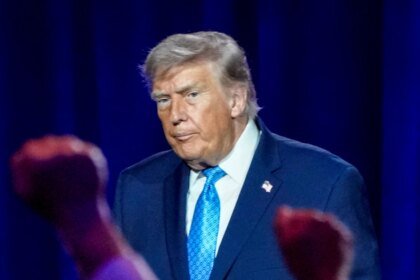
In the same context, the newspaper emphasizes that US President Donald Trump had dealt with the issue of arming Taiwan as a “negotiating card” in his talks with Chinese President Xi Jinping, which reflects a duality in the American approach between political commitment and negotiating pragmatism.
Most countries in the world, including the United States, do not recognize Taiwan as an independent state, but they oppose its seizure by force and continue to supply it with weapons within the framework of unofficial relations. The newspaper quotes multiple sources as saying that Washington is likely to postpone announcing new arms deals for Taiwan until after the Chinese President’s upcoming visit to the United States, in an attempt to avoid complicating the course of the dialogue with Beijing.
Cui Hongjian:
As internal divisions continue in Europe, the United Kingdom, France and Germany are seeking to present a unified and coherent position on security issues as a means of strengthening their international presence.
Military presence and Western criticism
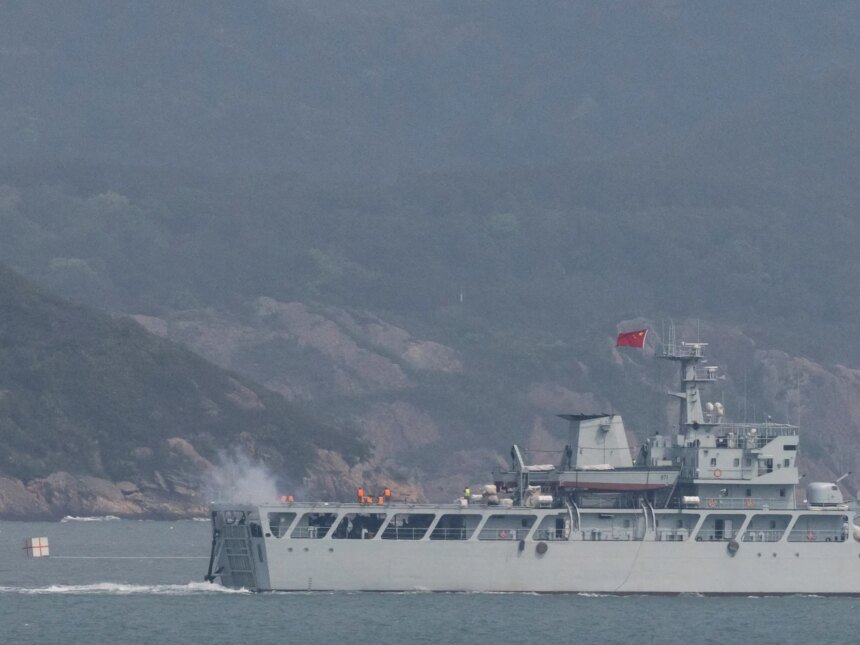
In parallel with this American hesitation, the region is witnessing a noticeable field escalation. The South China Morning Post indicates that China has intensified its coast guard operations in the eastern waters of the island, and sent the advanced aircraft carrier “Fujian” through the Taiwan Strait, in conjunction with Taiwanese military maneuvers aimed at raising combat readiness.
The same newspaper also confirmed that these moves come within a broader framework to enhance deterrence along the “First Island Chain,” a strategic region that the United States and its allies seek to fortify in the face of Chinese expansion.

Beijing considers these activities part of the exercise of its sovereignty, and that they are legitimate measures to exercise Chinese jurisdiction, rejecting criticism from the United States and three European countries regarding the deployment of Chinese coast guard forces and considering them a threat to regional stability, freedom of navigation, and the safety of international shipping.
In response to Western criticism, the newspaper quoted Chinese Foreign Ministry spokesman Guo Jiaquan as confirming that Chinese maritime patrols are “legitimate and necessary to protect its maritime rights and regional order,” calling on the United States, Britain, France and Germany to respect China’s sovereignty.
As for the English-language Global Times newspaper, which is directed to international public opinion, it went further in its tone, as it considered in its editorial that Western positions represent a “political play” aimed at supporting the forces of “secession” in Taiwan, stressing that China will not allow the waters surrounding the island to be turned into an arena for external intervention.
Conflicting political positions and interests
According to an analysis published by the Global Times; European positions show a contradiction between political commitment to the United States and the desire to maintain stable economic relations with China.
Academic Cui Hongjian points out in his statement to the newspaper that “in light of the continuing internal divisions in Europe, the United Kingdom, France and Germany are seeking to present a unified and coherent position on security issues as a means of strengthening their international presence,” but without reaching the point of breaking with Beijing, which explains the issuance of statements through unofficial representative offices in Taipei.
The newspaper confirms that some European countries are seeking to use the Taiwan file as a pressure card in other controversial issues by extending their influence in its neighboring regions, while Beijing warns that this approach may lead to a strategic miscalculation, especially if Taipei considers these positions as unconditional support for its political orientations.
The six guarantees are commitments made by the United States to Taiwan in 1982, including not consulting with Beijing regarding arms deals.
The military dimension and deterrence of force
On the military level, statements by Chinese Ministry of Defense spokesman Zhang Xiaogang confirmed that developing military capabilities, including hypersonic missiles and air defense systems, aims to protect national sovereignty. On the other hand, he criticized the deployment of American medium-range missile systems in Asia, considering that it increases the risks of the arms race.
Colonel Gang also stressed, according to China News Network, that US support for arming Taiwan “will not bring peace,” but will lead to escalation of tension, stressing that “using force to achieve independence” will lead to disastrous results.
Regarding the coincidence of joint exercises between the United States and Japan with Taiwanese military exercises; Colonel Gang warned against reckless initiatives that might increase the potential for confrontation in the region.
These developments reveal a complex scene in which political and economic considerations overlap with military ones, as the United States seeks to maintain a delicate balance between deterring China and avoiding direct escalation with it, while Beijing works to consolidate its sovereignty on the ground and legally around the island of Taiwan.
In this context, Europe appears to be a secondary player trying to give priority to its interests on both sides without having decisive tools of influence, which makes Taiwan a central point of friction in the international system. The concept of Chinese sovereignty intersects with the Western containment strategy, and any escalatory development at this point will serve as an additional factor that contributes to reshaping the balance of power in the Indo-Pacific region and perhaps in the world.