Welcome to From the Politics Desk, a daily newsletter that brings you the NBC News Politics team’s latest reporting and analysis from the White House, Capitol Hill and the campaign trail.
Limited time: Save 25% on NBC News subscription
Get exclusive reporting, live Q&As and ad-free reading.

In today’s edition, Jonathan Allen goes back to the ‘90s to explain the economic challenge Republicans face in this fall’s midterms. Plus, Natasha Korecki digs into California Gov. Gavin Newson’s next move in the billionaire tax battle.
Sign up to receive this newsletter in your inbox every weekday here.
— Adam Wollner
What if the economy gets better and it doesn’t help the GOP?
Analysis by Jonathan Allen
Republicans may have a Bill Clinton problem on their hands heading into the midterms.
On his path to ousting President George H.W. Bush in 1992, Clinton famously aimed his pitch at voters’ wallets. His campaign manager, James Carville, boiled the argument down to four words: “It’s the economy, stupid.”
The country had been through a recession that spanned parts of two years, with real GDP shrinking by as much as 3.5% in the final quarter of 1990. Deficits were piling up. And Bush infuriated his own base by raising taxes to try to balance the books after having promised that he wouldn’t do that.
“Read my lips,” Bush had said. “No new taxes.”
By the time Clinton won the Democratic nomination and turned his focus to the general election, the economy had reversed course. For most of 1992, it grew at a clip of greater than 4%. But the narrative was already set. Americans had lost faith in Bush’s ability to manage the economy, regardless of the change in direction. Stubbornly high unemployment, which continued to rise even as the economy grew, only helped seal the perception of Bush as a budget blunderer.
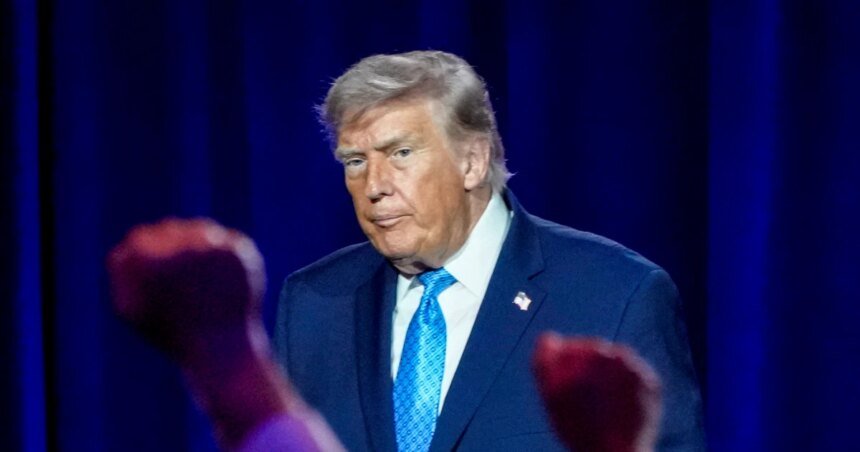
Thirty-plus years later, President Donald Trump and his Republican Party are staring down the possibility that, even if the economy improves over the next four months, voters have made up their minds about his handling of their fortunes. An NPR/PBS/Marist poll last week found that 60% of U.S. adults disapproved of Trump’s management of the economy, while 33% approved. The numbers are doubly staggering because economic savvy was once Trump’s political strong suit.
Democrats are focusing their midterm message on “affordability,” the catch phrase used by election winners in New Jersey, Virginia and New York in 2025. They have been bolstered by both voters’ perceptions and hard economic data. The economy’s expansion has been slow, and inflation is outpacing wage growth. Gas prices became a touchstone for Americans’ frustration with the economy as they soared during the Iran war. No one can get back the extra money they poured into their fuel tank.
But now that gas prices are settling down, it’s not clear that cheaper trips to the pump will convince swing voters that Trump and Republicans in Congress have been good stewards of the economy. Americans opposed the Iran war, which Trump chose to launch. It cost them money. It’s about to cost more, with the administration asking Congress for tens of billions of dollars in supplemental funding to cover the price tag. Trump also chose to apply across-the-board tariffs to imports — and the predictable foreign levies on U.S. exports — which has led to pain and uncertainty in many sectors of the economy.
If prices fall, and the economy grows, and the unemployment rate drops over the next four months — all big “ifs” — voters may forgive Trump and the GOP for recent hardships. But they may not. They may decide that the president exercises poor judgment when it comes to the economy, which is more damning than any particular recession or price spike.
In other words, it may already be too late for Trump to save his party’s lock on Congress with an economic turnaround. Veterans of the first Bush administration know that it’s hard to tell Americans that the economy is getting stronger when they don’t believe you have a handle on it anymore. And if Americans continue to struggle for the next four months, if the economy doesn’t improve markedly, Election Day could be a bad one for the GOP.
For subscribers: What led to an unusual courtroom clash between Justices Alito and Sotomayor
By Lawrence Hurley
Conservative Justice Samual Alito bit back after liberal Justice Sonia Sotomayor criticized his opinion giving the Trump administration more power to turn back asylum-seekers at the southern border.
After losing one billionaire tax battle, Gavin Newsom prepares to wage another
By Natasha Korecki
After failing to block from the ballot a measure that would enact a billionaire tax in his state, California Gov. Gavin Newsom is now proposing a national wealth tax of his own.
In a lengthy Substack post and video, Newsom — who opposes a proposed one-time levy in his own state as he mulls a 2028 presidential run — said he instead supported a more expansive plan.
His proposal would create a minimum tax on billionaires and a national public equity fund whereby Americans would own a stake in the artificial intelligence industry, as well as close tax loopholes for the ultra-wealthy. Newsom’s proposal would require billionaires and those with a net worth of at least $100 million to pay a minimum tax.
“When 10% of the people in this country own two-thirds of the wealth, when we have minted the first trillionaire in human history, and yet your wages have stagnated, and your healthcare costs have skyrocketed, something is fundamentally broken,” Newsom wrote. “Over the decades, the American economy has been engineered for the very top, a story as old as time: Money buys influence, and influence rewrites the rules. Those rewritten rules funnel even more wealth to the few. Under this weight, democracy itself starts to buckle.”
Newsom’s proposal comes as he positions himself for a 2028 White House bid, with potential presidential hopefuls well aware of what is top of mind in the Democratic Party. The base is increasingly agitating for its leaders to do more to address the nation’s wealth disparity, as the average American struggles to pay for the rising costs of food and fuel.
Newsom said his opposition to California’s billionaire tax proposal is grounded in where the money would be spent.
The California initiative would implement a one-time 5% tax on the assets of Californians whose net worth exceeds $1.1 billion. It would require the state to spend 90% of the new revenue on healthcare, with the remaining 10% split between education and food assistance programs.
🗞️ Today’s other top stories
- 🚢 Keeping it Strait: A trickle of marine traffic continued to pass through the Strait of Hormuz despite an attack on a ship in the vital waterway a day earlier, as Iran reiterated its warnings for ships to follow a Tehran-approved route. Read more →
- 🌱 Backyard betrayal: Many prominent figures in the “Make America Healthy Again” movement said they felt betrayed after the Supreme Court ruled that Bayer, the manufacturer of Roundup, did not need to warn consumers of a potential cancer risk associated with its weed killer. Read more→
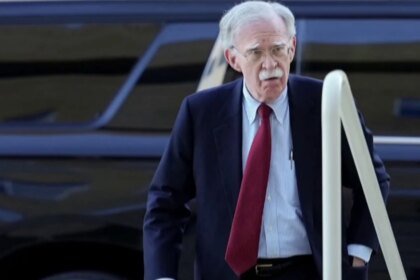
- ⚖️ In the courts: Former national security adviser John Bolton pleaded guilty in federal court to mishandling classified information related to his work during the first Trump administration. Read more→
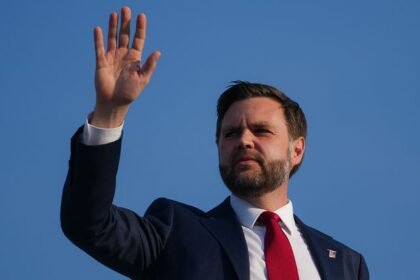
- ⏰ Scandal time machine: Vice President JD Vance said that “if Watergate happened tomorrow, it would be like a 12-hour news story. The idea that it would have taken down a presidency is crazy.” Read more→
- ⛓️💥 The Force is with him: Washington, D.C., has settled a lawsuit with a protester who said he was detained and handcuffed for following National Guard troops around the city while playing Darth Vader’s theme song from “Star Wars.” Read more →
That’s all From the Politics Desk for now. Today’s newsletter was compiled by Adam Wollner and Annelise Hanson.
If you have feedback — likes or dislikes — email us at politicsnewsletter@nbcuni.com
And if you’re a fan, please share with everyone and anyone. They can sign up here.