Published on 6/22/2026
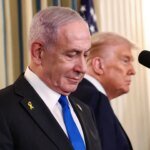
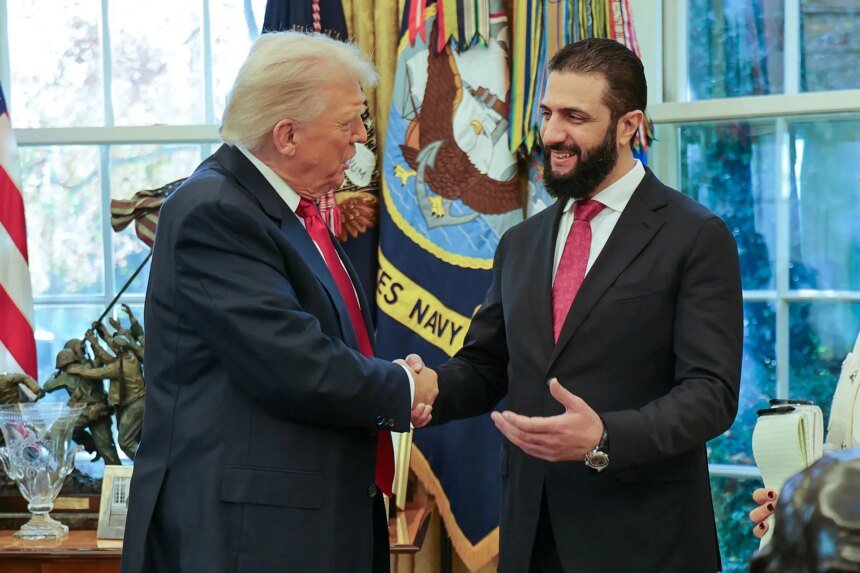
US President Donald Trump’s hints about assigning the task of dealing with the Hezbollah file in Lebanon to Damascus open a wide window to read the accelerating geopolitical transformations in the Middle East region, which force actors to recalculate and formulate positions.
While Syrian President Ahmed Al-Sharaa rushed to defuse the military interpretations, stressing that Trump’s statements were “misunderstood,” and Lebanese Prime Minister Nawaf Salam considered this clarification an end to misleading assumptions, a complex scene is taking shape in which internal Syrian calculations, which are burdened with challenges, are intertwined with the balances of regional influence and the current international negotiation paths.
“negotiating tools”
In this context, international affairs researcher Joe Macaron believes that Trump’s proposal is not a spur of the moment, but was previously circulated through his envoy, Tom Barrack, and its current context falls within a “brainstorming” within the White House to find a way out of the Lebanese impasse.
Macron warned – during his speech on the program “Beyond the News” – against trying to project formulas of the past onto a reality in which the data of Damascus and Beirut have completely changed.
For his part, former White House communications official Mark Pfeifel describes Trump’s language as an “exaggerated request” that reflects the mentality of the negotiator seeking to produce pressure points on Iran and Hezbollah, with the aim of pushing the memorandum of understanding to enter into force.
According to Pfeifel, this request falls within the tireless efforts made by Trump since last February to pressure Tehran and bring it to the negotiating table on complex files, such as the security of the Strait of Hormuz, the nuclear file, and enriched uranium.
The two analysts agree to rule out translating this proposal into a direct military intervention strategy, given its high financial and political cost, as well as the absence of any Turkish or Arab “green light” for such a step, especially since Israel’s military machine has been unable to achieve results throughout two years of fighting.

Alternative approach
As for Damascus’s position, writer and political researcher Abbas Sharifa confirms that Syria witnessed a 180-degree structural revolution within one year. After it was subject to sanctions and considered an agent of the Iranian axis and a source of drug exports, the Sharaa regime succeeded in dismantling hundreds of military factions and merging them under the umbrella of the Syrian army (including the Syrian Democratic Forces), which built Trump’s confidence in its capabilities.
Sharifa explains that Syria’s true intention does not stem from implementing external agendas or reproducing the military intervention of 1976 and playing the sectarian card, but rather is based on the principle of “state equality with official Lebanese institutions” and refusal to enter through the portal of sects or parties.
Today, Syrian influence tools revolve around development and economic integration projects that include railway connectivity, and power, electricity, internet and gas lines coming from Iraq, in an effort to transform the two countries into a single market and revive historical ties.
For the success of this approach, according to Sharifa, Damascus requires that weapons be restricted to the Lebanese state and the strengthening of its institutions. Al-Sharaa proposes mediation and dialogue to integrate Hezbollah into the state and not to eradicate or isolate it, with complete decisiveness in implementing the Taif Agreement to prevent Lebanon from turning into a corridor for smuggling weapons and drugs or a starting point for embracing remnants.

The Syrian interior and regional balances
This regional ambition of Damascus collides with internal constraints, which Pfeifel highlights, pointing out that the Sharaa regime faces critical internal priorities that prevent it from playing the “role of an agent for Washington,” namely dealing with the challenges of the Kurds and their forces, the Druze, the Alawites, the Christians, and the remnants of the previous regime, which requires it to devote itself to securing its borders and building itself first.
In the regional context, Macron points out that any future Syrian role is governed by the calculations of major powers such as Turkey and Saudi Arabia, pointing to the position of Turkish President Recep Tayyip Erdogan in Parliament, who linked his country’s security to the security of Syria and Lebanon as a check on Israeli expansion and a monitor of the post-Iranian-American agreement phase.
The scene concludes – according to Macron – the complete disarmament of Hezbollah in the short term, pending international arrangements resulting from the 60-day deadline to remove the party from the south, so that Lebanon will later return to managing its usual crises within the dominant American and Iranian controls, away from the illusions of direct Syrian military intervention.