Published on 6/20/2026
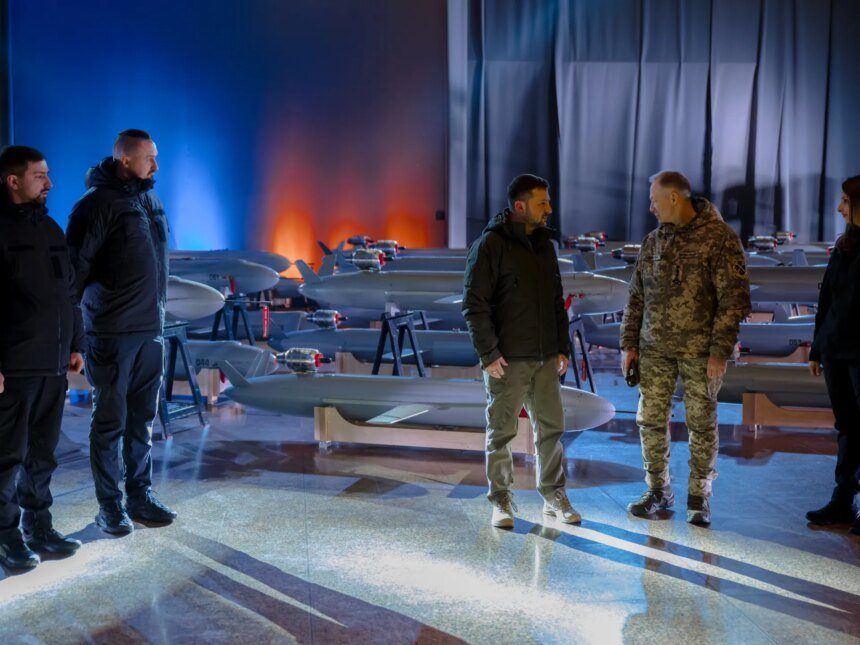
In a secret location inside Ukraine, and under strict security measures, Ukrainian military intelligence experts are preparing long-range Lyoti drones, as part of an escalating campaign aimed at taking the battle deep into Russian territory and striking the infrastructure supporting the war effort in Moscow.
A report by the Politico website stated that “Lyoti” suicide marches are among the most prominent weapons that Kiev is betting on in the current stage of the war, as they can carry explosive warheads weighing about 150 pounds and fly over distances exceeding two thousand kilometers, which gives them the ability to target vital installations far inside Russia.
A Ukrainian commander – known as “Viktor” – said that these drones have become “one of the most important strategic cards” for his country, noting that they constitute the focus of “deep strike” operations targeting sites located far behind the battle lines.

From tens to hundreds of drones
This air campaign has transformed over the past months from limited-scale operations into a broad offensive strategy, after the number of drones launched by Ukrainian forces increased to between 200 and 300 daily towards targets inside Russian territory, according to Ukrainian officials.
In the latest manifestation of this escalation, Ukraine recently launched a massive attack targeting an oil facility near Moscow, which led to the rise of thick plumes of smoke and temporarily disrupted air traffic at a number of airports in the capital, while the Russian authorities announced the interception of hundreds of marches over Moscow and other areas.
Ukrainian intelligence officials say that these operations rely on the “combined strikes” tactic, which combines long-range suicide drones and camouflage aircraft designed to exhaust air defenses, in addition to high-speed missile-like attack platforms.
Military and oil facilities top the list of Ukrainian targets, as they are essential pillars in financing and managing Russian military operations, according to Ukrainian officials.

“The war has come to your homes”
Ukrainian officials believe that the attacks seek to convey a message that the war is no longer limited to the battlefields, but is now affecting Russia as well.
Commander Victor says: “At first, the Russians thought they were just waging a special military operation, but now they have realized that it is a real war. The message addressed to Russia is: This war has reached your homes, too, and we hope that this message will contribute to pushing Russia to end this war.”
Ukrainian President Volodymyr Zelensky is counting on drone weapons to increase pressure on Moscow and push it towards the negotiating table, at a time when he continues to highlight the economic and logistical effects of these attacks on Russia, especially in the energy sector.
The repercussions of the campaign began to gradually appear on the Russian oil industry, as several refineries were forced to reduce production or stop some operations after being subjected to repeated attacks, while Russian officials acknowledged a decline in production as a result of emergency maintenance work in a number of facilities.
Western officials and military experts believe that the expansion of Russian geography, which has historically represented an important defensive factor, has turned into an increasing security challenge in light of Ukraine’s ability to carry out precise long-range strikes targeting sites spread over vast areas that are difficult to fully secure.
In contrast, Moscow still benefits from rising global energy prices. This provides financial support to mitigate the losses resulting from Western sanctions and Ukrainian attacks on energy infrastructure.

Huge developments
As its offensive capabilities continue to develop, Kiev confirms that some models of the new drones are now capable of carrying larger explosive charges and reaching targets located at greater distances within Russian territory, including areas located east of the Ural Mountains.
In carrying out these operations, Ukraine relies on a wide network of mobile and geographically distributed launch sites, which gives it great operational flexibility and makes it difficult for Russian forces to track the platforms or completely disrupt the attacks.
Ukrainian forces also use camouflage drones and high-speed “Piklo” jets, which means “hell” in the Ukrainian language, as part of simultaneous attack waves designed to confuse Russian defenses and increase the chances of penetrating them.

Kiev manages these operations through digital platforms supported by artificial intelligence, called “Prisma,” which integrate weather data and the movements of Russian air defense and electronic warfare systems into a unified operational system, allowing changing paths for marches to be planned and updated continuously.
Ukrainian officials confirm that the accumulation of experience and operational data over the years of war gave them an increased ability to choose the most effective paths to penetrate Russian defenses, which allowed the Ukrainian marches to reach highly fortified areas around Moscow and carry out attacks that now pose a growing challenge to the Russian defense system.