Published On 4/28/2026
|
Last update: 12:19 (Mecca time)
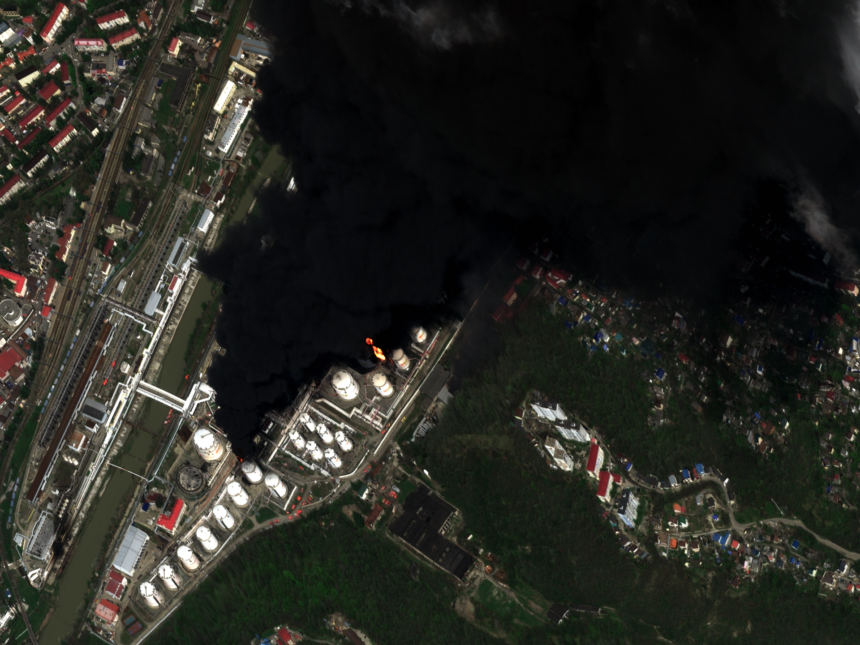
Recent satellite images showed visual indicators of marine pollution off the coast of the Russian city of Tuapse overlooking the Black Sea, coinciding with the appearance of extensive damage inside an oil facility in the port, days after Ukrainian drone attacks targeted infrastructure related to energy exports in the city.
According to the visual comparison conducted by the Al Jazeera Network’s Open Source Unit, between images taken before April 16, 2026 and others taken on April 26, the most recent images revealed a wide and extended dark spot above the surface of the sea, intersecting with an official Russian announcement of monitoring an oil spill leak near the port of Tuapse.

A visual reading of the images shows this spot extending from the coastal area adjacent to Cape Kadosh and the harbor towards open water, in a pattern that suggests hydrocarbon seepage occurred in the area.
Read also
list of 2 itemsend of list
This monitoring intersects with what was announced by the operational headquarters of the Krasnodar Territory, which said that it had detected an oil spill in the Black Sea with an area of approximately 10,000 square meters, about a mile and a half from the port of Tuapse, and attributed this to the damage caused to the marine facility following an attack carried out on the night of April 16.

Russian official data indicate that the site was later subjected to another, larger-scale attack on April 20, which led to the outbreak of large fires in fuel storage tanks and the export terminal. TASS also quoted the governor of the Krasnodar Territory as one person was killed and another was injured as a result of the port being targeted by a drone.

What do the photos show inside the facility?
High-resolution images taken on April 26 reveal that the thick plumes of smoke that had covered the site in the previous days had stopped rising, indicating that firefighting teams had successfully extinguished the fires. As the smoke cleared, widespread effects of destruction were clearly visible inside the facility, including severe charring in a number of oil tanks, and parts of them turning into dark, burnt blocks, with indications of major structural damage in some facilities.

These scenes are consistent with what the Open Sources Unit previously documented in previous reports about attacks on Russian energy-related facilities on the Black Sea coast, in the context of escalating Ukrainian attacks on Russian oil and logistical infrastructure.
The Tuapse facility is of particular importance because it includes a refinery and export terminal belonging to Rosneft, and it is considered one of the most important points for processing and exporting Russian oil on the Black Sea.
In this context, monitoring marine pollution of this type would require, in accordance with the general frameworks of the Oil Pollution Preparedness, Response and Cooperation Convention (OPRC) of the International Maritime Organization, rapid response measures aimed at containing the pollution and reducing its environmental and operational impacts.