

Al Jazeera correspondents

Published On 7/8/2026
|
Last update: 7/9/2026 09:58 (Mecca time)
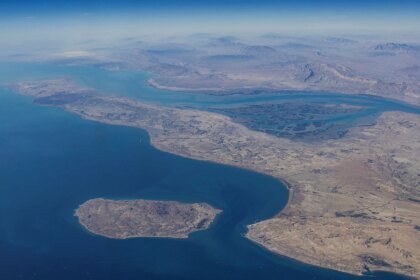
kuala lumpur – Malaysian Transport Minister Anthony Loke confirmed that the Strait of Hormuz crisis has confused operations in global ports, especially Asian ports, but it has not prevented Malaysian ports from maintaining their growth and activity.
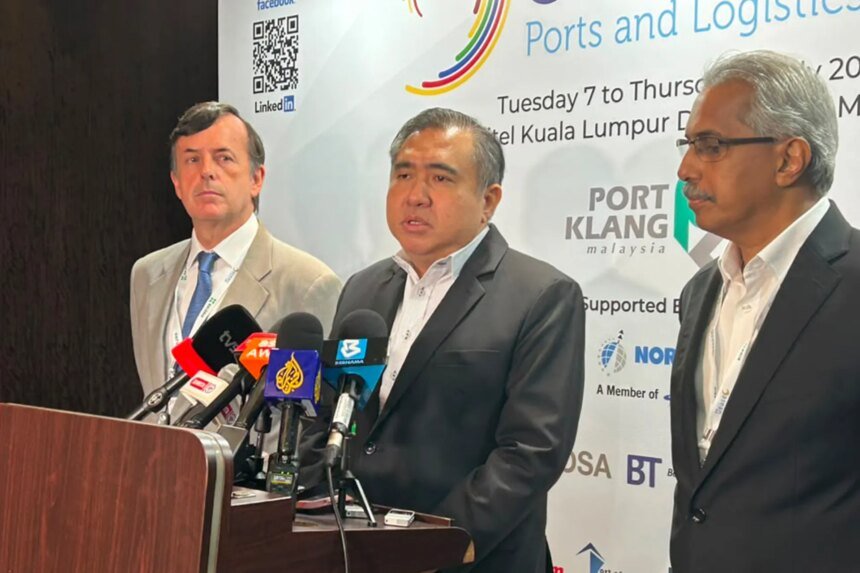
In response to a question from Al Jazeera Net, Luke said that Malaysian ports remained a “safe incubator” for logistical operations despite the geopolitical turmoil in the Middle East and the world.
The Malaysian Minister stressed the need to spare the Strait of Malacca international conflicts, stressing his country’s commitment to the principle of freedom of navigation, and strengthening cooperation between the Association of Southeast Asian Nations (ASEAN) to ensure the security and safety of navigation in this vital corridor.
The Strait of Malacca is overseen by Malaysia, Indonesia, Singapore, and Thailand. It extends about 900 kilometers in length, while its width narrows at some points to about 2.7 kilometers, making it one of the longest and busiest sea lanes in the world.

Port performance
After opening the 25th ASEAN Ports and Logistics Services Conference in Kuala Lumpur on Wednesday, the Malaysian Minister of Transport added that the performance of Malaysian ports, led by Port Klang and Tanjung Pelepas, remained strong despite the uncertainty imposed by developments in the Middle East, stressing the continuation of their operations and communication with the ports of ASEAN countries without interruption.
In this context, experts in maritime transport said that maritime trade in ASEAN countries grew by about 5% during the current year, while officials and experts participating in the conference confirmed that Malaysia’s strategic location, which links East Asia with Western markets, in addition to large investments in port infrastructure and political stability, constituted the most prominent factors supporting the growth of the maritime industry in the region.
Participants pointed out that the maritime sector contributes about 25% of the gross domestic product of the 11 ASEAN countries, which reflects its pivotal role in supporting regional trade and global supply chains.

Hormuz lessons
As for the expert in maritime transport affairs, Samir Mubarak, he called for taking advantage of the Hormuz crisis and modernizing the means of communication between the port network and automating its work to avoid any future crises.
In his speech to Al Jazeera Net, Mubarak described the ports as an interconnected network linking points scattered around the world, linked by shipping lines, and that “any disturbance in a group of points due to weather or wars affects this network all over the world and not just within a specific group.” Therefore, recovery from damage depends on the extent to which these points (ports) are interconnected with each other, and it may take – according to his opinion – a short, medium, or long-term time.
Mubarak, who heads the Nafez Company, which works in the field of port operation, called for keeping pace with modern technology, pointing out that the most important factors that change the speed of goods handling are automation and digitization, which can connect sea and land lines within the country or free zones and industrial zones, considering that “the more automated and computerized the connections are, the more capable they will be of adapting faster to any disturbances.”

The Tuas Port in Singapore is considered the largest in Southeast Asia, as it accommodates 60 million containers annually, while the Malaysian Port of Klang, which is the tenth largest in the world, absorbed about 15 million containers last year. Malaysia is looking into establishing other strategic ports, and Malaysian Transport Minister Anthony Loke confirmed that his country’s government has conducted a study of the Paulau Cherai port project on the Strait of Malacca.
Tuas Port in Singapore is the largest container port in Southeast Asia, with a capacity of 60 million containers annually, while Port Klang, ranked the tenth largest container port in the world, will handle about 15 million containers in 2025.
Malaysia depends on 90% of its global trade on maritime shipping, and therefore it sees the development of its ports as a necessity to keep pace with its growing needs in the field of global trade.