Published On 1/7/2026
Recent satellite images – taken by the American company “Vantor” between June 21 and 30, 2026 – showed Iranian nuclear facilities linked to uranium enrichment operations in Natanz, Fordow, and Isfahan, revealing a clear discrepancy in the level of apparent activity within these sites after the strikes that targeted Iranian nuclear facilities.
Reading the images indicates that no extensive restoration work or significant new changes appeared inside the main enrichment complex in Natanz, while the movement of vehicles and trucks continued near the entrances to the tunnels of the neighboring “Peakax Mountain” complex.
Read also
list of 2 itemsend of list
In Fordow and Isfahan, photos showed that the entrances to the tunnels leading to underground facilities remained closed or blocked with dirt, with obstacles and dirt piles appearing on the roads leading to the entrances in Fordow.
Natanz.. No clear reforms
At the Natanz facility, new images did not show significant activity or obvious repairs to previously damaged buildings within the main enrichment complex.
Vantur’s images indicate that the features of the main complex remained without prominent indications of extensive restoration work in the damaged buildings, which indicates that the activity visible so far is not concentrated within the main facility itself.
Images alone are not sufficient to determine the operational situation inside the facility, but they document the absence of clear surface indicators of major reconstruction or repair in the vicinity of the damaged buildings.

Active tunnels
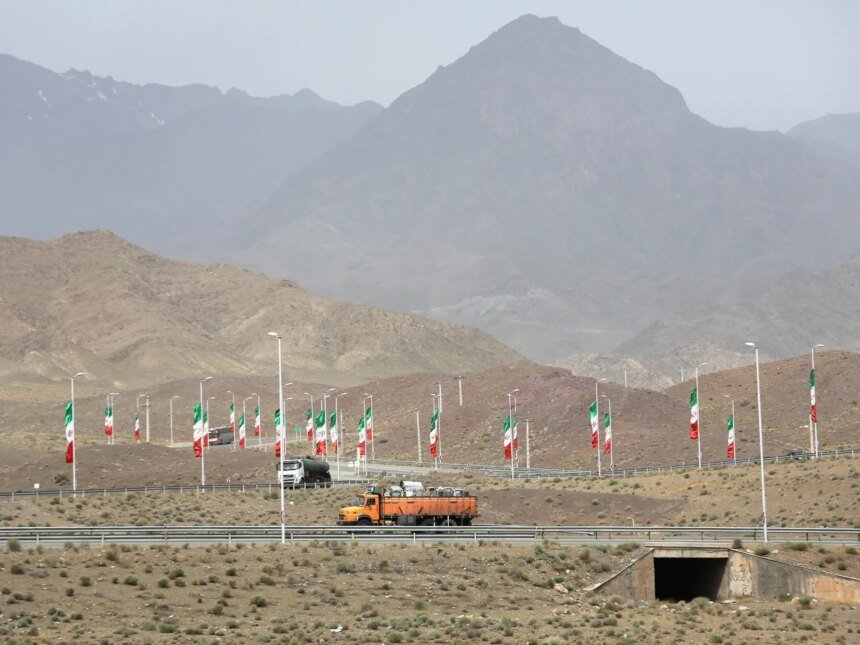
In addition to the main complex in Natanz, the images showed the continued movement of vehicles and trucks at the neighboring “Peakax Mountain” complex, specifically at or near a number of tunnel entrances.
In photos taken on June 21, several trucks and vehicles were spotted near the western entrance to the tunnel, including a cement truck that was preparing to enter the tunnel, and two trucks transporting dirt or dirt materials and unloading them on the roof of the tunnel entrance.
This activity makes the “Peakax Mountain” complex the most active site in recent images around Natanz, as the movement there appears more clearly than the activity observed inside the main enrichment complex.

Fordow Mardoumah
At the underground Fordow enrichment complex, satellite images show that the entrances to the tunnels leading to the facility remain closed or blocked with dirt and dirt materials.
There are also obstacles, including piles of dirt or other materials, placed on the roads leading to the entrances to the tunnels, which limit the ease of access or use.
These images are of particular importance, because Fordo is one of the most prominent Iranian fortified underground nuclear facilities, and any change in the entrances to the tunnels or the roads leading to them represents an important indicator of the nature of the activity following the strikes.
However, the fact that the entrances remain filled or blocked alone is not enough to determine the condition of the internal facility or the level of underground damage, as satellite images cannot monitor what is happening inside the tunnels themselves.

Isfahan.. No new activity
As for the Isfahan complex, the pictures did not show clear new activity at the entrances to the tunnels adjacent to the main complex or in its vicinity.
The entrances to the tunnels at the site appear closed or blocked with dirt, and have remained as they were, with no apparent indications of the removal of obstacles or the reopening of the entrances.
This reading indicates that the site did not witness – according to the available images – significant surface movement around the entrances to the tunnels, unlike what was observed at the “Peakax Mountain” complex near Natanz.

What do the pictures mean?
Vantor’s images reveal that the surface scene at the three Iranian nuclear facilities does not follow a single pattern. In Natanz, no major repairs appear inside the main complex, but there is noticeable activity near the entrances to the Pickax Mountain tunnels. In Fordow and Isfahan, tunnel entrances remain closed or blocked with dirt.
These images provide important indicators of the post-targeting phase, but they alone do not provide a final judgment on the ability of these facilities to operate or the extent of damage within the underground facilities.
Between trucks at the Natanz tunnels, blocked entrances in Fordow, and apparent calm near Isfahan, the pictures paint a preliminary map of the state of the Iranian nuclear facilities after the strikes, as it shows locations where no major repairs have occurred, entrances that are still closed, and limited engineering activity in some tunnels.