Published On 1/7/2026
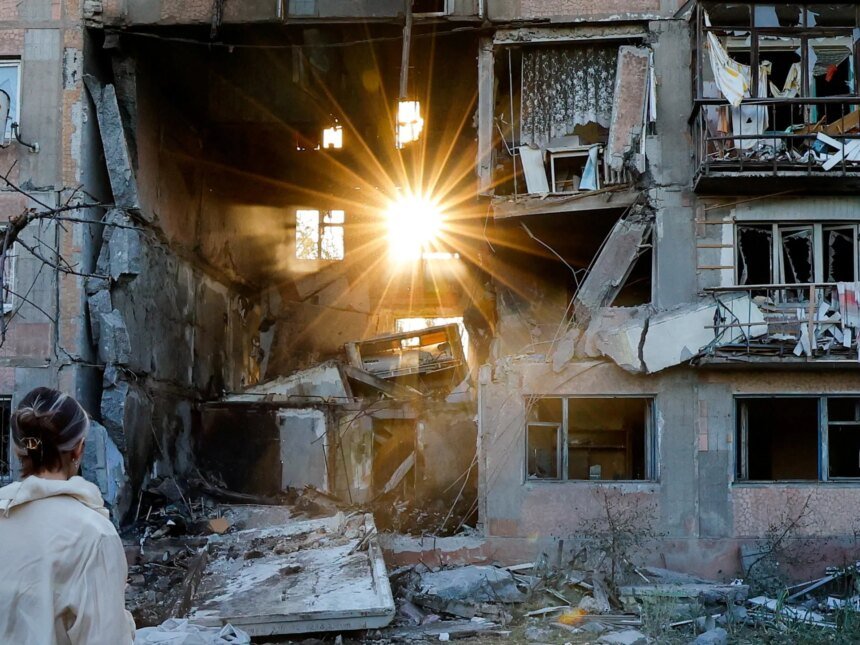
The Russian-Ukrainian war has entered a new turn of unprecedented escalation and a war of mutual attrition in depth using drones, as Ukraine targeted an oil refinery in the Russian city of Ufa, more than 1,300 kilometers away from the front line, while Russia bombed gas stations, energy and transportation infrastructure, and a logistics center in southeastern Ukraine.
This simultaneous field flare-up ahead of an expected North Atlantic Treaty Organization (NATO) summit in Ankara next week carries within it strategic connotations and encrypted political and military messages that each party seeks to impose on the table of allies and adversaries.
Meanings of escalation
Ivan Os, chief researcher at the Ukrainian Institute for Strategic Studies, believes that the precise Ukrainian strikes deep inside Russia carry a clear political message that the price of the war has become dear to Moscow.
Aws confirms – during his talk to the “Beyond the News” program – that drones imposed a new reality for wars, as Kiev succeeded through them in “cutting off fuel supplies to the occupied Crimean Peninsula without the presence of forces on the ground,” which proves that Ukraine has sufficient power to respond and force Russia to peace in the fifth year of the battle, refuting Russian claims of Ukrainian disarmament.
For his part, Hosni Abidi, professor of international relations at the University of Geneva, attributes this escalation to the “excess of confidence” that Ukraine has begun to feel after the influx of European aid and the arrival of the first batch of $90 billion (which Hungary had previously frozen), and the improvement of its military operations with additional production of drones and missiles.
Obeidi explains that the current balance represents a “freeze on the ground,” as Kiev wants, through its escalation, to prove its ability to deliver painful blows to Russian President Vladimir Putin in front of the United States, to ensure that any future diplomatic negotiation is not formulated at the expense of its interest.
Russian perspective
On the other hand, Russian military analyst Viktor Litovkin rejects the notion of a new balance of power, describing it as “ridiculous.”
Litovkin stresses that the Ukrainian strikes target civilian and oil facilities to compensate for its field losses on the fronts, while Russia responds forcefully against drone maintenance factories, ammunition and fuel depots, and logistical railway stations.
He confirms that Russian forces are continuing their advance to liberate the last sites in Donetsk, and towards Odessa and Nikolaev, committed to Putin’s promise to US President Donald Trump in 2025 to control the remainder of the Donbass region before the end of this year.
He believes that Ukraine is fighting with Western money to serve their interests, recalling that the peace agreement in Istanbul was thwarted on orders from former British Prime Minister Boris Johnson to prolong the war.
Ankara summit
This anticipation of the fire coincides with the upcoming NATO summit, amid the pledge of the Secretary-General of the alliance to a sustainable and long-term security commitment to Ukraine.
While Aws believes that Ukraine is requesting confirmation of support programs as it becomes a “testing platform” for Western weapons, Obeidi explains that the continuation of support is contingent on increasing European military spending and purchasing American weapons to ensure Trump’s satisfaction.
Obaidi refers to new weapons steps, such as Sweden’s sale of Gripen fighters to Kiev and the Airbus experiments, indicating that European intelligence reports (British, German, Dutch) that classify Russia as an imminent threat to the Baltic countries are primarily aimed at preparing Western public opinion to accept a more sustainable military and financial effort by NATO countries.
Since February 24, 2022, Russia has been launching an attack on Ukraine and stipulates in order to end it that its neighbor abandons joining Western military entities, which Kiev considers “interference” in its affairs.