

Al Jazeera correspondents
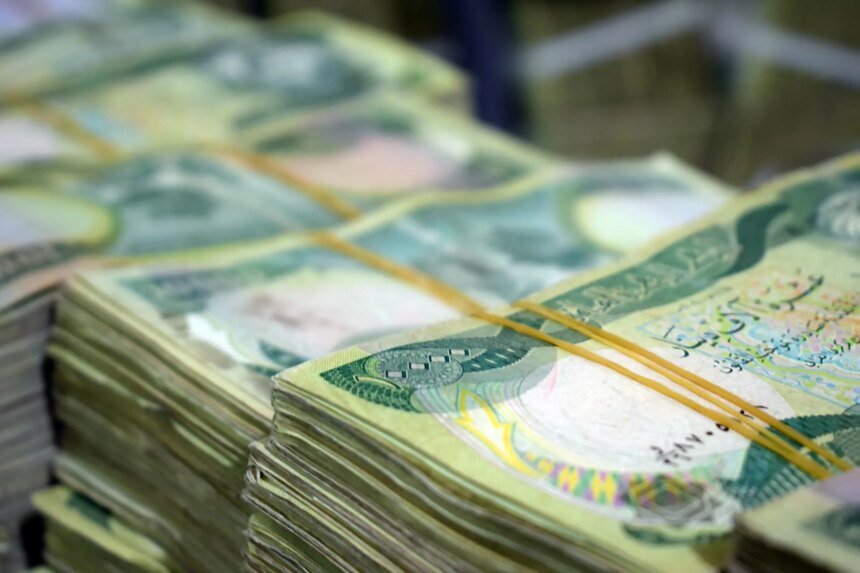
Baghdad- As the campaign of arrests continues, targeting officials accused of corruption cases in Iraq, observers of the situation and the street are asking a question that has been repeated for more than two decades: How much has corruption cost the Iraqi state? Especially after the arrest campaign that targeted representatives and senior officials in the Iraqi state against the backdrop of corruption accusations, but the accumulated economic losses seem to be the most prominent headline, after years of wasted resources and faltering development projects, in a country that is considered one of the largest oil producers in the world.
The Iraqi government says in its latest statements that it has so far arrested 21 officials accused of involvement in financial and administrative corruption cases, while a number of other wanted persons are still in hiding, as security and judicial prosecution operations continue.
Read also
list of 3 itemsend of list
Iraqi Prime Minister Ali al-Zaidi confirmed, during the cabinet session, that the government is continuing to fight corruption and recover public money, stressing the presence of what he described as “strong guardians” of public funds, in reference to the regulatory and judicial bodies.
Trillion losses
In his interview with Al Jazeera Net, economic expert Abdul Rahman Al-Mashhadani estimates the economic cost of financial and political corruption in Iraq at more than one trillion dollars, noting that a large portion of the looted funds was integrated into foreign economies.
He pointed out that a study he previously prepared estimated the smuggled funds at about $600 billion, compared to government estimates of $350 billion, while former Iraqi President Barham Salih estimated it at about $150 billion.
He added that corruption expanded in an unprecedented way after 2018, as the cost of obtaining some ministerial positions rose from about $5 million to between $50 and $100 million, which, according to him, reflects the doubling of the volume of looted funds.
He pointed out that the repercussions of corruption went beyond depleting public funds to disrupting the path of development, as Iraq is still suffering – since 2005 – a shortage estimated at 9,000 schools, while the health sector has only witnessed the construction of one or two new hospitals since the 1980s.
Al-Mashhadani concluded his speech by noting that the funds seized in cases affecting about 20 officials and representatives are estimated at between one billion and two billion dollars, an amount sufficient to establish 10 strategic factories that will provide between 5,000 and 10,000 job opportunities.

Double cost
The effects of corruption, according to specialists, are not limited to the amount of looted funds, but rather extend to weakening state institutions, declining public services, and squandering development opportunities.
In this context, financial and banking expert Mustafa Akram Hantoush explained – to Al Jazeera Net – that the economic cost of corruption in Iraq is not limited to the looted money, but rather extends to the decline in the level of public services, despite the large amount of spending on salaries, due to the preoccupation of a number of corrupt officials with achieving personal gains instead of performing their duties.
He added that corruption deprived new generations of job opportunities and hindered the building of state institutions, stressing that its cost is not limited to the stolen money, but rather extends to three main aspects:
- Draining public money
- Wasting development opportunities
- Threatening the future of generations.
Hantoush stressed that the anti-corruption campaign implemented by the government represents an important step, but it requires a long and persistent effort, because corruption is not linked to individuals as much as it is based on integrated systems, stressing that its success depends on community support that turns the fight against corruption into a permanent institutional approach, not a temporary campaign.
After the arrests
As part of efforts to recover public funds, the Iraqi government directed the Ministry of Finance to create a designated account to deposit funds recovered from those involved in graft cases, affirming its continued constitutional commitment to protecting public funds.
The Recovery Department of the Integrity Commission announced that the Commission was able to seize large amounts of money outside the country, which prevented those involved in corruption cases from disposing of it, confirming – in a statement – that it is working in coordination with the Ministry of Justice to file civil lawsuits to recover those funds.
Journalist Mustafa Jalil believes – in his interview with Al Jazeera Net – that recovering the looted funds represents only part of the treatment, as reducing corruption requires institutional, legislative and supervisory reforms that ensure the closure of waste outlets and prevent their recurrence, indicating that what they did exceeds all imagination, as what was looted was enough to build a prosperous state and perhaps two states with full infrastructure.
The current campaign comes at a time when Iraq is facing accumulated economic challenges, most notably the almost complete dependence on oil revenues, the failure to approve its general budget, high unemployment rates, a decline in basic services, and the continued need for huge investments in the education, health and infrastructure sectors.
As investigations continue and more defendants are arrested, all eyes remain on the outcome of the judicial procedures, and whether the campaign will succeed in recovering part of public funds, or will end like its predecessors without changing the size of the economic bill that has accumulated on Iraq since 2003.