

Published On 7/3/2026
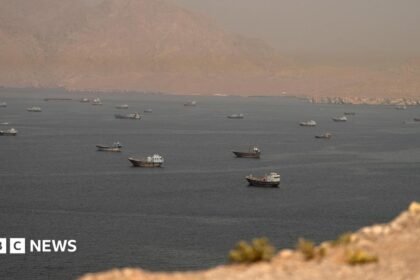
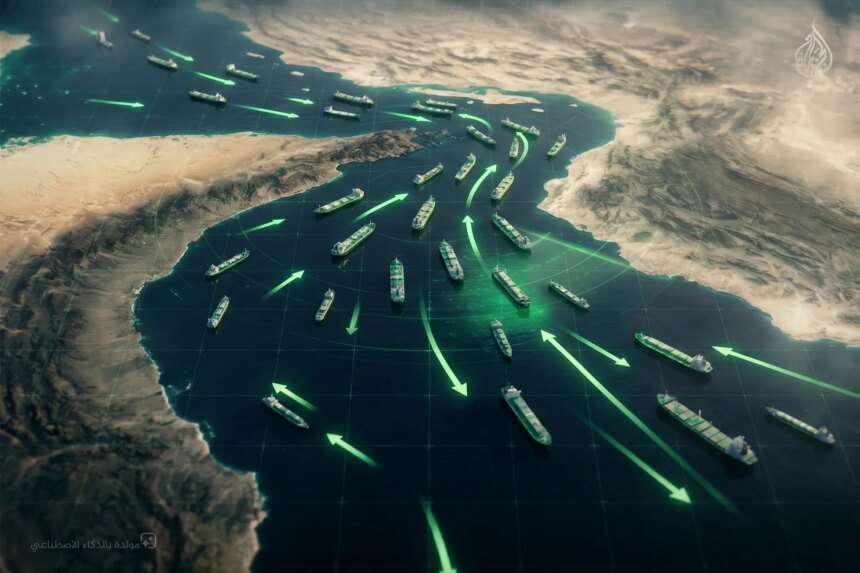
NBC News, citing 4 sources, revealed that Iran and the Sultanate of Oman submitted to the United States a proposal regarding a mechanism for managing the Strait of Hormuz, which includes joint management between Tehran and Muscat, while proposing the idea of collecting administrative fees.
According to two informed sources and a regional source, the plan was recently delivered to Washington.
However, an official in the Middle East explained that the Sultanate of Oman has not yet submitted an official proposal, despite continuing consultations with the United States regarding possible mechanisms for managing the Strait.
An informed source reported that the American negotiators have some reservations about the proposal, but they intend to discuss it with the Omani side, with their belief that the outstanding issues can be addressed.
He added that the American team values its partnership with the Sultanate of Oman, and is confident in the possibility of resolving differences at the technical level.
The same source indicated that Muscat is committed to ensuring freedom of navigation in the strait without imposing mandatory transit fees, stressing that the Omani proposal does not include any mandatory fees on ships.
For its part, NB News quoted the White House spokeswoman as saying that President Donald Trump confirmed that Iran cannot impose fees on passage through the Strait of Hormuz, as it is an international waterway.
On the other hand, a Middle East official said that Iran was pushing for tariffs and believed that Washington might eventually agree to a modified version of these proposals.
He added that any potential fees would be in consultation with the international community and through the International Maritime Organization, and if the participating countries agree, the revenues may be shared between Iran and the Sultanate of Oman.
The official explained that the money could be used to finance environmental risk assessment, rescue operations, and technical support, similar to the mechanisms in place in the Strait of Malacca, noting that the Sultanate of Oman has spent money over the years to maintain the strait and provide marine, environmental, and navigational services without collecting fees.
The official confirmed that the file is still under discussion and has not turned into a final proposal, adding that “the time may now be appropriate to impose something.”
In a related context, the Financial Times reported, based on recent data, that the number of flights through the Strait of Hormuz increased more than four-fold over the past week, in light of growing confidence in the continuation of the truce between the United States and Iran.

Iranian positions
On the other hand, the acting Iranian Ministry of Defense confirmed, during a phone call with the Turkish Defense Minister, that Tehran does not trust the United States because of what he described as its “violation of covenants,” indicating that the agreement with Washington came with the aim of restoring stability to the region, while confirming that the Iranian armed forces remain in a state of readiness, and that any violation of the agreement will be met with an appropriate response.
For his part, Iranian Parliament Speaker Mohammad Bagher Qalibaf announced, during his meeting with Vice President of the Chinese People’s Congress He Lifeng, that Iran will not allow the United States to interfere in the Strait of Hormuz.
Qalibaf added that, during his recent visit to the Sultanate of Oman, it was agreed – based on Article Five of the Memorandum of Understanding with the United States – on a mechanism to regulate traffic in the Strait of Hormuz, stressing that Iran is continuing on this path in consultation with the countries overlooking the Gulf.
Qalibaf also accused Israel of seeking to thwart the memorandum of understanding between Iran and the United States, considering that Iran’s deterrence force would prevent the outbreak of a new confrontation, while at the same time stressing the importance of reducing tension through deliberate political steps.

Course of negotiations
On the political level, a new round of indirect talks between the United States and Iran was recently concluded in Doha through Qatari and Pakistani mediators, amid official talk about “positive progress” in implementing the memorandum of understanding signed in Islamabad.
The Qatari Foreign Ministry said that the Qatari and Pakistani mediators held separate meetings with the American and Iranian negotiators in Doha, and that progress had been made on issues related to the memorandum of understanding, based on the outcomes of the Lake Lucerne summit.
On Wednesday, Iranian Deputy Foreign Minister Kazem Gharibabadi said – in statements broadcast by Iranian state television – that the Iranian delegation’s discussions in Doha were limited to the delegations of Qatar and Pakistan, and the Iranian delegation did not hold any meetings with the American side.
He explained that the Doha talks addressed the mechanisms for implementing the provisions of the Islamabad Memorandum, especially with regard to Lebanon and the frozen funds file.
On Monday, US President Donald Trump announced that a meeting would be held in Doha at the request of Iran, while Tehran confirmed that it would not hold any meeting with the American delegation unless the terms of the agreement concluded on June 14, 2026 were implemented.
On June 18, Iran and the United States reached a memorandum of understanding stipulating the cessation of fighting, the lifting of the US naval blockade on Iran, and the reopening of the Strait of Hormuz, after its closure caused an increase in oil and gas prices and inflation rates.