

Published On 7/3/2026
The American celebration of the 250th anniversary of independence is not limited to recalling the past, but rather opens a wide door to discussion about the future of the American role in the world. Between the legacy of the leadership of the international system after World War II, and the “America First” approach that reformulated foreign policy priorities, Washington appears to be facing a stage in which it is redefining its alliances and tools of influence in a world witnessing rapid transformations.
On the 250th anniversary of the independence of the United States, Americans return to recall turning points in their country’s history, not only as military victories that shaped Washington’s global standing, but also as an introduction to questioning the future of the American role in an international system witnessing rapid changes.
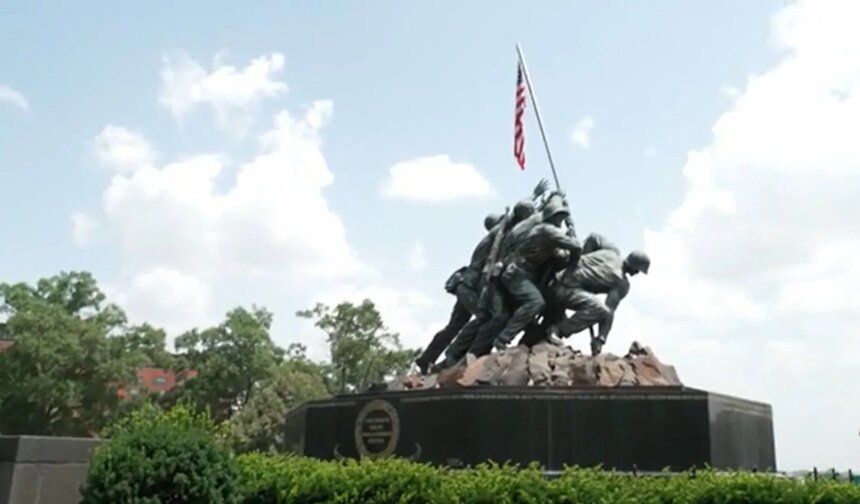
From Arlington Cemetery in Virginia, where the Battle of Iwo Jima is commemorated, one of the bloodiest battles of World War II for the Marines, Al Jazeera’s Washington correspondent Fadi Mansour’s report links American military history with the transformations that US foreign policy is experiencing today.
The report indicates that the United States, since World War II, has not only achieved military victory, but has invested in consolidating its global influence through the reconstruction of Europe and the establishment of the international order that it has led for decades. It spent more than 13 billion dollars after the war to rebuild 16 European countries, and contributed to the establishment of international political and financial institutions, in addition to establishing military alliances, most notably the North Atlantic Treaty Organization (NATO), to confront the Soviet Union, before it led what was known as the “free world” until the fall of the Berlin Wall.
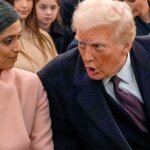
However, this leadership role began to face increasing questions within the United States regarding its political, economic, and military costs, which paved the way for the emergence of the slogan “America First,” which was adopted by the administration of President Donald Trump as a new framework for managing American alliances and interests.
National security priorities
Former Director of the National Security Council, Barry Pavel, says that the Trump administration does not seek to abandon alliances, but rather to rearrange them so that allied countries, especially in Europe, Japan, and South Korea, bear a greater share of the burdens of defense and security responsibilities within these alliances.
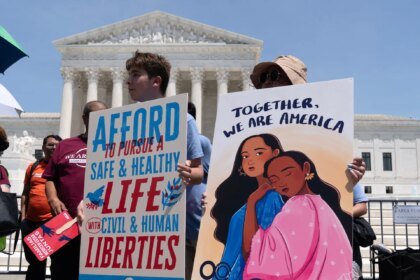
According to the report, this trend was reflected in the reformulation of US national security priorities, as the US Vice President, during the Munich Security Conference last year, informed European allies that the greatest threat to the continent is not represented by Russia or China, but rather by internal challenges, most notably immigration.
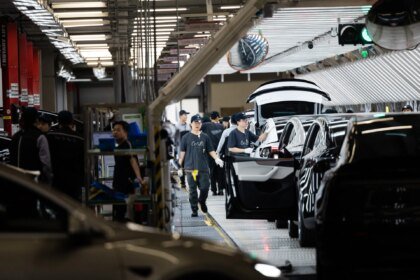
The Trump administration’s positions, whether regarding the war in Ukraine, imposing tariffs, or ambitions related to Greenland, have also contributed to increasing tension with allies, at a time when strategic competition with China is escalating.
The Vice President of the Atlantic Council, Matthew Kring, believes that Beijing has tried to exploit the trade wars to enhance its economic influence, and has achieved some gains, especially in the countries of the South, but he confirms that Washington’s allies are aware of the risks of heavy economic dependence on China, and therefore they have tended to reduce those risks and enhance the security of supply chains, especially in vital sectors such as artificial intelligence.
Despite the continued strength of American relations with its allies, the report indicates that the fluctuations in American policy have raised increasing questions about Washington’s strategic priorities, especially after the war on Iran, which reopened the debate about the nature of the American military presence in the Middle East.
The Chairman of the Board of Directors of the Middle East Policy Council, Richard Schmerer, believes that relations between the United States and the Gulf states will remain strong, but will adapt to new changes. He expects that Iran will seek to build relations based on non-aggression with the Gulf states, while Washington may tend to reduce its direct military deployment and rely on positioning from greater distances.
The report concludes that the transformations taking place in American leadership are not merely a reason for reshaping the international system, but are also a result of the changing global balance of power. In light of this new equation, the Trump administration seems more inclined to manage international relations according to the logic of deals and protect national interests, rather than continuing to bear the burdens of unilateral leadership of the world, no matter the cost.