

Published On 7/2/2026
|
Last update: 15:11 (Mecca time)
The heat waves that hit Germany during the summer are no longer just a passing seasonal phenomenon, but rather have turned into a real test of the ability of cities and residents to adapt to a new climate reality.
With record temperatures recorded in a number of German states, the details of daily life have changed, and unprecedented challenges have emerged affecting multiple aspects, from public health and transportation to urban planning and management of public spaces.
At a time when scientists are warning that these phenomena are likely to be exacerbated by climate change, German authorities are intensifying their efforts to strengthen adaptation policies and reduce risks, in a race against time to confront what climate experts describe as the “new normal.”
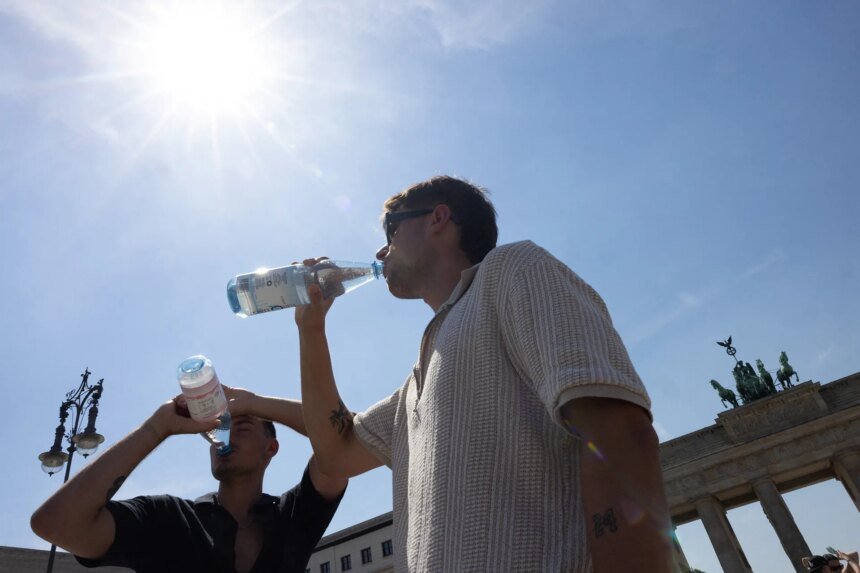
In Alexanderplatz Square in central Berlin, the scene did not resemble the European summer that residents had become accustomed to years ago. Under a blazing sun, temperatures exceeding their seasonal levels, many people preferred to take shelter in the shade of trees or sit near fountains, while some streets were empty of pedestrians during the noon hours.
Even means of transportation were not spared from the effects of high temperatures, as transport companies issued warnings about the possibility of train movement being affected by the expansion of railways, while some municipalities raised their level of preparedness to confront any outages or damage that might result from heat stress affecting the infrastructure.
In the open cafes, tables seemed almost empty during the noon hours, while many residents chose to postpone their movements until the evening hours, when temperatures are relatively low. Public parks and lakes also witnessed a remarkable turnout from families who found them an outlet to escape the heat.
Inside one of the public parks, the German “Hopa Müller” was carrying a bottle of water and a small fan, and she said in a statement to Al Jazeera Net: “We were waiting for summer to enjoy the sun, but today we are looking for any shaded place, because the heat has become exhausting even for healthy people.”
The Syrian young man, Mahmoud Basil, who has been residing in Germany for years, believes that the current heat waves are completely different from what he knew when he arrived in the country. He says: “When I came to Germany, I thought that the summer here was always mild, but in recent years the temperature has become unprecedentedly high, and this is reflected even in working hours and transportation.”
As for Moroccan Fatima Al-Mufaddal, who lives in Berlin, she confirms that the German authorities have become more present during heat waves through warning messages and health instructions, but she believes that the phenomenon is recurring in a way that raises concern, adding: “We did not expect that we would experience temperatures in Germany similar to some summer days in North Africa, but it seems that climate change no longer excludes anyone.”

Scientists do not view these daily scenes as mere seasonal fluctuations, but rather they see them as a clear indication of the transformations taking place in the global climate system, which have made Europe one of the regions most affected by rising temperatures in recent decades.
Speaking to Al Jazeera Net, German researcher Petra Bohoff, who specializes in climate change issues, confirms that Europe has become one of the regions where temperatures are rising at a rate exceeding the global average.
She explains that climate change resulting from human activities has led to an increase in the frequency, intensity, and duration of heat waves, noting that what was described decades ago as an exceptional event has become increasingly frequent today.
Petra adds: “The question is no longer whether heat waves will recur, but rather how societies can adapt to a new climate reality, because these phenomena are likely to continue as global temperatures continue to rise.”
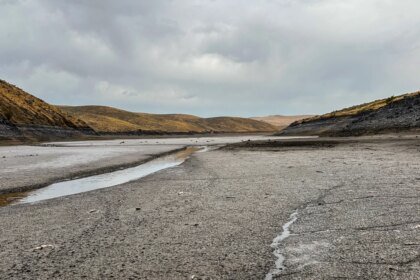
The researcher points out that heat waves are now extending for longer periods, and are often accompanied by droughts and forest fires, which increases pressure on water resources, the agricultural sector, and energy networks, and makes the cost of climate adaptation higher year after year.
Ways to adapt
Petra Bohoff confirms that Germany began years ago to review its urban policies to adapt to the climate, by expanding green spaces, planting trees within cities, adopting building materials that reduce heat absorption, in addition to developing early warning systems to protect groups most vulnerable to risks, especially the elderly, children and the sick.
The same spokeswoman pointed out that local authorities planned to provide drinking water points in public spaces, and to create what are known as “cold islands” within cities, which are spaces that allow residents to take shelter from the heat during peak hours, in addition to awareness campaigns calling for avoiding direct exposure to the sun and drinking plenty of water.
However, the researcher believes that these measures represent only part of the solution, because adaptation to climate change cannot compensate for efforts aimed at reducing its causes.
Every part
Professor of Climate System Dynamics at the University of Potsdam, Anders Levermann, agrees with this proposal, stressing to Al Jazeera Net that investing in adaptation has become a necessity, but it will not be sufficient if global emissions continue to rise.
He says that every fraction of a degree Celsius by which the Earth’s average temperature rises means more heat waves, droughts and floods, calling for accelerating the transition towards a low-carbon economy and strengthening international cooperation to meet climate commitments.
While Germany, like the rest of European countries, is preparing for a summer that may bring more intense heat waves in the coming years, it seems that climate change is no longer an issue discussed only within laboratories or international conferences, but rather has become a reality that imposes itself on the details of daily life, and is redrawing man’s relationship with his cities, his environment, and his future.