Published on 6/29/2026
The town of Faron in southern Lebanon stands before an exceptional scene among the villages of the border region. While Israel talks about including it among the areas from which it is supposed to withdraw, the field reality reveals that the town was not entered by Israeli forces during the war, and no military sites were established or occupation flags were raised over it, but in return it paid a harsh price as a result of bombing and raids.
Al Jazeera’s correspondent in southern Lebanon, Mazen Ibrahim, says that Fron remained different from a number of border towns that witnessed the direct presence of Israeli forces, as Israeli tanks did not enter its lands, while the Lebanese army remained present there from the beginning, as its center was positioned on the outskirts of the town near the Litani River, and its forces conducted continuous patrols.
A follower of field affairs confirms that the Israeli army never entered Pron, and that its concentration was in the town of Qantara, which is about five kilometers away from it. He pointed out that the Lebanese army maintained its presence in the region, and was conducting patrols during the war, passing through Pron and arriving at the town of Burj Qalawayh.
The importance of Faron is not limited to its geographical location, as it overlooks Wadi Al-Hujair from its hills, which represents a natural barrier separating it from a number of towns under occupation. It is also adjacent to the town of Ghandouriya, which was also classified as an experimental area, but did not witness the entry of Israeli forces into it.
Faron is a Lebanese region
According to Al Jazeera’s correspondent, access to Faron does not face major security obstacles, given that it is a Lebanese area that was not subject to the control of the Israeli occupation and its forces did not enter it, which makes it available to civilians and the Lebanese security forces.
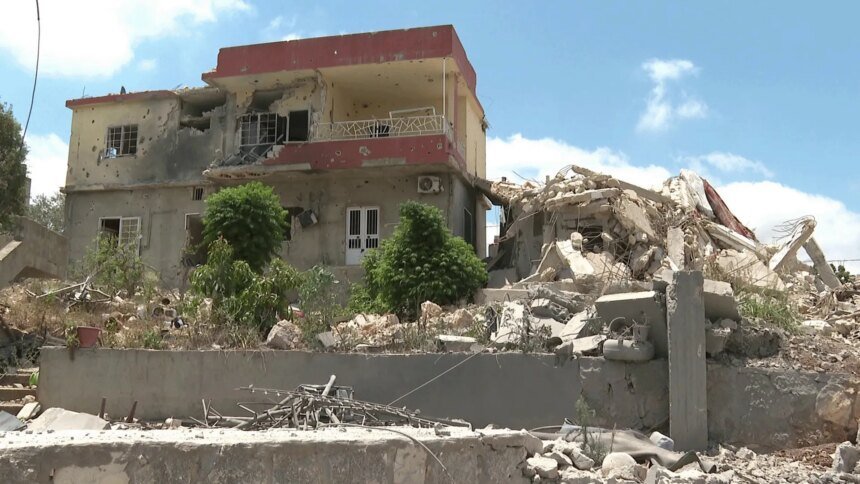
But the absence of direct occupation did not mean the absence of the effects of war, as the Israeli air and artillery bombardment left widespread destruction in the town, as large parts of it turned into rubble, and residents remained between the option of displacement and waiting, in an attempt to restore their lives amid the rubble of homes.
A resident of the town says that about 80% of Fron was destroyed, explaining that most of the houses were leveled to the ground, while the remaining houses were severely damaged, but the people are trying to repair a small part of their homes to return and reside in them, stressing that the residents are clinging to their land despite the extent of the losses.
She adds that the land represents great moral value to the people of the town, as it is linked to their memories and sacrifices, and that they are committed to staying on it and not leaving it despite the difficult circumstances.
In light of this reality, the United Nations Interim Forces in Lebanon (UNIFIL) continue to conduct their patrols inside the town, sometimes with support from the Lebanese army, at a time when France remains a witness to the paradox of war. A town that the occupation forces did not enter, but it bears the effects of its strikes and is waiting for life to return to its streets and homes.