

Published On 7/8/2026
|
Last update: 16:30 (Mecca time)
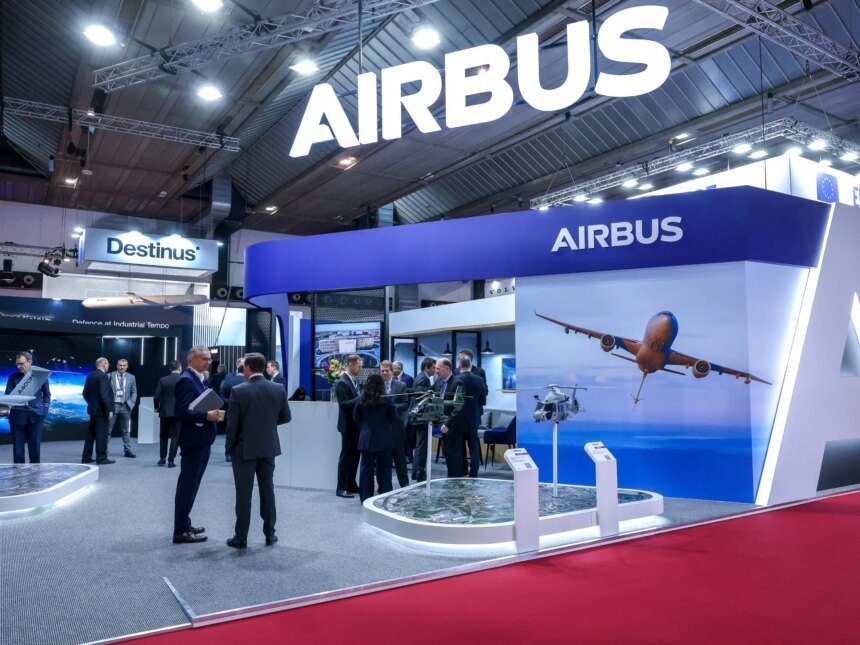
Airbus is betting on the recovery of airlines in the Middle East from the turmoil of the Iran war, with the region remaining on a long-term growth path despite the closures of airspace, the diversion of flight routes, and the rise in the cost of fuel during the past months.
The European company said in its global aviation market forecasts for the period 2026-2045 issued today, Wednesday, that global air travel has demonstrated “internal resilience” in the face of major shocks, considering that short-term disturbances such as regional conflicts and rising fuel do not curb demand in the long term. It also expected the Middle East to continue a “stable growth path” over the next two decades.
Airbus estimated that the recovery of the Middle East network and flights reached between 80% and 90% in the early July 2026 update, after a sharp decline in daily passenger aircraft traffic in the region since the beginning of March.
The Airbus report came after the International Air Transport Association (IATA) said that travel bookings to the Middle East began to gradually recover after a 63% decline in March following the escalation of the Iran war on February 28.
IATA expects airlines in the Middle East to turn a net loss of $4.3 billion in 2026, compared to a net profit of $7.2 billion in 2025.
The European company’s forecasts come at a time when IATA data reveal the extent of the short-term blow to the sector, as the association expects airlines in the Middle East to record a contraction of 11.4% in passenger traffic measured by passenger revenue per kilometer during 2026, due to airspace restrictions and the loss of part of transit traffic as passengers move to alternative hubs.
IATA expects airlines in the Middle East to turn into a net loss of $4.3 billion in 2026, compared to a net profit of $7.2 billion in 2025, with the load factor declining to 75.5%, which reflects the difference between immediate pressure on profits and the continued attractiveness of the region in the longer term.

Long term demand
Airbus expects that the world will need 42,060 new aircraft over the next two decades, including 22,240 aircraft to meet traffic growth and 19,820 aircraft to replace old fleets, with single-aisle aircraft representing 81% of demand and wide-body aircraft 19%.
Detailed Airbus data shows that the Middle East will need 3,490 new passenger aircraft between 2026 and 2045, including 1,870 single-aisle aircraft and 1,620 wide-body aircraft. The fleet operating in the region will also increase from 1,450 aircraft at the end of 2025 to 3,160 aircraft by 2045.
These numbers reflect the specificity of the aviation model in the region. The share of wide-body aircraft in the expected demand for the Middle East amounts to about 46% of the total new aircraft, which is a much higher percentage than the global average, which demonstrates the continued dependence of Gulf carriers on long-haul flights and connecting traffic between Asia, Europe, Africa and the Americas.
Airbus believes that the growth of the middle class, the expansion of immigration and family travel, and the improvement in the efficiency of new aircraft will push global travel traffic to grow at an annual rate of 3.9% within 20 years, in parallel with an expected global economic growth of 2.6%, so that air travel traffic will double and reach about 10 billion passengers annually by 2045.
A role that does not change easily
Despite the pressures of war, the IATA report says that the structural role of the Middle East as a global aviation hub is not likely to change, as the region is based on geographical location, infrastructure and dense connectivity networks, but it indicated that the recovery path may be driven by prices more than a rapid return in travel volumes.
Thus, Airbus places the current crisis in the category of a short operational shock, not a permanent structural transformation. Airlines in the Middle East are facing a difficult year in terms of profits and traffic, but they remain, according to the company’s expectations, among the regions that will continue to expand their fleets and their role in connecting global air traffic during the next two decades.