


Published On 7/7/2026
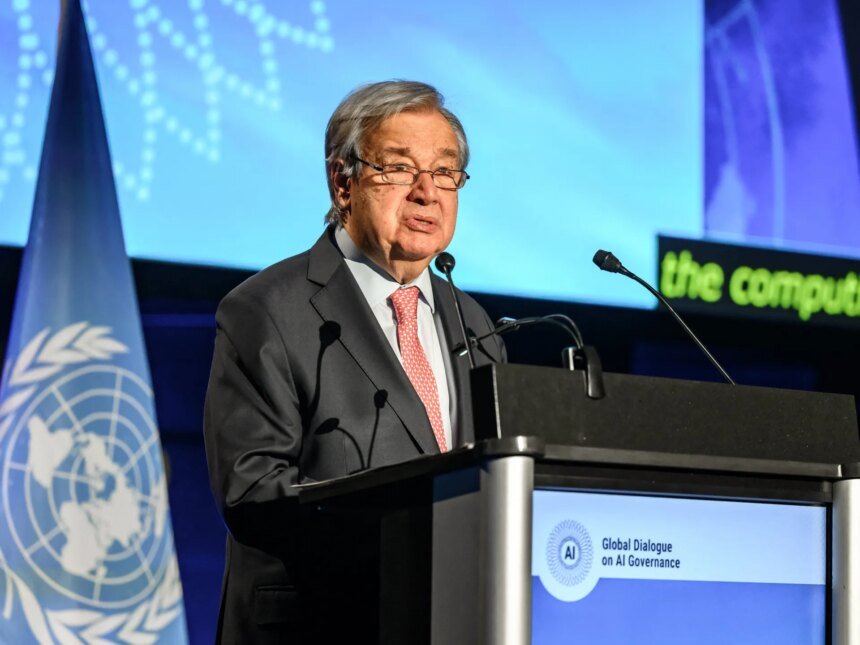
United Nations Secretary-General António Guterres called for comprehensive global controls to regulate artificial intelligence, warning that this technology could turn into a direct threat to human rights.
Guterres warned of the dangers of these technologies if left without governance, especially with the transition of advanced chips from civilian uses to battlefields and the emergence of “killer robots” as an existing reality.
At the opening of the United Nations’ first global dialogue on the governance of artificial intelligence in Geneva yesterday, Monday, Guterres said that any future international agreement must be “worthy of the world’s trust” and put human safety – especially children – first, warning of the dangers of manipulation and abuse through generated digital content.
The President of the United Nations General Assembly, Annalena Baerbock, joined this call, warning of the “dark side” of artificial intelligence and noting that about 99% of “deepfake” content is of a sexual nature. She explained that 96% of it targets women and girls, raising serious concerns about gender-based violence and digital violations of women’s privacy.
Guterres stressed that human rights are “non-negotiable” in any artificial intelligence governance system, and that these technologies “must not rob people of their dignity or entrench discrimination,” stressing that machines can provide information, but the final decision must remain in the hands of humans, especially in sensitive areas such as the judiciary, health care, and law enforcement.
He called for a “global pledge to protect children from the dangers of artificial intelligence,” requiring companies to prove the safety of their systems for children, and to prevent any production or circulation of images of a sexual nature of children, while monitoring and removing this content immediately.
He also warned of the widening “artificial intelligence gap” between the North and the South, and the resulting gaps in development, security and sovereignty, calling for building capabilities in developing countries to ensure equitable access to this technology in a way that protects rights and freedoms instead of undermining them.