Published On 7/8/2026
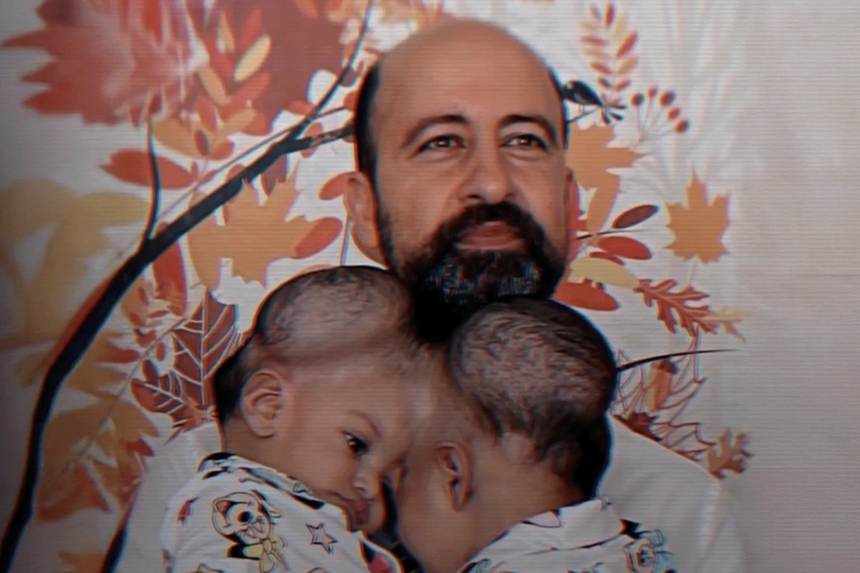
Humanity stands in amazement at the sight of Siamese twins joined at the head, where the brain and blood vessels are intertwined in a complex tangle that modern medicine classifies as among the most complex and historically dangerous surgeries.
Behind the scenes of these operations, which receive widespread global attention and attention, stands the famous British neurosurgeon Professor Awais Jilani.
In an exclusive interview with Al Jazeera, Gilani revealed the secrets of his management of these medical challenges by integrating engineering philosophy with artificial intelligence and virtual reality technologies, paving the way for saving the lives of children wherever they are through his charitable foundation, according to journalist Abdul Aziz Sabah.
Think with the mindset of an engineer
Jilani explains that confronting this type of adhesion requires abandoning the traditional medical view and shifting towards structural planning. He says: “When you look at these children who are attached, the degree of adhesion from the outside makes separation without harm seem impossible, and here the surgeon must think like an engineer.”
This vision revolutionized the handling of cases. Instead of the classic, exhausting operations that took 40 continuous hours and often ended in the death of one or both children, Jilani and his team adopted “staged surgery.”
The operation ranges between two and four stages, weeks apart, giving young bodies a real chance to recover and reducing surgical trauma.

Virtual operating room
Reliance in separating the brain and blood vessels is no longer limited to two-dimensional images or professional intuition. Rather, digital technology has become a major partner in the operating room.
From his first operation in 2006 to his successes in 2025, Jilani led a qualitative leap by integrating MRI and CT images into “virtual, augmented and mixed reality” platforms. These technologies allow the creation of a 3D “digital twin” that accurately matches children’s complex anatomy.
Regarding this breakthrough, Jilani says: “We can see images in 3D, interact with them, and begin visually simulating surgery before actually performing it.”
He adds that engineers and surgeons from different continents meet in a virtual operating room to discuss and test about 100 crucial steps, and anticipate all possibilities before touching the patient’s body.
Towards medical justice
The British surgeon’s efforts are not limited to luxurious London hospitals, but rather extend through an ethical and humanitarian concern to deliver this complex treatment to poor families in the Arab world and developing regions who are unable to bear the expenses of travel and treatment. From this standpoint, he founded a charitable organization.
Jilani believes that the institution has a dual challenge: the first is to achieve consistent medical successes and overcome historical failures, and the second is the parallel responsibility to achieve medical justice.
He stresses: “It is not enough to achieve medical achievements. Rather, they must be delivered to children in need around the world. It is our responsibility to deliver the best findings of science to everyone, wherever they are.”
After a quarter of a century spent in pediatric surgery, Jilani acknowledges the enormous psychological weight imposed by the nobility of the profession and the absolute trust given to him by grieving parents.
But this burden dissipates in the most beautiful human moment, as he concludes his speech to Al Jazeera, describing his feeling after the success of the operations and seeing the children walking and running like others: “It is like a heavy burden that has been on your shoulders for a year or two…then it becomes impossible to describe the amount of satisfaction and happiness in words.”