

Published On 7/8/2026
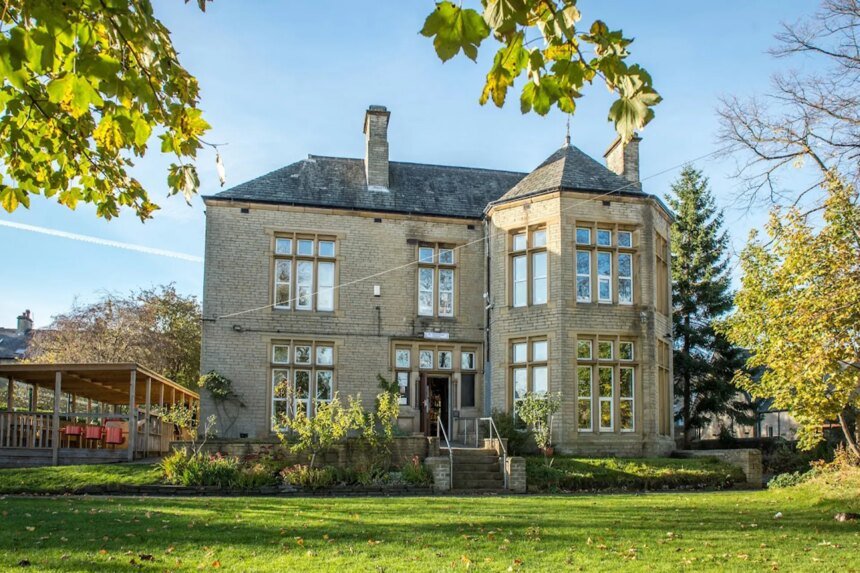
In the city of Halifax in northern England, the Wool Merchant Hotel returned to receiving guests after 4 years as a shelter for asylum seekers, which resulted in the separation of families, the severing of the ties they had built in their local communities, and their redistribution to ill-prepared housing or remote military sites, according to a report published by the British newspaper “I Paper”.
For the British government, the hotel represents a model of what it describes as “giving hotels back to local communities.” But for those who lived there, its closure marked the beginning of a new phase of mobility and instability.
The government is continuing to implement its plan to end reliance on hotels to accommodate asylum seekers, after it has turned in recent years into one of the most controversial immigration files due to its financial cost and its connection to the political debate on immigration.
According to the “I Paper” newspaper, the crisis lies in the accumulation of asylum applications and the chronic shortage of social housing, which has made temporary stay in hotels become a reality that extends for months and sometimes years.
By the end of last March, the number of appeals submitted against asylum rejection decisions reached about 87,500, an increase of 70% compared to the previous year. In the same month, 20,885 asylum seekers (21% of the total awaiting decisions) were staying in hotels, while 72,768 people (75%) were living in other types of temporary accommodation.

“Emergency solution”
The use of hotels to house asylum seekers is not a new policy in Britain. Local authorities have been using them for years in emergency situations until permanent housing is available. But with the Corona pandemic that began in December 2019, reliance on it increased in an unprecedented manner.
In March 2020, about 1,200 people were staying in hotels, before the number rose to 9,500 people by October of the same year. By 2023, the government had used about 400 hotels to house more than 56,000 asylum seekers.
Since then, Britain began searching for less expensive alternatives. In June 2026, the Ministry of Interior announced the closure of 20 additional hotels, reducing the number from 400 to 170 hotels.
Transfer of asylum seekers
The government plans to transfer thousands of asylum seekers to former military sites, as it announced that it seeks to use 3 sites belonging to the Ministry of Defense in Bicester, Barnham and Linton-on-Oz, to accommodate about 3,750 asylum seekers, if the projects obtain the necessary approvals.
The Ministry of Interior says that the cost of staying in one of these locations is about 132 pounds sterling (about 176 US dollars) per person per night, compared to 144.98 pounds (about 193 US dollars) in hotels.
New suffering
The I-Paper newspaper report presented the suffering of asylum seekers who stayed in hotels for years, but are currently residing at the St. Augustine Center in Halifax, which is a charitable institution that provides support to asylum seekers and refugees.
The newspaper’s correspondent met a Syrian refugee who fled northern Syria with his wife and three children during the war years. After arriving in Britain, he spent two years moving between a refugee hotel in Bradford and other temporary accommodation.
He told the newspaper’s correspondent that the most difficult thing about the experience was not waiting for the asylum decision, but rather the constant movement from one place to another, explaining, “We make friends, and the children adapt to their schools, and then the transfer decision comes and we start everything again. You feel as if you have become a refugee for the first time again.”
He stressed that children are the most affected, because they are forced every time to leave their schools and friends and adapt to a new environment.
According to Durham University professor Jonathan Darling, hotel residents often only get a few days’ notice before being moved to shared accommodation, which may be in other distant cities.
This is what happened to some residents of the Wall Merchant Hotel, as they were transferred to a military site in East Sussex.
Difficulties are not limited to housing, as hotel residents receive less than 10 pounds sterling (about 13 US dollars) per week to cover their personal needs, while those living in other housing receive less than 50 pounds (about 66 US dollars) per week.
Political controversy and profits
In the past few years, asylum hotels have become a symbol of the political debate over immigration in Britain, as several cities have witnessed protests in front of hotels housing asylum seekers. A study published last May showed that a large segment of Britons still believe that immigration is on the rise, even though official figures indicate the opposite.
In Halifax itself, the Labor Party lost control of the local council in the May 2026 elections to the Reform Party, which made combating “mass immigration” one of its most prominent slogans.
But the iPaper newspaper also drew attention to another party that has benefited from this crisis, which are the private companies that manage housing for asylum seekers.
In May 2025, it was reported that the three companies contracting with the government had made profits amounting to 380 million pounds sterling (about 507 million US dollars) from accommodation contracts, and the profits of the “Britannia” hotel chain alone had exceeded 150 million pounds sterling (about 200 million US dollars) since it began receiving asylum seekers in 2014.
Experts point out that many of the hotels that signed these contracts were not actually achieving commercial success, but rather were suffering from weak demand or financial difficulties, which made the government contracts an opportunity to save their businesses.