

Published On 7/6/2026
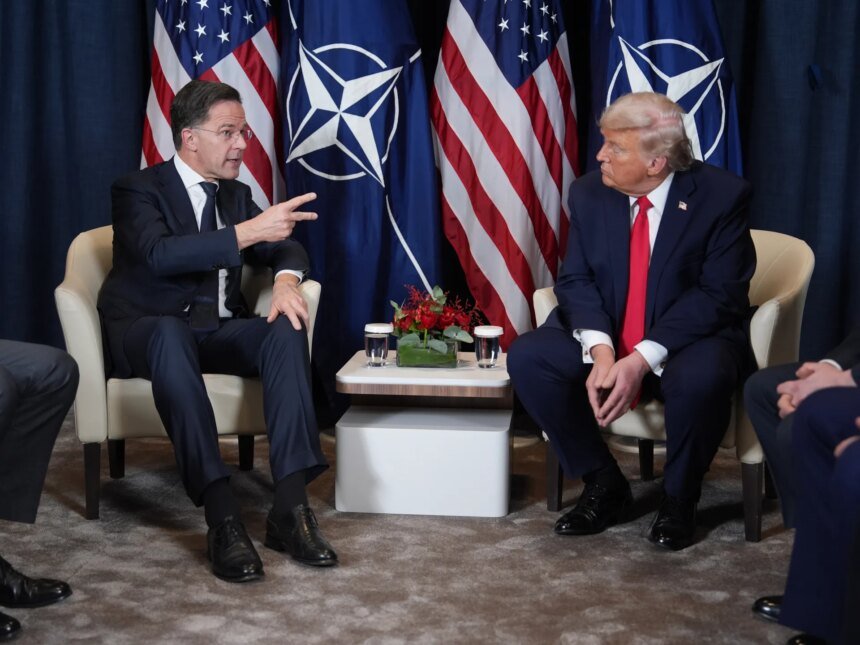
As the NATO summit in Ankara approaches, European fears are growing that core issues related to the continent’s security and the future of collective deterrence have given way to financial and commercial calculations imposed by US President Donald Trump.
Politico, the Financial Times, and the Wall Street Journal agree that NATO is going through a critical phase that threatens its cohesion and future, and they agree that Trump’s personality and policies have become the most influential factor in the future of the alliance.
Read also
list of 2 itemsend of list
Trump and the definition of the alliance
Politico believes that Trump has succeeded in reshaping NATO in accordance with his vision based on commercial transactions rather than strategic partnerships. The alliance, which was established after World War II on the basis of common defense and common democratic values, has become – according to the site – closer to an economic platform that focuses on the volume of military spending and arms deals.
According to an analytical report on the site, Trump pushed European countries to increase their defense spending in an unprecedented way, and also encouraged them to buy more American weapons. In Washington’s view, the success of the Atlantic summits has become measured more by the volume of defense contracts and new investments than by the level of political coordination or progress in confronting security threats.
The report indicates that European officials are now dealing cautiously with the White House and the US decision-making room, trying to avoid any direct clash with Washington, in light of Europe’s continued reliance on American military capabilities, despite the growing European desire to build greater defense independence.
Between strength and weakness
In its editorial, the Financial Times presents a dual assessment of NATO’s situation, considering that it has become stronger on the one hand and weaker on the other.
On the one hand, Trump’s continued pressure has led to a significant increase in European defense spending, as non-American countries have pumped tens of billions more into armaments and increased military readiness. European militaries have also benefited from lessons learned from the Ukrainian war, both in the areas of military innovation and adaptation to modern warfare.
But the newspaper believes that these gains are offset by a more serious loss, represented by a decline in European confidence in Washington’s commitment to defending its allies if they are attacked. The problem is no longer limited to asking the Europeans to bear a greater share of the burden, but rather related to the presence of growing doubts about the Trump administration’s willingness to fulfill the traditional security pledges that have formed the basis of Atlantic deterrence for decades.
The newspaper believes that the alliance is still theoretically capable of reaching a new “grand deal” based on Europe bearing the primary responsibility for conventional defense, in exchange for the continuation of the American nuclear umbrella, but the lack of confidence in Trump’s approaches makes this scenario fraught with doubts.
The specter of American withdrawal
The Wall Street Journal editorial board places the issue of the American military presence in Europe at the forefront of the challenges presented to the summit.
The newspaper warns that any rapid withdrawal or reduction of US forces stationed in Europe will send the wrong message to Russian President Vladimir Putin, and may encourage him to test the cohesion of the alliance or exploit any potential defense gaps.
The newspaper rejects Trump’s rhetoric that the United States does not reap benefits from its spending on NATO, stressing that maintaining European stability is not a charitable act but rather a direct American interest whose importance has been proven through the experiences of the twentieth century and the major wars it witnessed.
The newspaper also intersects with the Financial Times in warning that reducing American commitment may weaken collective deterrence and increase the possibilities of Russian adventures in Eastern Europe.
Europe between dependency and independence
The three sources agree that Europe today faces a complex dilemma. On the one hand, US military and intelligence capabilities remain the backbone of European defense. On the other hand, European capitals have come to realize that continuing complete dependence on Washington has become a risky option in light of American political fluctuations.
For this reason, European calls are increasing to accelerate investment in local defense industries, enhance air defense and long-range missile capabilities, and develop command, control, and intelligence systems in a way that reduces dependence on American support.
What future?
In the end, the three platforms indicate that the Ankara summit may turn into an occasion to celebrate the large numbers related to increased military spending and arms deals, rather than a platform to address the crucial questions facing the alliance.
The most prominent question hanging over the summit remains: Can NATO adapt to a phase in which the United States has become less committed to defending Europe, or is the alliance already entering a new phase entitled the decline of traditional solidarity and the rise of the logic of interests and transactions?
Source: Publico + POLITICO + Financial Times + Wall Street Journal