

Published On 5/7/2026
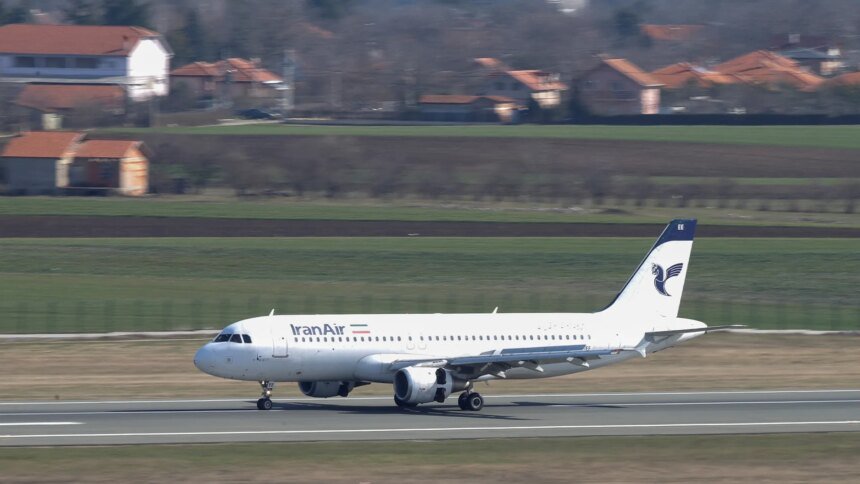
Global air traffic has begun to record signs of gradual recovery with the return of a large portion of navigation through the Strait of Hormuz, after a period of turmoil that raised fears of a crisis in aviation fuel supplies during the summer travel season, at a time when ticket prices remain high despite the decline in fuel prices.
In an economic window on Al Jazeera, Siham Ashto highlighted the repercussions of the war on the global aviation sector, explaining that its repercussions were not limited to maritime navigation in the Gulf and the Strait of Hormuz, but rather extended to air traffic, given that the Gulf region provides about a fifth of the world’s seaborne aviation fuel supplies.
She pointed out that fears reached their peak with the approach of the summer travel season, after the International Energy Agency warned of the possibility of the outbreak of the largest energy crisis in decades, before the Iranian-American memorandum of understanding and the gradual return of shipping traffic through the Strait of Hormuz contributed to alleviating those fears.
Estimates from the International Air Transport Association (IATA) showed a gradual improvement in travel reservations between June and September, but reservation levels are still below pre-war levels, as they were about 30% lower in May than in February.
The report added that aviation fuel prices, despite their decline, are still high, which was reflected in travel ticket prices, as the average price of a barrel of jet fuel during May reached about $160, compared to about $200 per barrel during the height of the war in April.
The importance of the Gulf region lies in the fact that it is a major source of aviation fuel supplies, as Europe depends on it to provide about 24% of its needs, while Africa’s dependence rate reaches about 33%.
Reality is starting to change
Commenting on market developments, oil and energy markets expert Amer Al-Shoubaki confirmed that warnings about the jet fuel crisis were based on real data, but recent developments contributed to alleviating the severity of the crisis. He added, “These warnings were realistic, but what we see on the ground is different. There is an increase in travel traffic despite the rise in ticket prices, even though the crisis is not over yet.”
Al-Shoubaki explained that the decrease in fuel prices and the return of navigation traffic through the Strait of Hormuz contributed to the provision of additional quantities of aviation fuel, noting that more than half of ship traffic through the Strait has already returned, including tankers carrying aviation fuel from Kuwait and other Gulf countries towards Europe. He added that Europe was most at risk of fuel shortages, pointing out that the crisis had not completely ended, but it had caused great pressure on prices.
Al-Shoubaki pointed out that the specificity of the European market is due to its limited capabilities in refining aviation fuel compared to the volume of demand, explaining that Europe relies heavily on imports, especially those coming from the Gulf region.
He added that the United States is a source of aviation fuel, while Europe imports the bulk of its needs, with a dependence of approximately 50% on Gulf supplies, in addition to the increasing dependence on the American market.
Ticket prices
Regarding the future of travel prices, Al-Shobaki explained that fuel prices had decreased significantly compared to the peak of the crisis, but he expected that this would be delayed in affecting ticket prices.
He pointed to the companies’ desire to compensate for their losses, saying, “Tickets vary and may be delayed. Fuel prices have decreased… but this has not been reflected in the tickets because the companies want to compensate for their losses in the past period.”
He explained that the price of a ton of aviation fuel reached about $1,800 during April, compared to about $800 in February before the crisis, and then declined now to about $900, pointing out that fuel prices decreased by about 23% during the past month. It is likely that competition between airline companies will begin to become more apparent after the end of the summer season, which may prompt some companies to gradually reduce ticket prices.
At the conclusion of his speech, Al-Shoubaki explained that airlines are trying to achieve a balance between compensating for their losses and maintaining demand levels, indicating that the demand for travel is still high despite the increase in prices.
He added that travel traffic during this summer exceeds last year’s levels, as demand in Europe increased by between 10 and 15%, while the United States recorded greater growth, with a larger number of travelers turning to air travel instead of land travel in light of the rise in gasoline prices, which contributes to the continued strong demand for airline tickets despite their high cost.