


Published On 7/3/2026
Global food prices fell for the second month in a row last June, with the decline in the prices of sugar, grains, and dairy products offsetting the rise in the prices of vegetable oils and meat, indicating a partial easing of pressures on agricultural commodities after the energy shock that accompanied the Iran war and the disturbances in the Strait of Hormuz.
The United Nations Food and Agriculture Organization (FAO) said its food price index averaged 130.3 points in June, down 0.4 points, or 0.3%, from the May level. The index measures the monthly change in international prices of a basket of globally traded food commodities, and includes 5 sub-indices weighted by average export shares during 2014-2016.
Despite the monthly decline, the index remained 1.7% higher than its level a year ago, but it remained 18.7% lower than its peak recorded in March 2022 following the outbreak of the Russian-Ukrainian war, according to FAO data.
The index fell in May to 130.8 points, down 0.2% from the revised April level, after it jumped in April for the third month in a row amid rising energy costs and trade disruptions linked to the escalation in the Near East, according to the organization’s data.

Cereals and sugar
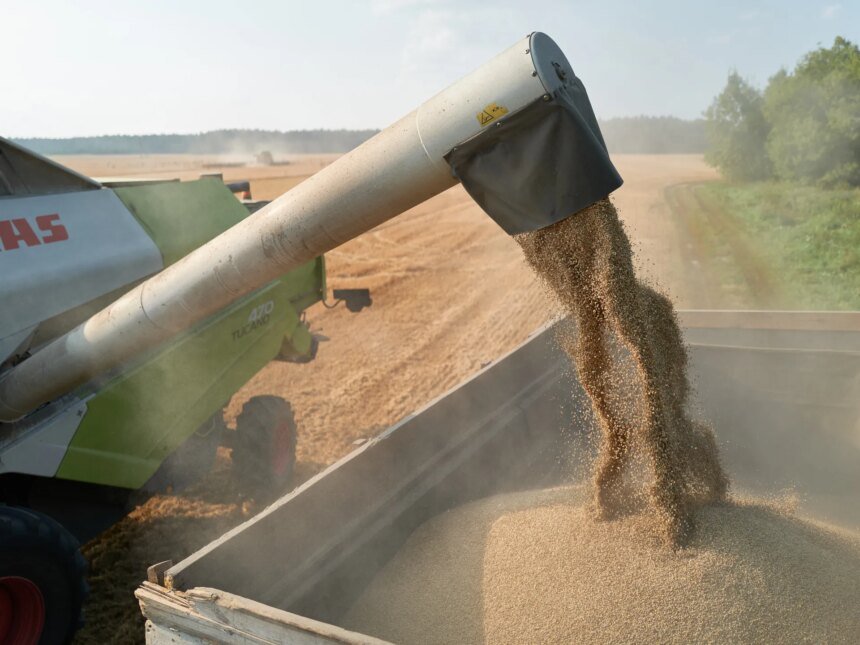
The grain index led the decline in June, falling 3.5% to 110.2 points, but remained 2.7% higher than its level a year ago, and global wheat prices fell 4.4% due to accelerating harvests and improving supply expectations in the Black Sea region, which outweighed concerns related to crop prospects in the United States and Australia.
Corn prices also fell by 6.2% with expectations of abundant supplies from exporting countries in South America, in addition to lower crude oil prices, which put pressure on demand related to biofuels. In contrast, the rice price index rose 3.2%, supported by increased Asian demand for Indica rice, weather concerns, and higher production, transportation, and marketing costs.
The sugar index fell 5.7% to 89.7 points, becoming 13.3% lower than its level a year ago. FAO attributed the decline to the decline in domestic ethanol prices in Brazil for the third month in a row, which encouraged factories to direct a greater amount of sugarcane to sugar production, in addition to the strength of Brazilian exports supported by the decline of the Brazilian real against the US dollar.
However, the organization indicated that concerns about the potential impact of the El Niño phenomenon on sugar production in India and Thailand during the 2026-2027 season limited the general decline in prices.
The dairy products index fell 1.5% to 117.4 points, affected by the decline in prices of all dairy products, in light of improved production and availability of supplies in the European Union and the United States, and continued weak demand for some products, especially dried whole milk from China.
Commodities rise
On the other hand, the vegetable oil index rose 3.8% to 192 points, supported by the rise in palm oil and rape oil prices and the stability of sunflower oil prices, which offset the decline in soybean oil. FAO linked the rise in palm oil to expectations of a decline in export supply from Indonesia with an increase in domestic demand for biodiesel production materials, while rape oil prices continued to rise due to the strong demand for biofuels and unfavorable weather conditions for agriculture in Australia and Canada.
The meat index also increased 0.4% to 131 points, recording a new record level, mainly supported by the rise in global poultry meat prices and the increase in lamb meat prices, while the prices of pork and beef declined.
FAO said that poultry prices rose as a result of an increase in export prices in Brazil amid strong global demand, in addition to a temporary tightness in domestic supply after production adjustments that followed a previous abundance in supplies.
The June reading comes at a time when food markets remain linked to fluctuations in energy, shipping and fertilizer costs, and the FAO warned in May that continued uncertainty in key trade routes, including the Strait of Hormuz, could reduce fertilizer use and add new pressures on food prices, with grains and vegetable oils sensitive to fuel and energy movements.
In a separate report on grains, the FAO kept its forecast for global grain production in 2026 almost stable at 2.983 billion tons, a level 1.9% lower than the record recorded in 2025, but it will remain the second largest production recorded historically.
The organization raised its forecast for coarse grain production to 1.624 billion tons thanks to improved prospects for corn in Argentina, Brazil, China and Zambia, while it lowered its forecast for wheat production by 0.5% from the previous month to 806.5 million tons, an annual decline of 4.3%, affected by expectations of a decline in Australia’s production to less than the 5-year average with the possibility of El Niño-related drought and high input costs.
The FAO also expected that the global use of cereals in the 2026-2027 season would reach about 2.961 billion tons, and that global stocks would rise to 957.8 million tons by the end of the seasons in 2027, keeping the stock-to-use ratio at 32%, which would provide relative cover for the markets despite the decline in production from the 2025 peak.