

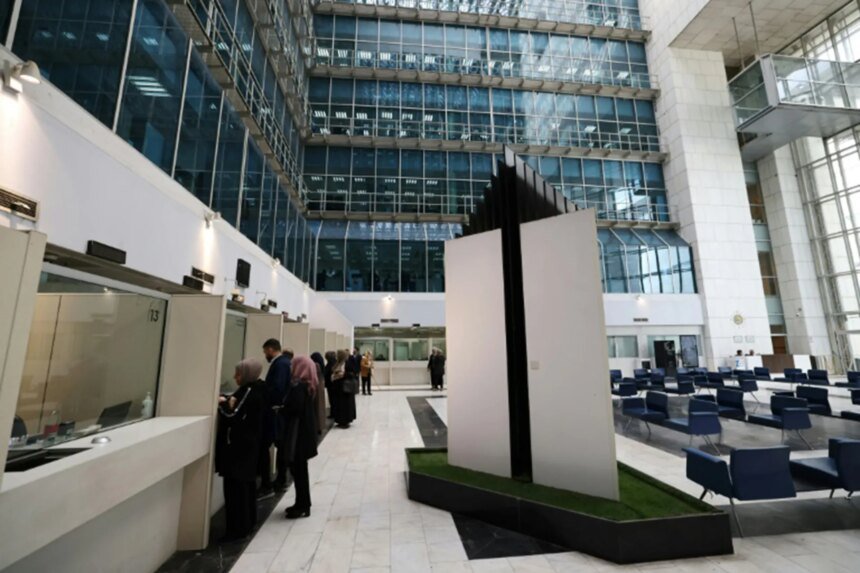
Baghdad – On the streets of Baghdad, the Iraqi citizen does not need numbers and reports to realize that the absence of the budget has begun to impose its presence on the details of his daily life. Projects are suspended, salaries are delayed, appointments are postponed, and ministries operate only within the limits of necessary spending, while the state continues to manage its affairs according to the temporary disbursement rule, with the impossibility of approving the 2026 budget and Parliament moving towards preparing the 2027 budget at the same time.
This comes at a time when there are increasing fears that financial obligations and uncompleted projects will be transferred to next year’s 2027 budget, which will add new burdens on public finances, in light of Iraq’s continued reliance on oil revenues as the main source of financing 90% of spending.
Read also
list of 4 itemsend of list
Mustafa Latif (a government employee) says that the continued failure to approve the budget directly affects the lives of citizens, stressing that Iraqi markets are witnessing a state of stagnation and a slowdown in economic activity as a result of the cessation of government spending and the delay in launching projects.
He added to Al Jazeera Net that the government and Parliament are required to expedite the approval of the budget, because of its impact on resuming projects and creating job opportunities for youth and graduates.
Latif points out that supporting the private sector should be one of the priorities of the new budget to contribute to reducing unemployment.

Late salaries and suspended projects
Citizen Ali Al-Masoudi from Sadr City explained to Al-Jazeera Net that the continued non-approval of the budget has disturbed the lives of citizens, especially with the delay in disbursing salaries and entitlements, noting that the duration of the delay has reached between 37 and 40 days in some departments and institutions.
Al-Masoudi adds that the absence of the budget was also reflected in appointments, especially in the health sector, as well as its impact on commercial and economic activity.
Al-Masoudi explains that many projects are still stalled due to the non-approval of the budget, citing a bridge project in Sadr City that was not completed despite a long period of time having passed since work began on it, which caused traffic jams in the region.
Posted liabilities
Jamal Kujar, a member of the Finance Committee in the Iraqi Parliament, revealed “shocking” numbers regarding the size of the financial obligations awaiting the Iraqi state, and explained that the obligations carried over to the 2027 budget will constitute a burden approaching half of the entire budget.
These obligations include 33 trillion dinars (about 25 billion dollars) of receivables to projects and contractors, in addition to 105-110 trillion dinars (about 80-84 billion dollars) loans owed to the three government banks (Rafidain, Al-Rasheed, and the Iraqi Trade Bank), which requires the government to pay them in parallel with its efforts to reduce the burdens of appointments and public spending.
He indicated in his interview with Al Jazeera Net that the ability of the 2027 budget to absorb the carried forward obligations will depend to a large extent on the security and military conditions in the region, because of their direct impact on Iraqi oil exports.
Koger pointed out that reopening the Strait of Hormuz or activating export lines through Türkiye, Syria, and Jordan will constitute decisive factors in determining the country’s financial situation.
He added that the temporary disbursement rule is limited to operational expenses, which do not contribute to achieving additional resources, which prevents the government from launching any spending outside it and leads to the cessation of new investment projects.
Koger explained that this mechanism is based on the last approved budget, and its performance is affected by oil prices, and makes the government closer to a caretaker government due to its limited capacity for new spending.

Financing and reform challenges
The financial scene in Iraq is becoming more complex with the decline in oil prices, at a time when the Iraqi budget depends almost entirely on oil revenues.
In his interview with Al Jazeera Net, economic expert Abdul Rahman Al-Sheikhly points out that continuing to finance the budget by relying on oil places public finances with major challenges, in light of the decline in the price of a barrel of oil.
He explains that the high cost of oil production – which may exceed $16 per barrel – in addition to the increase in transportation and insurance costs and the risks of exporting through the Strait of Hormuz makes confronting the budget deficit estimated at about 64 trillion dinars (about 48.6 billion dollars) more difficult.
Al-Sheikhly adds that addressing the crisis requires a package of reforms, the most prominent of which are:
- Reducing spending, especially government.
- Maximizing non-oil revenues by tightening control over the state’s resources of customs, taxes, and fees, and combating financial and administrative corruption.
- Encouraging local industries by relying on the private sector, after amending the laws protecting the national product and workers.
- Supporting the agricultural sector with equipment, fertilizers and seeds.
- Prosecuting corrupt people and recovering stolen funds.
Media reports indicate that the government of former Prime Minister Muhammad Shiaa Al-Sudani had completed the initial draft of the draft budget for the year 2026 before its departure, including broad financial commitments, including the confirmation of contracts, but the country’s entry into the elections and then the caretaker phase prevented it from proceeding with its approval.
The financial scene became more complex after the government of Prime Minister Ali al-Zaidi gained confidence on May 14, 2026, with an incomplete ministerial formation that included 14 ministers out of 23, as political differences led to a delay in completing the vacant ministries, especially Interior, Defense, and Planning, which was reflected in the government’s ability to prepare and send a draft integrated budget during the first half of the year.