

Published On 2/7/2026
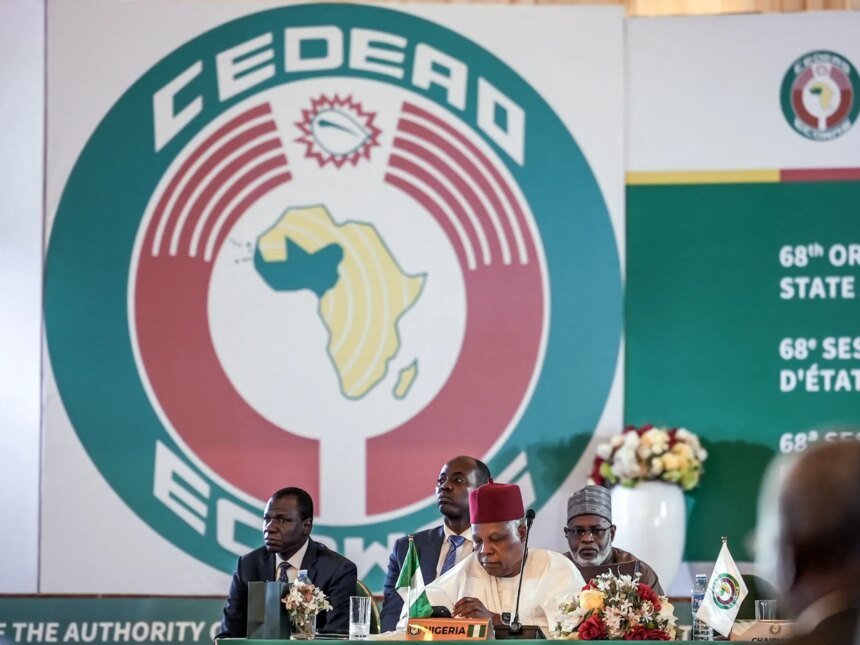
Political controversy escalated in Guinea-Bissau after the head of the mediation mission of the Economic Community of West African States (ECOWAS), Sierra Leone Foreign Minister Timothy Kaba, announced that a constitutional review would be put to a popular referendum, an announcement that was rejected by the team of former presidential candidate Fernando Dias, who accused the regional organization of exceeding its powers and legitimizing the actions of the ruling military, according to what Radio France Internationale reported.
This crisis comes about 7 months after the military took control of power in the country and canceled the electoral process, as the coup of November 26, 2025 cut off the announcement of the final results of the elections that took place in the same month.
The spokesman for the Dias team, which declared itself the winner of the elections, said that ECOWAS had exceeded its mission as a mediator, adding in a statement reported by French radio: “ECOWAS is only exaggerating the problem! No citizen of Guinea-Bissau can trust its neutrality anymore. By announcing the organization of a constitutional referendum, the organization is legitimizing everything that the military coups have done since they seized power. As mediators, they did not even consult the opposition.”
The radio indicated that the text of the constitution has not yet been issued by interim President Horta Ntam, but the opposition believes that a new constitution may have serious repercussions on the elections scheduled for December 2026.
Dias’ campaign body also accused the regional organization of “inconsistency,” stressing in a statement that “no foreign representative has the authority to announce or adopt constitutional paths, such as a referendum or constitutional reform, in the name of the citizens of Guinea-Bissau.”

ECOWAS responded
In response to these accusations, the ECOWAS Commission issued a statement last Monday, in which it strongly rejected the allegations of interference raised by the campaign team of candidate Fernando Dias, stressing that its mission operates exclusively under a collective mandate issued by the Assembly of Heads of State and Government, without interference in the internal affairs of member states. The Commission stressed that it “did not announce or adopt any constitutional path” in the name of the people of Guinea-Bissau, explaining that its discussions were limited to technical consultations with the national authorities regarding a political road map, and that its mission was limited to “communicating the broad outlines of the political road map that was discussed with the national authorities.”
The organization said in its statement that “such reporting should not be mistakenly interpreted as an attempt to determine the constitutional future of Guinea Bissau,” noting that this sovereign decision rests exclusively with the country’s institutions and its people. She also expressed her regret at attempts to portray her work as “foreign interference,” and called on all political actors to exercise restraint and engage in constructive dialogue that creates a climate conducive to national harmony.
Power in Guinea-Bissau is currently held by General Horta Ntam, who heads the supreme military command to restore national security and public order, along with a transitional government led by Prime Minister Elidio Vieira. The military authorities justified their intervention at the time with the prolonged post-election crisis and a high risk of destabilization.
Both ECOWAS and the African Union condemned the unconstitutional change of government and suspended Guinea-Bissau’s membership in some regional mechanisms, while continuing mediation efforts to facilitate a return to constitutional order, while ECOWAS affirmed its commitment to supporting a peaceful and comprehensive political process with national leadership before the general elections scheduled for December 2026.
Source: The island + African press + French press