

Published On 7/3/2026
The differences in positions inside Iran regarding the recent memorandum of understanding signed with Washington, with Qatari-Pakistani mediation, revealed the depth of the political debate taking place within the corridors of the Iranian regime regarding the limits of negotiation and who is authorized to make fateful decisions.
According to a report prepared by Asmaa Al-Naim for Al Jazeera, the signing of the memorandum came to reopen the file of “multiple decision-making centers” in the country to the public, especially after the disputes that were previously managed out of the limelight came out to Washington and at home alike, amid renewed questions about who bears the cost of strategic choices in this sensitive stage that followed a series of wars and assassinations.
On the front of defenders of the negotiating track, Iranian President Masoud Pezeshkian emerged, warning of the presence of internal and external currents seeking to undermine national unity and obstruct the agreements. He was supported in this by Parliament Speaker Mohammad Bagher Qalibaf, who launched an attack on those he described as extremists, demanding that they stop obstructing the negotiations.
This movement believes that diplomacy has become necessary to reduce the cost of war and ease economic pressures, in addition to resolving vital issues such as frozen Iranian funds and the future of navigation in the Strait of Hormuz.
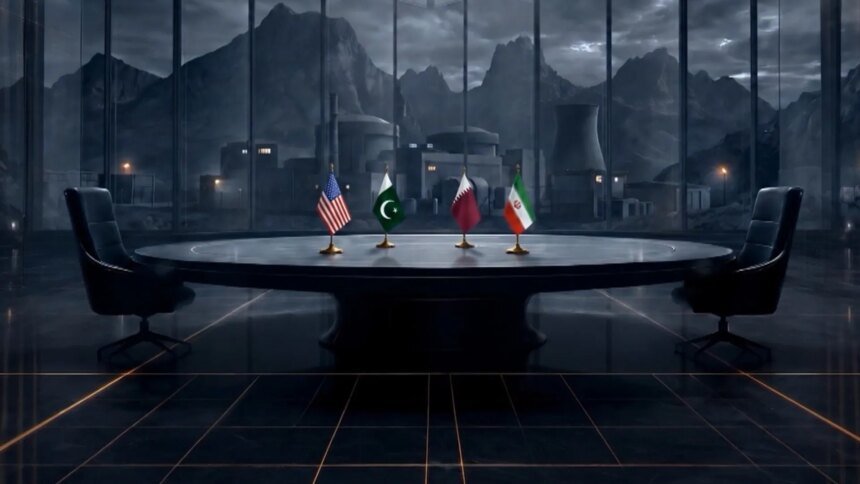
On June 18, Iran and the United States reached a memorandum of understanding stipulating the cessation of fighting, the lifting of the US naval blockade on Iran, and the reopening of the Strait of Hormuz, after its closure caused an increase in oil and gas prices and inflation rates.
Strong objections
On the other hand, the diplomatic track faced strong objections from within the regime’s structure. The Deputy Chairman of the National Security and Foreign Policy Committee in Parliament, Mahmoud Nabawyan, warned of Iran turning into an “American colony,” while Representative Amir Hussein Thabeti considered that Washington had achieved through diplomacy what it was unable to achieve in the war, especially in the Strait of Hormuz issue.
For its part, the Leadership Council of Experts entered the debate with an explicit call to adhere to the directives of the Supreme Leader and not to make concessions that affect the nuclear program or the tools of Iranian power.
At the heart of these discrepancies, the position of the Iranian Leader appeared as a reproduction of the duality of the position at the highest level. His letter indicated that he had a different opinion regarding the memorandum, but he expressed his approval of it after President Pezeshkian pledged to bear full responsibility for achieving Iran’s demands and proving the feasibility of the agreement for national interests, so that the institution of the Supreme Leader remains the center of gravity of those who are conservative, and the institution of the presidency is the center of gravity of those demanding achievement.
On the field level, observers observed a public absence of the Revolutionary Guards during the intensive negotiation phase led by institutional figures such as Abbas Araghchi and Muhammad Baqir Qalibaf from Switzerland to Doha. However, the tone of escalation and the positions of the Revolutionary Guards returned to the forefront as some paths faltered, an indication that the Iranian negotiation is not being conducted at the diplomatic table alone.
The Iranian government is currently facing double pressure: The first is to convince the outside of its ability to adhere to pledges, and the second is to convince the inside – burdened by economic crises and the decline of the currency – that negotiation does not mean giving up the tools of power. These negotiations with Washington will become a real test not only for managing the external conflict, but also for managing the complex balances inside Iran.