


Published On 7/3/2026
|
Last update: 04:41 (Mecca time)
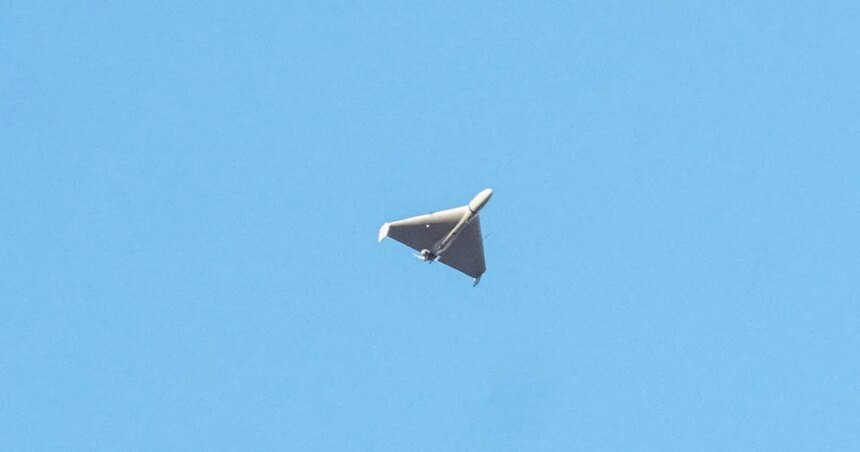
Newsweek magazine highlighted the Iranian Shahed-136 drone, considering that it has become one of the most influential weapons in modern wars, after it changed the equations of combat by combining low cost with the ability to exhaust advanced air defense systems, which prompted major countries such as Russia and America to reconsider their military strategies.
A report by journalist Tom O’Connor indicates that the “Shahed-136”, which is described as a mobile munition or “suicide drone”, was the result of decades of Iranian military development aimed at compensating for the air force’s limitations in confronting opponents who possess more advanced technologies.
Read also
list of 2 itemsend of list
The cost of production ranges between 20,000 and 50,000 dollars, and in some cases it may drop to only about 7,000 dollars, in exchange for interceptor missiles, the value of each of which reaches millions of dollars.
Newsweek quotes specialist researcher Akram Khareef as saying that the secret of “Shahed”’s success does not lie in its technical complexity, but rather in its simplicity and the possibility of producing it in large numbers, which allows air defenses to be overwhelmed with swarms of low-cost aircraft, and forces the opponent to consume expensive ammunition to intercept them.
The spokesman believes that this weapon has enabled Iran and Russia to impose disproportionate military and economic costs on their opponents, in addition to its psychological impact on the civilian population.
Project roots
The report reviews the roots of the project, explaining that the idea of the plane goes back to Western projects during the Cold War, most notably a German project called “Dar,” before Israel later developed the “Harpy” plane.
Experts told the magazine that Iran redesigned the idea, replacing the anti-radar guidance systems with satellite navigation systems, then increased the size of the plane and its operating range until the “Shahed-136” appeared in its current form.
According to the report, the development of the Iranian program was not the result of technological superiority as much as it was a response to conditions imposed by international sanctions and the Iran-Iraq war in the 1980s. These circumstances have prompted Tehran to invest in domestic drone and ballistic missile programs that rely on commercial components available on the market, while developing production networks that are not easily affected by sanctions.
Newsweek quotes researcher Steven Feldstein as saying that Iran was forced to search for low-cost alternatives after losing the ability to maintain the American military systems that it possessed before the Islamic Revolution, which led to the adoption of a policy based on gradual innovation and local manufacturing, a strategy that later resulted in a series of drones, all the way to the Shahed-136.
The simplicity of the design of the “Shahed” drone made it a weapon whose production is difficult to disrupt with sanctions, as it relies on available civilian components and flexible supply chains, which allowed Iran to continue manufacturing it despite Western pressure.
turning point
The report believes that the war in Ukraine represented the most prominent turning point in the popularity of this march, after Russia used its local version, “Ghiran,” extensively against Ukrainian targets, while Iran continued to develop new models and used them during confrontations with Israel, as well as during the American-Israeli war on Iran, which confirmed its operational effectiveness.
The magazine confirms that the simplicity of the “Shahed” design also made it a weapon whose production is difficult to disrupt with sanctions, as it relies on available civilian components and flexible supply chains, which allowed Iran to continue manufacturing it despite Western pressure.
Its effectiveness has also prompted other countries to seek to imitate it or obtain licenses to produce it, an indication that the concept of “cheap, high-impact weapons” has become one of the most prominent features of wars in the twenty-first century.
However, the report points out that Shahid’s superiority may not last forever, as experts expect that the rapid development in electronic warfare technologies and air defense systems will reduce their effectiveness in the future, in the context of an ongoing race between means of attack and defense on modern battlefields.