Navigational data revealed an almost complete cessation of ship traffic through the Strait of Hormuz from the route announced by the Sultanate of Oman about a week ago in coordination with the United Nations, as three ships crossed the Omani route adjacent to the Musandam Peninsula, compared to an almost total trend of today’s transit movement – which amounted to 11 ships – to the Iranian route.
The ongoing transformation coincides with several variables that began with attacks attributed to Iran on ships that attempted to cross the Omani route, which initially prompted the ships to avoid the Omani route for hours, then head to the route designated by Tehran south of Qeshm Island.

The Al Jazeera Network’s open source unit had previously monitored the crossing of at least 120 ships through the Omani corridor since it was announced on June 24, even before the recent shift.
Read also
list of 3 itemsend of list
Almost complete stop
Navigational data from the Marine Traffic platform show the crossing of an oil tanker and two ships transporting bulk goods and containers from the Omani route since this morning, in the lowest transit movement, compared to the crossing of 11 ships, including two oil tankers and two liquefied gas tankers, and seven ships transporting goods and containers from the Iranian route.

Among those ships that ignored Iranian warnings to cross the Omani route is the “beloved” oil tanker (AL MAHBOOBAH) flying the Saudi flag, heading to the Saudi port of Jubail, coming from the Chinese port of Yangpu.
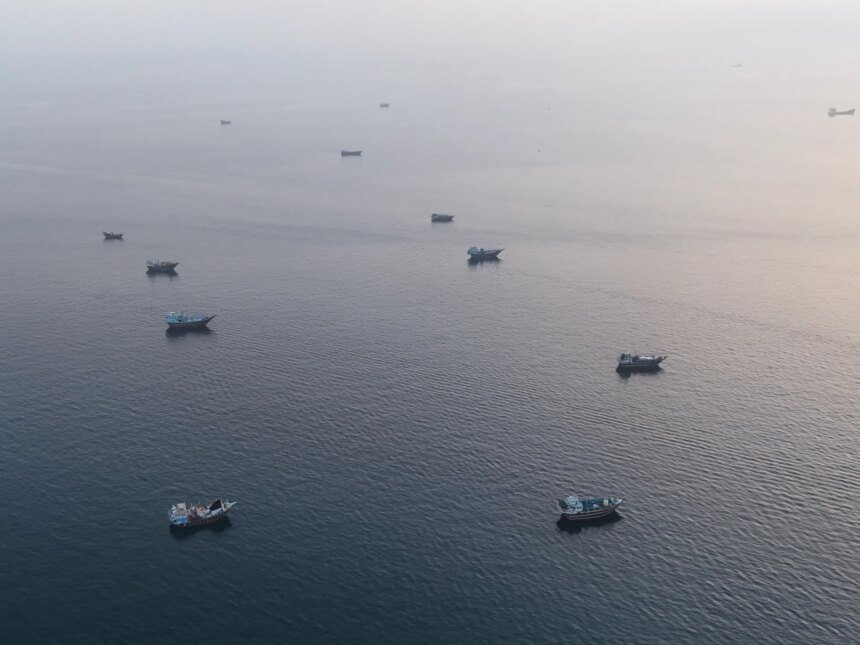
The live broadcast map also shows the positioning of dozens of ships within the area designated by Iran for crossing the Strait, an indication of continued transit through the Iranian route.
On some days, the Hormuz transit movement witnessed a clear preference for the Omani route before the Iranian Strait of Hormuz Management Authority announced on the evening of Thursday, June 25, that any sailing outside the routes specified by the authority would not be covered by a guarantee of safe passage, nor would it enjoy insurance coverage or related responsibilities, a statement that was followed by successive targets that included two ships.
When did the transformation happen?
After the Sultanate of Oman, in coordination with the International Maritime Organization, announced a safe route for ships to cross along the Musandam Peninsula, which was followed by dozens of ships heading to the new crossing route without obtaining an Iranian permit, Iranian television quoted the naval forces of the Iranian Revolutionary Guard as saying that several parties announced, hours ago, a new route for ships to cross in the Strait of Hormuz without informing or coordinating with Iran, considering this route to be “completely unacceptable and dangerous.”
While several ships changed their course and avoided the Omani route, for fear of being targeted, other ships continued to cross in light of the American emphasis on protecting maritime navigation, but the movement witnessed major turmoil after an oil tanker was targeted.
Navigational data following the Iranian targeting the day before yesterday of the KIKU oil tanker, which was carrying two million and 11 thousand barrels of Qatari oil, reveal a complete shift in transit routes, despite the United States resuming new attacks on Iran and announcing the continuation of ships crossing the Strait of Hormuz freely.

Navigational data reveal that ships avoided crossing the Omani corridor after targeting the tanker “Kiko”, and that they began crossing the Iranian route extending south of the Iranian island of Qeshm.
According to monitoring conducted by the unit, the Omani corridor remained empty from 12 noon Doha time until the next morning.
Did Iran regain Hormuz?
The ongoing shift in transit traffic coincides with the holding of the first round of the Hormuz Joint Committee, which is being conducted by the Iranian Deputy Foreign Minister and the Omani Minister of State for Foreign Affairs in Oman.
The Iranian government has previously announced that it will hold talks with the Sultanate of Oman to determine a framework for managing maritime services in the Strait of Hormuz in the future, in reference to the Omani corridor, which Iran officially rejects.
On the 12th day of the signing of the memorandum of understanding between Washington and Tehran, and 122 days after the outbreak of war, Axios quoted American officials as saying that it had been decided to stop all combat activities with Iran.
The delegations of Washington and Tehran are scheduled to meet tomorrow, Tuesday, in Doha to resolve the dispute over the Strait of Hormuz, according to Axios.