
The low-key says the most at the Elisabeth Ohlson exhibition at Kulturhuset
Already on the outside of the gallery at Kulturhuset, they have hung it up. Elisabeth Ohlson’s iconic (sorry) staging of the Last Supper. Jesus, twelve perky drag queens and a fleeing French bulldog. It is a stance worthy of the artist. We don’t hide, we invite. Welcome to be horrified or delighted. On the way from “Elisabeth Ohlson – Retrospective” (open until November) I meet an acquaintance on the way in and shout “It was fun!”
What bizarre words, I immediately think. Cool? I have just been standing and hyperventilating in the “death room”, with photographs of the artist’s own death in 2024, as well as her father’s. Also some pictures from the artist’s Einar’s funeral, in tasteful small format, conveys an acute sense of sadness.
“Fun”. Yes, Elisabeth Ohlson is still fun. Alive or dead. The most famous pictures, “Ecce Homo” and other series, where the biblical stories are mixed with homosexual iconography, often feel like a party, even if hate crimes are a common theme. You will understand if you watch the documentary”Elisabeth Ohlson: Ecce Homo and the last self-portrait”, as shown in the exhibition, that she often invited friends to join. If you see a neo-Nazi in the picture, it’s probably a leather gay acting.
“It’s really terrible”says an elderly woman at the opening – in front of a photo where a church is half filled with a healing congregation, half with lesbians – “Terrible”, replies her friend. As if this were completely serious. Yes, that is seriously, but it’s also a bizarre joke, it’s camp. It is interesting to see how it is received by a heterosexual audience, which sometimes seems to lack humor. Not because they are in the majority at the opening. I have never seen such a high density of handsome silver flats in the 60s. I seriously consider calling some friends there who might be interested in a coming-of-age romance, but stop myself.
Excuse the stitch track. It strikes me at the exhibition that I don’t care that much about “Ecce Homo”. I see Jesus fat cock and feel indifference. The shock factor is certainly still there for many visitors but beyond that, once you get used to it, the work height is not high in that series. And then there are those cheerful 21st century colors and advertising aesthetics. Ulrika Knutson writes in an accompanying exhibition text that the art world never accepted Ohlson’s aesthetics and that it was good, in retrospect. One can only agree. These images belong in a wider public, they kind of play with it.
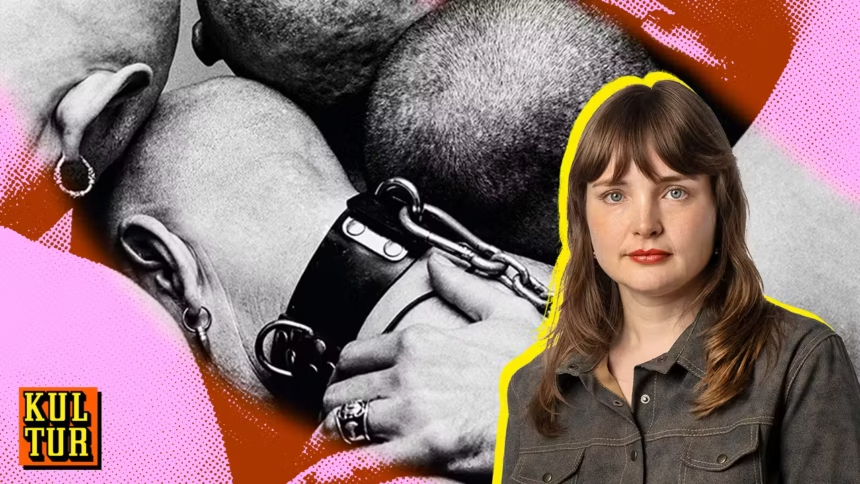
The photo series that really stand out for me are “Könskrigare” and “Laderbögar” from the early 2000s. These black and white photos of trans people, lesbians and gays are more quiet and heartfelt in their expression. It’s sensual and it’s serious. I feel enveloped by a queer community over time. There are no grand gestures here, but they are real. And the photo of Elisabeth with the camera straddling a broken-down flat without a shirt, well, it’s just sexy.
In a secluded room are some memorabilia and real hate letters sent to her during the “Ecce Homo” hysteria of the late 90s. There are also two photographs of Tommy Bornecrantzthe man Elisabeth photographed for a few years, who worked at Skansen. He is first photographed in 1989 surrounded by a group of happy cows, and then four years later in the hospital bed, dying of AIDS, emaciated. A story that is told in the documentary, where Elisabeth also talks about how she hung out in ward 53 at SÖS with her friends. It was the ward for those who were dying of the disease. I was so young, she says, and some of them were younger than me. They coughed like 90-year-olds. Then they were gone.
These photographs are striking and a little hidden, but really central. Both the queer joy and the death were there, so early.