Published on 6/26/2026
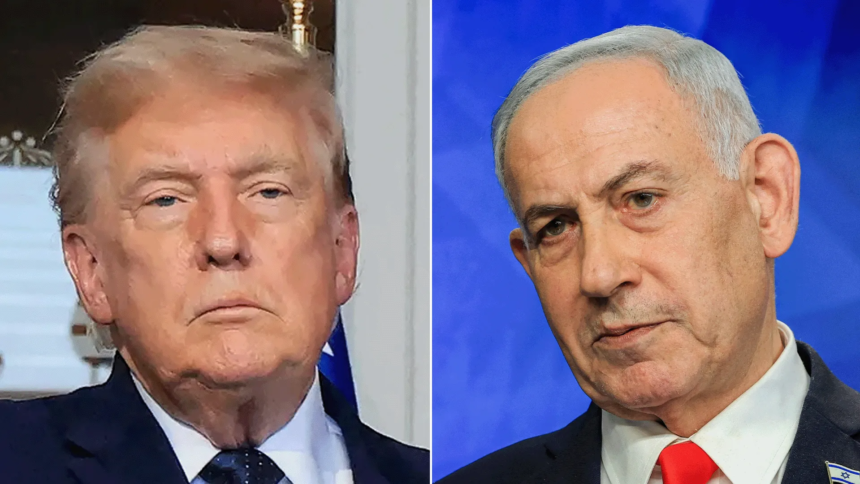
The divergence that surfaced between the United States and Israel following the American-Iranian memorandum of understanding to stop the war represents a historical turning point in the relationship between the two allies, as the past decades have not witnessed such a public escalation of disputes, with mutual accusations and harsh criticism that reached the point where US President Donald Trump described Israeli Prime Minister Benjamin Netanyahu – wanted by the International Criminal Court – as “crazy” and “a fraud.”
The episode (6/25/2026) of the “Scenarios” program reviewed the dimensions of this rift, addressing the shifts in American public opinion, whose polls showed that two-thirds of Americans consider the war on Iran unnecessary, and that a large percentage holds the Israeli leadership responsible for dragging their country into it.
In contrast, approximately the same percentage of Israelis believe that the war was necessary and should have continued.
The episode raised questions about the depth of this dispute and the chances of it developing into a real dispute, and reviewed the reasons for the root disagreement in the calculations and interests of each party, as Washington believes that the war achieved its goals by concluding the memorandum of understanding that allows the containment of the nuclear file and the reopening of the Strait of Hormuz, while Tel Aviv considers the memorandum an early end to a war that did not complete its goals of dismantling the Iranian nuclear program and the ballistic missile program.
The discussions showed that the roots of the dispute go back to the Gaza war two years ago, when many Americans, both Democrats and Republicans, felt dissatisfied with the killing of tens of thousands of civilians, which was reflected in a poll that showed that Americans under the age of 30 support the Palestinians rather than the Israelis.
In the same context, the Democratic Party primaries in New York revealed the success of 3 candidates opposed to Israeli policy at the expense of faces described as veterans, which indicates a profound change in the political scene, according to experts.
Professor of International Affairs Melanie McAllister explained that the distinction between criticism of Israel and anti-Semitism has become more acceptable in America, referring to the statements of Vice President J.D. Vance, who stressed that criticizing the Israeli government does not mean anti-Semitism.
Israel is facing a transformation
In agreement with this proposition, Israeli journalist Gideon Levy believes that Israel is facing a dramatic shift in its relationship with Washington, and that the war was the drop that spilled the cup, with American public opinion changing, including among the Jewish community in America, which no longer supports Israel unconditionally.
On the other hand, Director of the Stimson Center, Hafez Al-Ghawil, stressed that the train of change has started around the world, with the emergence of voices from within the Jewish communities separating Zionism from the Jewish religion.
He pointed out that the electoral victories of candidates opposed to Israel in New York, which includes the largest Jewish community outside Israel, represent an important indicator that standing against Israel no longer causes political loss for the candidates.
In clear contrast to the American scene, Levy explained that Israeli society is moving towards more “extremism”, as the left has become almost absent, and most Israelis believe that Israel has the right to do what it wants, and that there are no innocents in Gaza.
While some believe that the current differences are “circumstantial” and will not lead to a divorce between the two allies, the program’s experts confirm that the relationship will not return to what it was, and that American support will become conditional and not absolute.
According to a report broadcast during the episode, recent opinion polls showed that only 23% of Americans see themselves as supportive of Israel, and the percentages also showed that support for Israel among Republicans is less than 50% for the first time.
The panel’s guests suggested that Europe would soon follow the American footsteps in distancing itself from Israel, with a radical change in the position on Israel, which has become viewed more as a burden than an ally, amid expectations of an acceleration of change in the relationship during the coming period, with the alliance remaining but on more rational and pragmatic foundations.