Published on 6/25/2026
|
Last update: 00:46 (Mecca time)
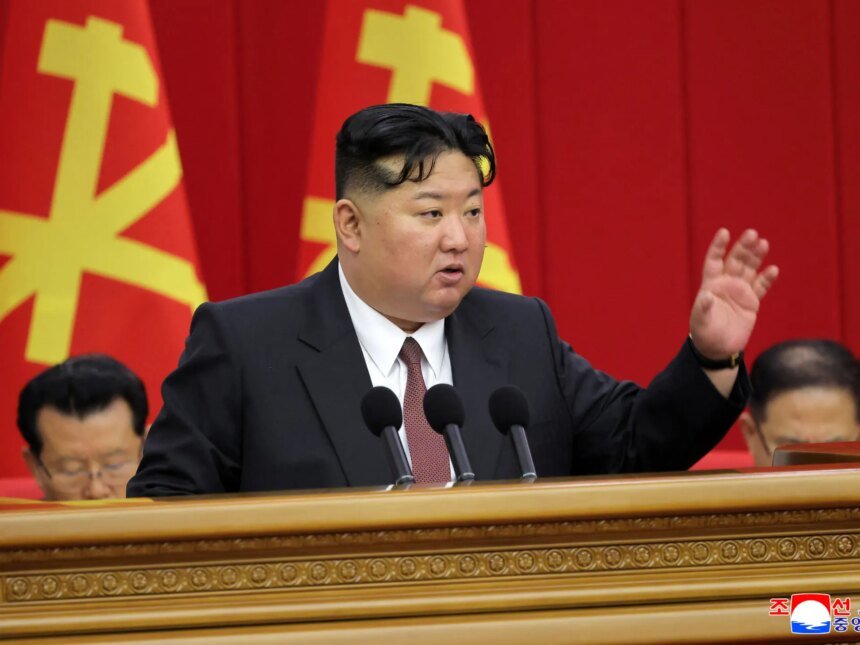
North Korea is accelerating to expand its nuclear industry as part of its declared strategy to strengthen deterrence against what it describes as growing threats from the United States of America.
This strategy has become clearer in repeated statements by North Korean leader Kim Jong Un, in which he pledged to equip warships with nuclear missiles, double the production of fissile material used in weapons, and expand the country’s nuclear arsenal in general.
What messages does Pyongyang want to convey through this declared policy? What is the goal behind accelerating nuclear industry activities? Where does North Korea’s nuclear arsenal stand today?
Neutralization of nuclear disarmament
Nuclear weapons are now an entrenched part of the country’s constitution as well, with an amendment earlier this year giving Leader Kim constitutional command authority over nuclear forces, as well as the power to delegate launch authority to a separate command, a move analysts say is aimed at fortifying against a “decapitation strike” (i.e. a strike targeting the senior leadership).
The British newspaper The Guardian – in its analysis – quotes Lee Ho-ryong, a researcher at the Korea Institute for Defense Analysis, as saying that Pyongyang seeks to consolidate the idea that the principle of denuclearization no longer applies to North Korea, and to develop military capabilities that force Washington to take it seriously.
The researcher adds in her comment: “Their point of view is that this issue is not something that can be reduced or undone through negotiations at the present time.”

Officially, denuclearization remains South Korea’s stated goal in its dealings with North Korea, and South Korean President Lee Jae-myung has made this a fundamental pillar of his government’s policy.
Last May, US President Donald Trump and Chinese President Xi Jinping reaffirmed what the White House described as a “common goal” of denuclearizing North Korea. However, when Xi visited the capital, Pyongyang, the Chinese statements did not contain any reference to this matter.
Researcher Lee Ho Ryung believes that Washington and Seoul will continue to adhere to nuclear disarmament as their official goal, but the practical focus is likely to shift towards “arms control,” that is, restricting and gradually reducing the nuclear arsenal rather than eliminating it completely.
The Iranian lesson
North Korea often makes exaggerated claims about the strength of its defense capabilities, but beyond this enthusiastic rhetoric – as the Guardian says – analysts believe that the question is no longer centered around whether North Korea has nuclear weapons, but rather about why it appears to need so many of them.
The recent US-led strikes against Iran have reinforced a lesson North Korea has long learned: that states without a fully operational nuclear arsenal expose themselves to the risk of attack rather than achieve deterrence.
The British newspaper estimates that North Korea’s arsenal is designed to be able to withstand a first strike, and includes mobile launch platforms by land and railways, fortified underground facilities, and a growing fleet of submarines.
This year, North Korea began testing cruise missiles capable of carrying nuclear warheads from a new 5,000-ton destroyer, and Leader Kim pledged that his country would build two additional warships every year for the next five years.
Analysts believe that Pyongyang believes it needs a much larger arsenal to balance the size and complexity of the forces allied against it.
“It faces the US nuclear umbrella, joint US-South Korean forces, and trilateral cooperation with Japan,” says Hong Min, a senior researcher at the state-funded Korea Institute for National Unification. “It is more than just minimal deterrence.”
The era of acceleration with Kim
Since Pyongyang’s first nuclear test in 2006, the regime has developed what some experts describe as an effective nuclear capability, including intercontinental ballistic missiles capable of reaching the US mainland.
Under Kim Jong Un – who took power in 2011 – North Korea accelerated its nuclear weapons program in defiance of United Nations sanctions, a move that observers believe is aimed at reducing the possibility of it one day being exposed to a regime change attempt by the United States.
North Korea has not conducted any nuclear test since 2017, but according to experts, it has demonstrated progress in missile technology and increased its weapons stockpile, in line with Leader Kim’s pledge – last August – to seek “a rapid expansion of nuclear capabilities.”

An arsenal shrouded in mystery
Because of Pyongyang’s policy of ambiguity regarding its nuclear arsenal, it is difficult to estimate the exact size of this arsenal. But it is believed – according to The Guardian – that North Korea has collected about 50 nuclear warheads, which is information that cannot be officially confirmed.
Last April, the head of the International Atomic Energy Agency, Rafael Grossi, said that North Korea had made “extremely dangerous” progress in its ability to produce more nuclear weapons.
An American research center also suggested – during the same period – that North Korea had completed the construction of a facility dedicated to uranium enrichment in Yongbyon.
The research center explained that the suspected new enrichment facility in Yongbyon, and another facility at the Gangsun site near Pyongyang, had not been announced to international nuclear bodies.
These findings are consistent with an assessment issued by the International Atomic Energy Agency a year ago, which stated that Pyongyang was building an enrichment facility in Yongbyon that could be used to produce materials suitable for making nuclear weapons.
Earlier this year, South Korean President Lee Jae-myung said that North Korea produces enough materials to make between 10 and 20 nuclear weapons annually, in addition to developing intercontinental ballistic missile technology.