Continuous updatingcontinuous update,
Published on 6/26/2026
|
Last update: 12:19 (Mecca time)
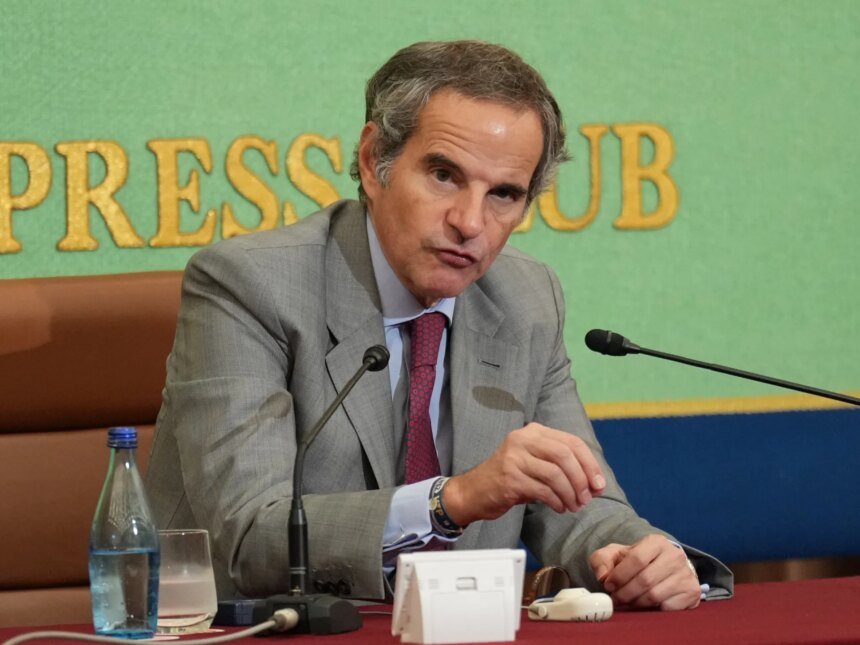
The Director-General of the International Atomic Energy Agency, Rafael Grossi, said, “The agency has a memorandum of understanding that stipulates its supervision of the inspection of Iranian nuclear facilities, while Tehran warned that the American military presence in the Gulf destabilizes security and provokes division in the region.”
Grossi confirmed in a press conference on Friday that the agency is “ready to move forward with its technical work in Iran,” expressing his hope that the agency’s experts will be given the opportunity to enter Iranian nuclear sites soon.
Grossi pointed out the need for the agency’s inspectors to be in Iran to ensure that the agreement between Tehran and Washington is reliable. He also stressed that the International Atomic Energy Agency is an independent organization and will carry out inspections on its own, stressing that inviting America or any other observing party to participate in the process remains a decision up to Iran.
He explained that the details of the agency’s work in Iran and the composition of the coordination committee for the inspection process will be determined by the Iranian-American negotiations.
Regarding Iranian highly enriched uranium, Grossi stressed that thinning Iranian highly enriched uranium or transporting it abroad remains one of the proposed solutions, provided that Tehran approves, stressing that agency experts believe that Iranian nuclear materials have not been transferred since their last inspection in 2025, but they need to confirm that.
Disagreement regarding the administration of Hormuz
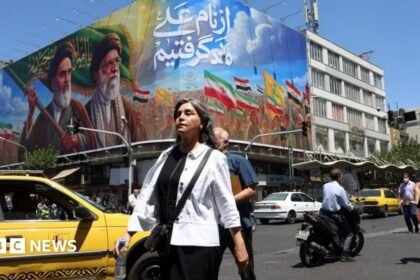
In a statement issued today, Friday, the Iranian Ministry of Foreign Affairs said that what was agreed upon in Clause Five of the Memorandum of Understanding between Tehran and Washington is the approved basis for managing navigation in the Strait of Hormuz.
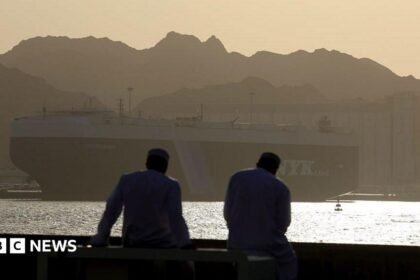
Yesterday, Thursday, the Iranian Revolutionary Guard Navy warned against ships sailing outside the routes determined by Tehran in the Strait of Hormuz, considering that any new corridor announced without coordination with it is “unacceptable and entails extreme danger,” in a position that reflected Iranian discomfort with the temporary route that the Sultanate of Oman announced opening in its part of the strait.
Muscat had announced the provision of a temporary, free sea lane in the Strait of Hormuz, in coordination with the International Maritime Organization, with the aim of organizing the movement of ships and ensuring their safe passage without imposing transit fees.
The Revolutionary Guard Navy responded by saying: “Some parties” announced a new route without informing Tehran, stressing that safe crossing and the only permitted route through the strait is the one determined by Iran.
The Omani move came at a time when Iran confirmed that the state of the Strait after the war would not return to what it was before, and that it would collect fees in exchange for providing services to ships crossing the Strait.
However, Omani Foreign Minister Badr al-Busaidi said on Thursday that the route provided by his country would be free, while his American counterpart Marco Rubio said, during a meeting with his Gulf counterparts in the capital, Manama, that the United States would not accept imposing any fees on crossing the strait, regardless of its name.
Inspectors return
A few days ago, Steve Witkoff, US President Donald Trump’s envoy, told members of the US Congress during a secret briefing that Iran will invite the International Atomic Energy Agency to inspect its nuclear sites, and will begin work to identify and reveal the locations of enriched materials in Tehran.
Witkoff informed leaders in Congress and members of committees related to national security that the memorandum of understanding concluded by the United States with Iran did not include any side agreements, but a side message was drafted between Tehran and the International Atomic Energy Agency, including extending an invitation to the agency.
Two informed sources told the Associated Press that Witkoff revealed during the briefing that there was a letter and invitation addressed to the Director-General of the Agency allowing him to bring American nuclear inspectors into Tehran.
The United States and Iran agreed to settle the issue of the fate of the stored enriched materials according to a mechanism agreed upon between the two parties, in accordance with the timetable mentioned in the seventh paragraph, with the minimum methodology being to reduce its concentration in place under the supervision of the International Atomic Energy Agency.
The two parties also agreed to discuss the issue of enrichment and other agreed-upon issues related to Tehran’s nuclear needs, based on a satisfactory framework agreed upon during the final agreement.