Published on 6/24/2026
The 2026 FIFA World Cup is characterized by an unprecedented abundance of goalscoring, with matches so far scoring a 25% higher goal rate compared to the same period in previous editions, making this edition one of the most exciting offensively in the history of the tournament.
It is likely that the most prominent reasons for this increase are due to the ball approved by the International Federation of Association Football (FIFA), in addition to other organizational changes that directly affected the format of matches.
Read also
list of 2 itemsend of list
FIFA explained that the 2026 World Cup ball was designed with deep stitching that provides ideal stability during flight, while players and coaches confirmed that its high speed makes reaching the goal easier, especially for long shots and fast balls, in addition to improving control in wet conditions.
Austria national team coach Ralf Rangnick said that the ball is “fast like a cannonball,” adding: “When it is shot strongly and at the right angle, it becomes very difficult for the goalkeepers to deal with it.”

Longer pauses… and a higher attack tempo
The tournament also witnessed the adoption of additional pauses designated for drinking water, in a new procedure applied for the first time, which indirectly increased the duration of the actual matches, and in turn contributed to the increase in the number of goals.
This resulted in 121 goals being scored in the first 40 matches of the 2026 World Cup, scored by 88 different players, most of whom were stars of the major European leagues.
Players from the three major leagues in Spain, England and Germany have scored more than half of the tournament’s goals so far, with English Premier League players topping the list.
In one of the most prominent matches, the confrontation between the Netherlands and Sweden ended with a 5-1 victory for the Netherlands, while all six goals came from players active in the English Premier League during the 2025-2026 season.

Big clubs dominate the scorers list
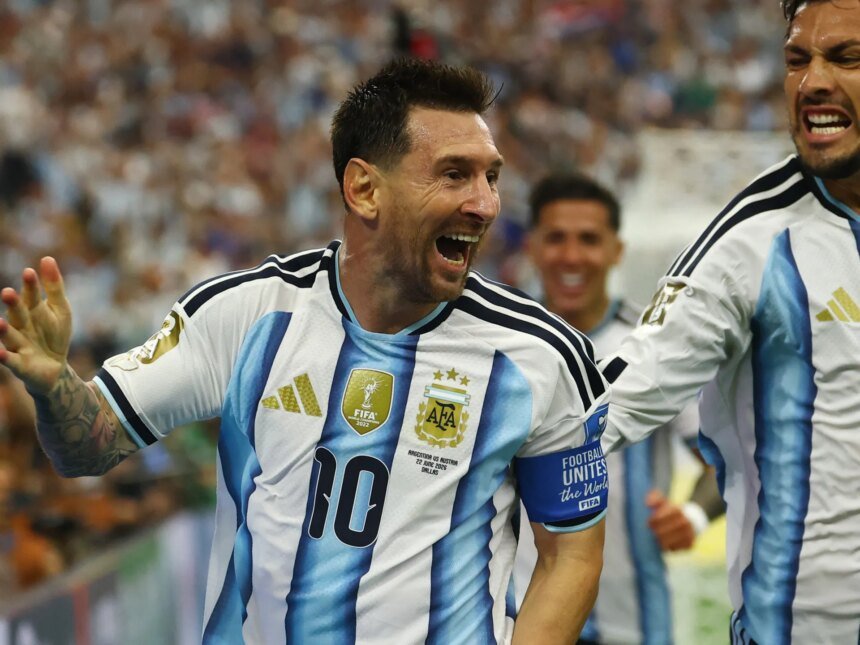
Real Madrid and Liverpool players topped the scorers’ lists in the tournament, as well as Inter Miami, thanks to the great influence of one star, Lionel Messi.
English Premier League players scored 28 goals, compared to 16 goals for German League players, 11 goals for the Spanish League, 7 for the French League, 5 for the Italian League, in addition to 8 goals for American League players.
Messi scored a hat-trick against Algeria and two goals against Austria, while the other goals were scored by Peter Moses (FC Dallas), Matias Galarza (Atlanta United), and Finn Surman (Portland Timbers).

Dominance of the English Premier League and effectiveness of Real Madrid stars
When announcing the official lists, FIFA revealed that about 200 professional players are active in England, nearly double the number of players in Germany (109), which was directly reflected in the distribution of goals.
Real Madrid and Liverpool top the list of the most influential clubs, as Real Madrid players scored 6 goals, including 3 by Kylian Mbappe, two goals by Vinicius Junior, and one goal by Jude Bellingham.
As for Liverpool, its players scored multiple goals through Cody Gakpo (two goals), Virgil Van Dijk, Alexander Isak, and Mohamed Salah, who was among the club’s ranks when the national team lists were announced.
Bayern Munich scored 4 goals through Harry Kane (two goals), in addition to Jamal Musiala and Luis Diaz, while Manchester City was among the most represented clubs with 19 players, and its star Erling Haaland scored two goals.

Ronaldo makes history again
The tournament also witnessed historic individual numbers, as Cristiano Ronaldo became the second oldest player to score in World Cup history at the age of 41 years and 138 days, behind Cameroonian Roger Milla (42 years and 39 days).
Ronaldo also became the oldest European player to score in a major tournament (the World Cup or the European Nations Cup), and raised his tally to 10 goals in the World Cup, topping the list of Portugal’s all-time top scorers in the tournament, surpassing Eusebio (9 goals).

On the way to a record
The 2026 World Cup is set to break the record set in the 2022 edition, which witnessed 172 goals in 64 matches, while the current edition will hold 104 matches, making it expected to record an unprecedented number in the history of the tournament.