The United States and Iran offered differing accounts on Tuesday over whether Tehran had agreed to allow international nuclear inspectors to visit its most sensitive nuclear sites, underscoring the complexity of the negotiations to reach a lasting peace.
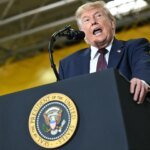
Mr. Trump said in a post on social media on Tuesday that Iran had “fully and completely agreed to the highest level Nuclear inspections,” adding that Iranian officials who claimed otherwise were making false statements. “If they did not agree to this, there would be no further negotiations!” he added.
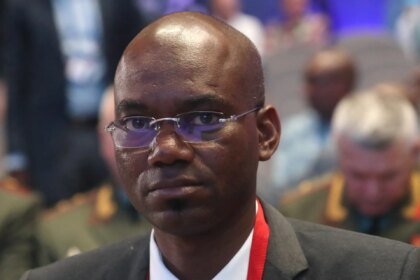
The comments came hours after Esmail Baghaei, Iran’s foreign ministry spokesman, responded with a flat “no” when asked if Tehran, in the latest round of peace talks, had agreed to permit inspectors from the United Nations to access its war-damaged nuclear sites. Mr. Baghaei told a news conference in Tehran that the two sides had not discussed nuclear issues in any detail, according to Iranian state media.
The divergent accounts of what was agreed in the latest U.S.-Iran talks in Switzerland on Sunday and Monday underscored the distrust and confusion surrounding the negotiations, as the two sides seek to hammer out a lasting deal to end the war.
Vice President JD Vance had suggested there was consensus on the question of access for inspectors on Monday, saying “the Iranians have agreed to invite I.A.E.A. inspectors back into their country,” referring to the International Atomic Energy Agency, the U.N. nuclear watchdog. Mr. Vance hailed the apparent point of agreement as an early win for U.S. negotiators and said it was the “first step toward permanently ending a nuclear weapons program in Iran.”
Soon after, Mr. Baghaei told the official Iranian state news agency IRNA that Iran had made “no new commitments” for inspections. Any engagement with U.N. inspectors, he said, would take place “under existing procedures” set by Iran’s government, but he did not elaborate.
Rafael Grossi, the head of the I.A.E.A., suggested in an interview with NHK, Japan’s public broadcaster, that his agency intended to secure access to Iran for its inspectors as soon as possible, with the timeline and locations yet to be confirmed. “We think that the sooner the better, especially since this agreement has a time frame of 60 days, so we will have to be working without losing much time,” he said, referring to the preliminary U.S.-Iran agreement signed last week that paused hostilities for 60-days to allow for further talks.
The preliminary agreement between the two sides committed Iran to letting the agency supervise the “down-blending” of its stockpile of highly enriched uranium, but Iranian officials subsequently said that the nuclear issue would only be addressed at a later stage in the talks.
The United States is seeking assurances from Iran that it cannot covertly develop nuclear weapons in the future. Iran has always insisted that it was not seeking such weapons, but it has enriched uranium close to the levels used in atomic bombs, far beyond what is needed for civilian uses.
Iran previously granted access to international inspectors under the 2015 nuclear deal negotiated by former President Barack Obama and other world powers. But after Mr. Trump withdrew from that agreement in 2018, Iran began restricting the inspections and ramped up its enrichment. Then, after joint U.S.-Israeli attacks on the country’s nuclear sites in June last year, Iran halted most inspections.
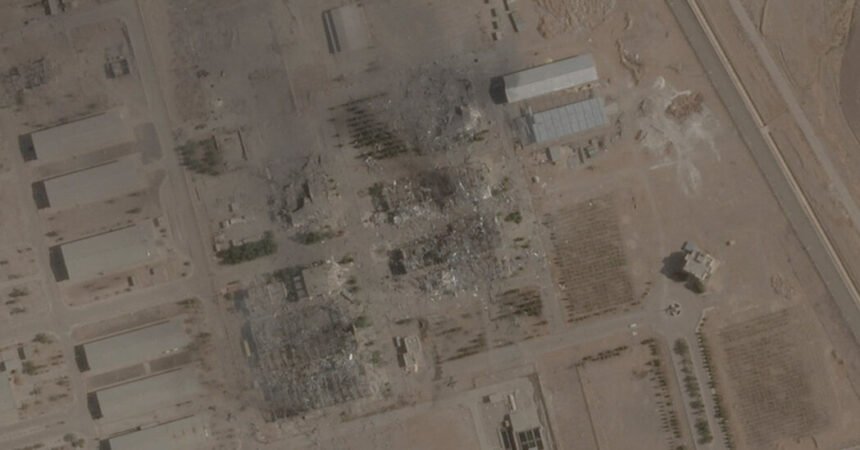
The country’s three key nuclear sites, Natanz, Fordow, and Isfahan, sustained severe damage in those U.S.-Israeli strikes, according to satellite images, but the extent of the damage and progress of any subsequent repair work is unclear.
Iran has said that its stockpile of highly enriched uranium, the crucial ingredient of a potential nuclear weapon, was destroyed or buried in the 12-day war, but no independent agency has been able to access the sites and assess their status.