Published on 6/23/2026
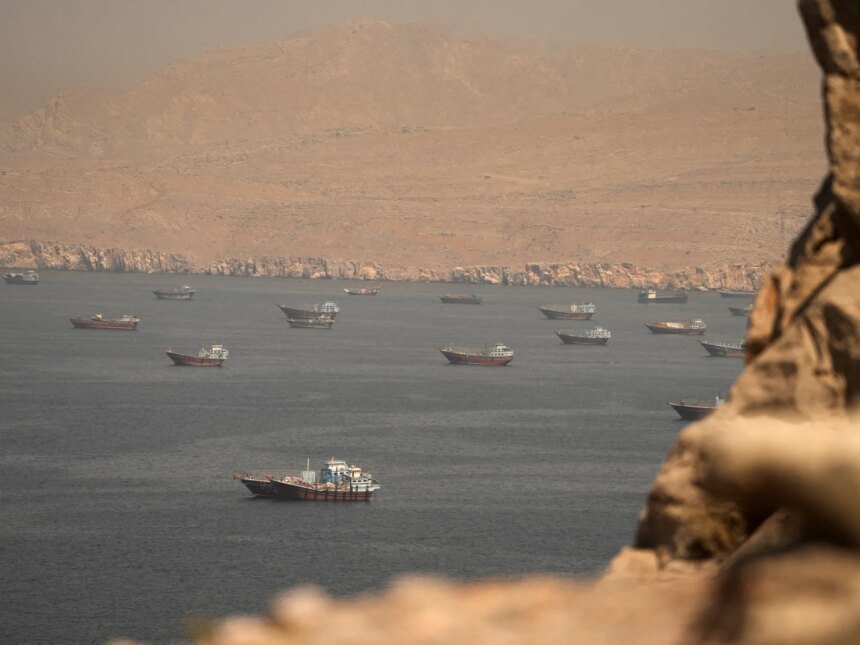
The United Nations International Maritime Organization said on Tuesday that an evacuation plan for hundreds of ships carrying 11,000 sailors stranded in the Strait of Hormuz is currently underway to help them cross, after reaching a ceasefire agreement between Iran and the United States.
A spokesman for the organization announced the start of coordination with ships in preparation for the evacuation process, without specifying a time frame. The organization also stated that it had obtained the necessary security guarantees, and had carefully verified the availability of safe navigation conditions.
“This large-scale operation will be carried out in close cooperation with Iran, the Sultanate of Oman, all other coastal countries in the region, the United States and the maritime transport sector,” the organization’s Secretary-General Arsenio Dominguez said in a statement.
The IMO announcement included instructions from Oman on how ships should pass through the Strait, the narrow waterway leading to the Arabian Gulf, through which a fifth of global oil and natural gas trade passed before the war.
Two temporary tracks
In a separate statement, the Omani Ministry of Defense said that the evacuation process will take place in stages according to the international organization’s plan that was discussed over a period of months. She added that, given the high risk of collision under the current circumstances, it is necessary to evacuate ships gradually and in an organized manner.
The Ministry stated that what is known as the “traffic separation scheme” is not safe for use at the present time, and indicated the possibility of using two temporary lanes north and south of the scheme.
According to the movement plan, each ship will be contacted individually and informed of its transit day, which was determined by the authorities with whom the International Maritime Organization coordinates.
Meanwhile, navigational data monitored by the Al Jazeera Network’s open source unit revealed that transit traffic through the strait has continued since the announcement of the US-Iranian agreement, and has increased at a remarkable rate compared to the week that preceded the announcement.
According to monitoring, 20 ships have crossed the Strait of Hormuz since the morning of June 23, bringing the total number of ships crossing since the closure was announced on June 20 to 70 ships.
The plan, adopted by the International Maritime Organization in 1968, established shipping lanes through Iranian and Omani waters in the strait.
Floating mines are among the main dangers threatening navigation in the waters surrounding the Strait of Hormuz.