Published on 6/22/2026
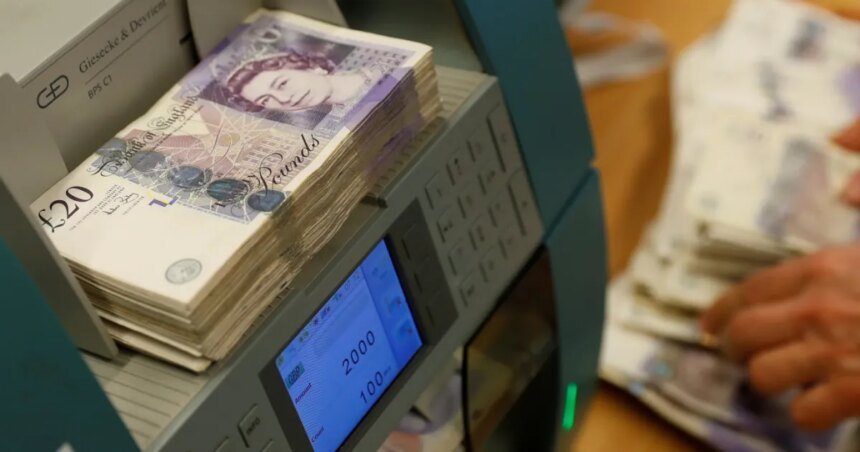
The pound sterling held firm and British bonds stabilized on Monday after British Prime Minister Keir Starmer announced his resignation, with markets awaiting the possibility of Greater Manchester Mayor Andy Burnham assuming the presidency of the Labor government, and what that might mean for British financial policy.
At the time of writing these lines, the pound sterling rose by 0.09% to $1.32434, while the British 10-year bond yield moved near 4.82%, after the market showed a limited reaction to the resignation that was widely expected.
Read also
list of 2 itemsend of list
Burnham enjoys the support of Health Minister Wes Streeting, amid expectations that he will assume the leadership of the Labor Party without disagreements.
Streeting said in a message posted on the
Financial concerns
Bloomberg reported that Starmer’s decision to step down opens the door for Burnham to succeed him, after he was elected as a member of Parliament last week, but the main question for investors relates to the impact of the new leadership on the country’s finances, and who the next Prime Minister will choose as Treasury Minister if Rachel Reeves is dismissed.
The agency quoted Pooja Kumra, chief British and European interest strategist at Toronto-Dominion Bank, as saying that the market’s focus is now shifting to Burnham’s political agenda amid a very tight financial space.
Markets fear any possible increase in bond issuances to finance spending, in light of Britain’s high debt levels, while Burnham has not yet provided sufficient details about the policies he might follow, which makes estimating its impact on future borrowing more difficult.

Starmer said that the nomination window to choose a new leader will open on July 9 and close by September 1, with him remaining in office until the end of the process.
Locker option
The Guardian quoted Britain’s deputy chief economist at Capital Economics, Ruth Gregory, as saying that choosing the next Treasury Secretary will be pivotal, because leaders from the left of the Labor Party may tend to increase spending and borrowing, while the center-right movement may compensate for any increase in spending by cutting other items or raising taxes.
Gregory added that any more expansionary fiscal policy may support GDP in the short term, but the impact may be limited if part of the increase comes through defense spending, because a large portion of this spending goes to imports, and the impact may dissipate if higher taxes weaken confidence or raise bond yields.
British bond yields have declined over the past weeks, supported by optimism about a peace agreement between America and Iran, after they reached the highest level in 18 years last month with the rise in oil prices due to the unrest in the Middle East and the inflationary fears it raised.
Political pressure
The Labor Party was subjected to political pressure after losses in the local elections in early May, which paved the way for Burnham to win a seat in Parliament, as last week he defeated the British Reform Party, led by Nigel Farage, in a by-election in the Makerfield constituency.
Bloomberg believed that Burnham’s victory prompted a number of Labor representatives to consider him the best opportunity to stop the rise of the populist right in the next general elections, scheduled no later than 2029.

Bloomberg quoted macro strategist Skylar Montgomery Koning as saying that the market’s reaction to the possibility of Burnham heading the government indicates that investors are treating the matter as political noise rather than a real threat to Britain’s financial credibility.
The pound sterling has been under pressure in recent weeks with increasing questions about Starmer’s fate, and expectations of the Bank of England raising interest rates at a slower pace than its American counterpart have also affected the currency.
Steve Price, global chief investment officer for wealth management at Standard Chartered, said that political uncertainty may create a buying opportunity, but he is waiting for a selling wave to occur first, adding that the markets will have a different view if Burnham believes that he can achieve growth through increased spending.
Francesco Pesoli, currency strategist at ING Group, said that the pound’s performance against the euro indicates that it is valued fairly in the short term, which is a positive sign because it means that the markets are calm about the change of government, but it also means that the currency may face a greater decline if financial concerns re-emerge.