Published on 4/25/2026
Indonesia has withdrawn from a proposal to impose financial fees on ships crossing the Strait of Malacca, one of the most important sea lanes in the world, days after statements that sparked controversy regarding the possibility of implementing this step.
Indonesian Finance Minister Purbaya Yudhi Sadiwa said, in statements he made in the capital, Jakarta, that talk about imposing fees on ships was not serious, stressing that the government did not have any such plans.
Read also
list of 3 itemsend of list
Minister Sadiwa added that Indonesia, as a party to UNCLOS, cannot impose fees or taxes on ships transiting through international straits, referring to the legal restrictions governing navigation in such lanes.
The minister himself had indicated in statements last Wednesday that his country was studying the possibility of imposing fees on ships passing through the Strait of Malacca, considering that his country was located on a major path for global trade and energy without benefiting financially from this transit, which sparked a discussion about this step and its impact on the movement of trade.

Opinion of neighboring countries
In response to the Indonesian Finance Minister’s previous statements, Singaporean Foreign Minister Vivian Balakrishnan said that the war in the Middle East highlighted the importance of vital sea crossing points.
Balakrishnan added, according to what was reported by CNBC, that the right of passage is guaranteed to everyone, stressing that his country will not participate in any efforts to close or obstruct passages or impose fees on passing ships.
Malaysian Defense Minister Khalid Noordin also ruled out that the Strait of Malacca would face a situation similar to the Strait of Hormuz, especially in light of the fact that 80% of China’s energy imports pass through Malacca.
Trade corridor toll map
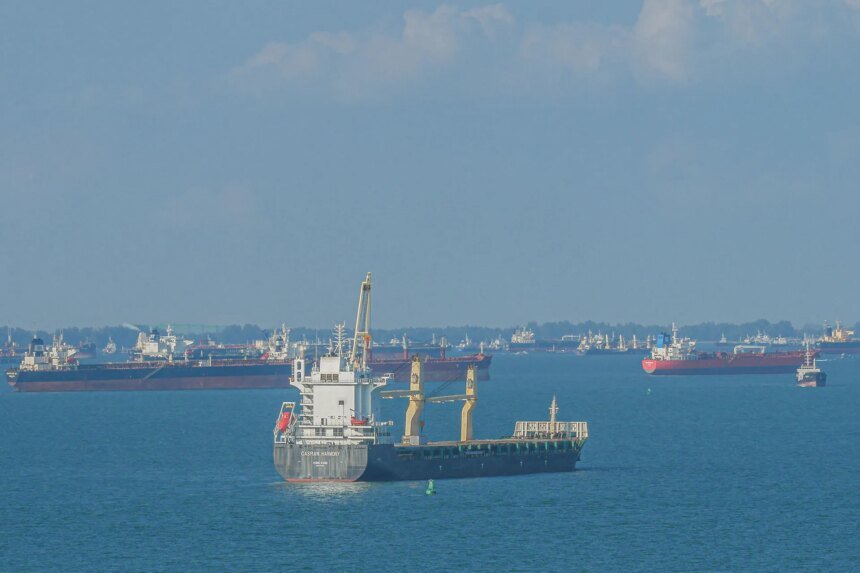
The Strait of Malacca connects the Indian and Pacific oceans, and is considered one of the busiest sea lanes in the world, as it represents the shortest route for transporting oil and goods between the Middle East and Asia. It passes between Indonesia, Malaysia and Singapore, and about 280 ships pass through it daily without imposing transit fees, according to Bloomberg.
Any changes in the navigation system or imposition of fees in this strait are seen as a step that may directly affect global supply chains, in light of its adoption as a main path for international energy and trade flows.
Bloomberg data also shows that the Lombok Strait (Indonesia) witnesses the passage of about 250 ships daily without paying any transit fees, while the Bosphorus and Dardanelles Straits in Turkey record about 232 ships daily with fees paid.
The figures indicate a large discrepancy in fees and congestion systems between sea lanes, as about 195 ships pass through the Strait of Gibraltar daily without fees, compared to 190 ships through the Danish Straits, and 145 through the Sunda Strait in Indonesia.
As for the Bab al-Mandab Strait (between Yemen and Eritrea), approximately 35 ships pass through it daily without paying any transit fees.
On the other hand, countries with international water channels impose fees for ships to cross, since they are not classified as international waters. This concerns the Panama Canal, which receives about 40 ships per day, and the Suez Canal (Egypt), which receives about 35 ships per day.
As for the Strait of Hormuz, data indicate that before the war on Iran, it witnessed the passage of about 100 ships daily without fees, and according to the table, Iran began imposing transit fees as of mid-March of last year at a value of one dollar for each barrel of oil.