Published on 6/22/2026
|
Last update: 18:33 (Mecca time)
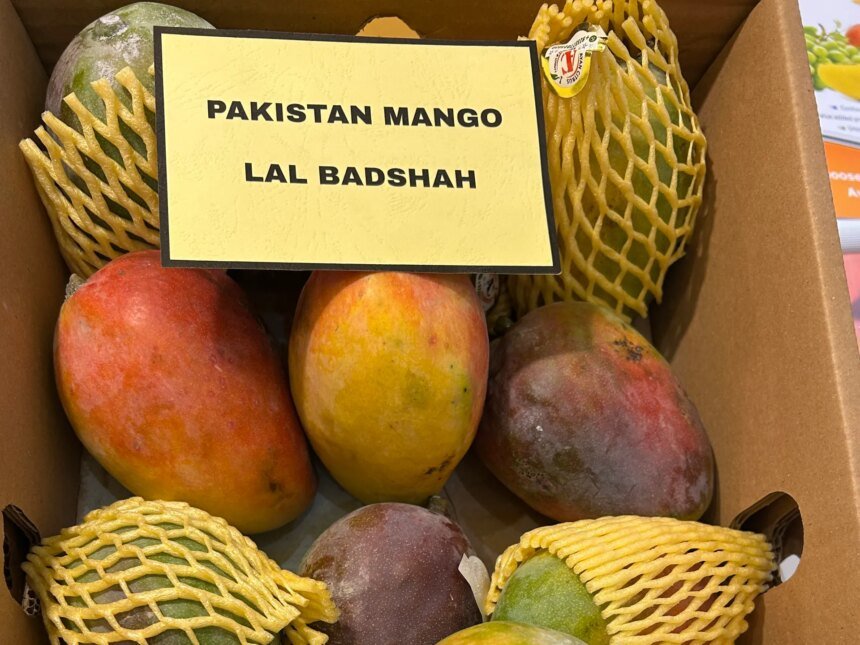
Pakistani mango exports are facing great pressure this season due to the repercussions of the war in the Middle East, as exporters expect shipments to decline by about 30% compared to last year, as a result of turmoil in major markets, high transportation costs, and decreased demand in the Gulf states, Iran, and Afghanistan.
This comes despite reaching a preliminary agreement to stop the war between the United States of America and Iran, as workers in the sector believe that the agreement came too late for the current mango season, which began in June and continues for about 3 months.
Read also
list of 4 itemsend of list
Pakistan is the fourth largest exporter of mangoes in the world, producing more than 24 varieties of the fruit and achieving an average of about $110 million in export revenues annually, according to a report by Agence France-Presse.
Wahid Ahmed, chief patron of the Pakistan Fruit and Vegetable Exporters Association, said that about 80% of mango exports go to the Gulf countries, Iran and Afghanistan, markets that have been directly affected by the war and regional tensions over the past months.
He added that mango exports are likely to decline by about 30,000 tons this year to reach only 80,000 tons, compared to the previous season, noting that the closure of the border with Afghanistan and the continued unrest in Iran have significantly weakened the trade movement.

Shipping pressures
The turmoil in the Strait of Hormuz contributed to rising energy prices and maritime transportation costs, increasing the burden on exporters.
According to Ahmed, the cost of shipping a container containing 25 tons of mangoes rose from about $1,400 last year to between $6,000 and $7,000 this year.
This increase caused a reduction in profit margins for producers and exporters, while some contractors abandoned their investments in orchards due to expected losses.
The decline in prices in the local market did not succeed in compensating for export losses, as Pakistani families suffer from high costs of living and inflation resulting from the repercussions of the regional crisis.
Government data indicate that the inflation rate rose to 10% during the three months following the outbreak of the war, compared to 5.5% during the period from July to February last.
In the city of Karachi, the price of a kilogram of mango fell to about 200 Pakistani rupees (about 0.72 dollars), equivalent to about half its price last year, but weak purchasing power limited the demand for purchases.
Producers believe that consumers prefer to direct their limited income to basic commodities, which makes the demand for fruit less of a priority in light of the current economic pressures.

Tropical treasure
Mango is one of the most important tropical fruits in the world, and is known in South Asia as the “King of Fruits.” There are hundreds of types of mango, varying between sweet, creamy, sour and spicy varieties, and some of them have flavors close to pineapple.
Mango has a special place in a number of countries, as it is considered the national fruit in Pakistan, India, and the Philippines, and it is also considered the national tree in Bangladesh.
The history of mango cultivation dates back more than 5,000 years in India, while the oldest known mango tree in the world, located in central India, still produces its fruits today.
The name mango in the English language goes back to words used in the local languages of southern India, before it was transmitted through Portuguese and then British traders to European languages.
Mango belongs to the family of hard-core fruits, such as olives, dates, cashews, and pistachios, as it contains a single seed surrounded by a fleshy pulp and a leathery outer shell.
In the United States, credit for the spread of mango cultivation goes to the American agricultural explorer David Fairchild, who transported its seeds from India at the beginning of the twentieth century, and some of the trees planted at that time still bear fruit today in Florida.