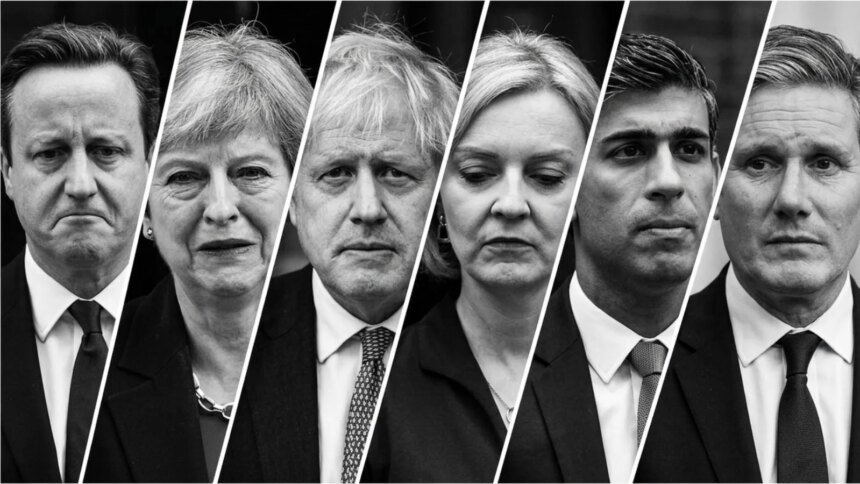
Britain is once again facing political uncertainty. With Prime Minister Keir Starmer stepping down, the country is set to get its seventh prime minister in just over a decade. Such frequent changes at the top are rare in modern British history and reflect growing public frustration over issues ranging from weak economic growth and pressure on public services to rising concerns about immigration.
While governments have changed, many voters feel the country’s core challenges remain unresolved. The result has been declining trust in political leaders and increasing instability within both major political parties.
Since 2016, the United Kingdom has witnessed an unusually high turnover of prime ministers.
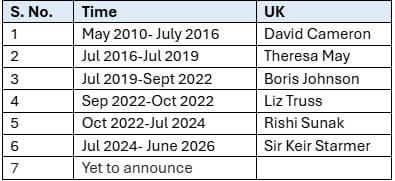
Unlike presidential systems, British prime ministers are not directly elected by voters. The prime minister is usually the leader of the party that commands a majority in the House of Commons. This means a governing party can replace its leader and therefore the prime minister without holding a general election.
Labour’s Big Victory, But a Weak Mandate
The 2024 general election appeared to be a historic triumph for the Labour Party.
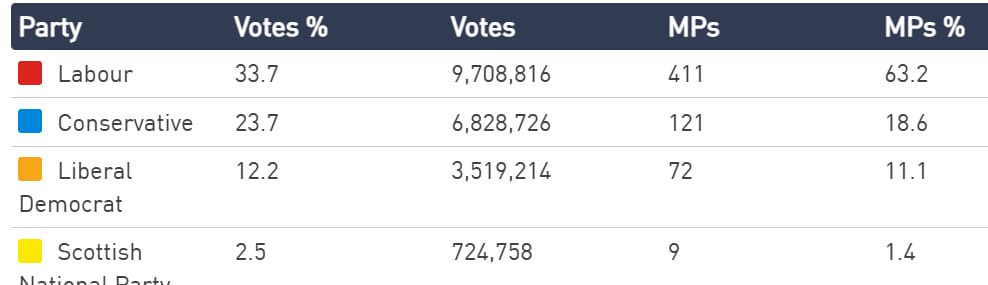
After 14 years of Conservative rule, Labour returned to power by winning 411 of the 650 seats in the House of Commons. At the same time, the Conservatives suffered a dramatic collapse, losing around 250 seats.
However, Labour’s parliamentary majority concealed an important reality. The party secured just 33.7 per cent of the national vote, receiving about 9.7 million votes nationwide. Yet under Britain’s First Past the Post (FPTP) electoral system, that vote share translated into roughly 6 per cent of the seats in Parliament.
This gap between votes received and seats won has revived debate about whether the electoral system accurately reflects public opinion. A government can appear dominant in Parliament while receiving support from only a third of voters.
A Strong Majority on Paper, A Fragile Foundation in Reality
A large majority in Parliament often suggests political stability. But Britain’s recent experience shows that numbers alone do not guarantee strong public support.
Governments that come to power with relatively limited vote shares often find themselves vulnerable when public opinion begins to shift. Economic difficulties, unpopular policies or electoral setbacks can quickly expose underlying weaknesses.
In such circumstances, even governments with comfortable parliamentary majorities can face growing pressure from within their own parties as lawmakers become anxious about their political future.
Keir Starmer’s Rapid Decline in Popularity
Keir Starmer led Labour to a landslide victory in 2024, promising change after years of Conservative rule. However, his popularity declined sharply during his time in office.
A series of controversies, policy reversals and unmet expectations created the perception among many voters that his government was struggling to deliver improvements in living standards.
The discontent was not limited to the public. More than 100 Labour MPs around a quarter of the party’s representatives in Parliament publicly called for Starmer to step aside or set out a timetable for his departure.
According to polling data cited by Ipsos, Starmer’s approval ratings after 14 months in office were the lowest recorded for any British prime minister over a similar period in the past 50 years. Support for the Labour Party also fell sharply during that time.
Why Do UK Prime Ministers Keep Resigning?
Britain’s political system makes leadership changes easier than in many other democracies.
Several factors have contributed to the revolving door at 10 Downing Street:
- Internal Party Revolts: Political parties can remove their leaders through internal contests if enough members lose confidence in them. A prime minister can therefore be replaced without a general election.
- Constant Political Pressure: British leaders face intense scrutiny from the media, opposition parties and their own colleagues. Falling poll numbers or disappointing election results can quickly trigger leadership challenges.
- The Long Shadow of Brexit: The 2016 Brexit referendum deeply divided both major political parties and the country itself. Successive governments struggled to manage the political and economic consequences of leaving the European Union.
- Economic Frustration: Weak economic growth, rising prices and pressure on public services have made it difficult for any government to maintain long-term public support.
- Scandals and Policy U-turns: Public confidence can fall rapidly when leaders become associated with scandals, ethical controversies or repeated changes in policy positions.
- Rise of New Political Challengers: Smaller parties such as Reform UK have increased pressure on both Labour and the Conservatives by attracting dissatisfied voters.
- Growing Expectations, Limited Solutions: Governments today face multiple challenges, including global economic uncertainty, migration pressures, energy concerns and public spending constraints. Solving these problems takes time, but voters often demand immediate results.
Britain’s Economic Challenges Continue
Political instability has been accompanied by economic difficulties.
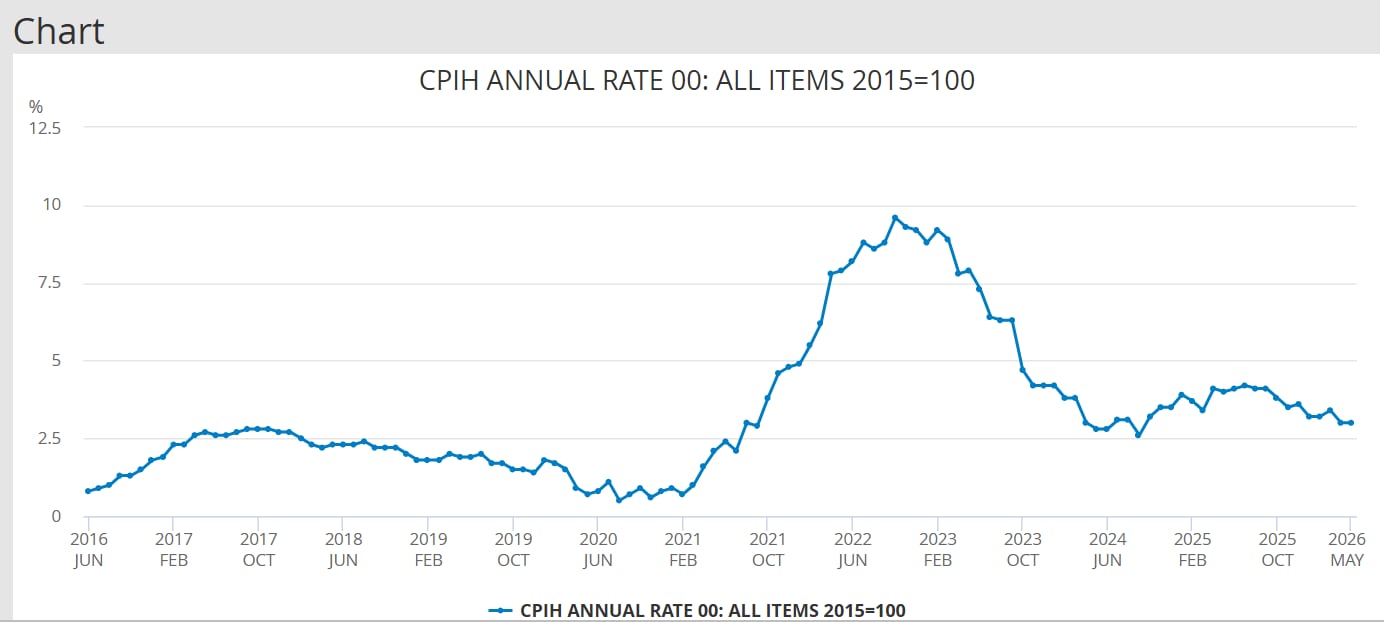
Although inflation has fallen significantly from its peak in October 2022, prices continue to rise. They are simply rising at a slower pace than before. In May 2026, Britain’s annual inflation rate stood at 3.3 per cent. Economic growth has also remained modest compared with several other major economies.
GDP Growth (January-March 2026 Quarter)
- USA: 1.6 per cent
- China: 4.4 per cent
- Germany: 0.3 per cent
- India: 7.8 per cent
- Japan: 2.1 per cent
- UK: 0.6 per cent
At the same time, Britain’s unemployment rate stood at 4.9 per cent, adding to concerns about the economy and living standards.
Immigration Remains A Sensitive Issue
Immigration continues to be one of the most politically charged issues in Britain.
For many voters who backed Brexit in 2016, tighter control of immigration was a key objective. However, despite leaving the European Union, net migration later reached record levels, leading to criticism from both supporters and opponents of successive governments. The issue remains central to British political debate and has contributed to the rise of challenger parties seeking to capitalise on public dissatisfaction.
Latest IPSOS Survey
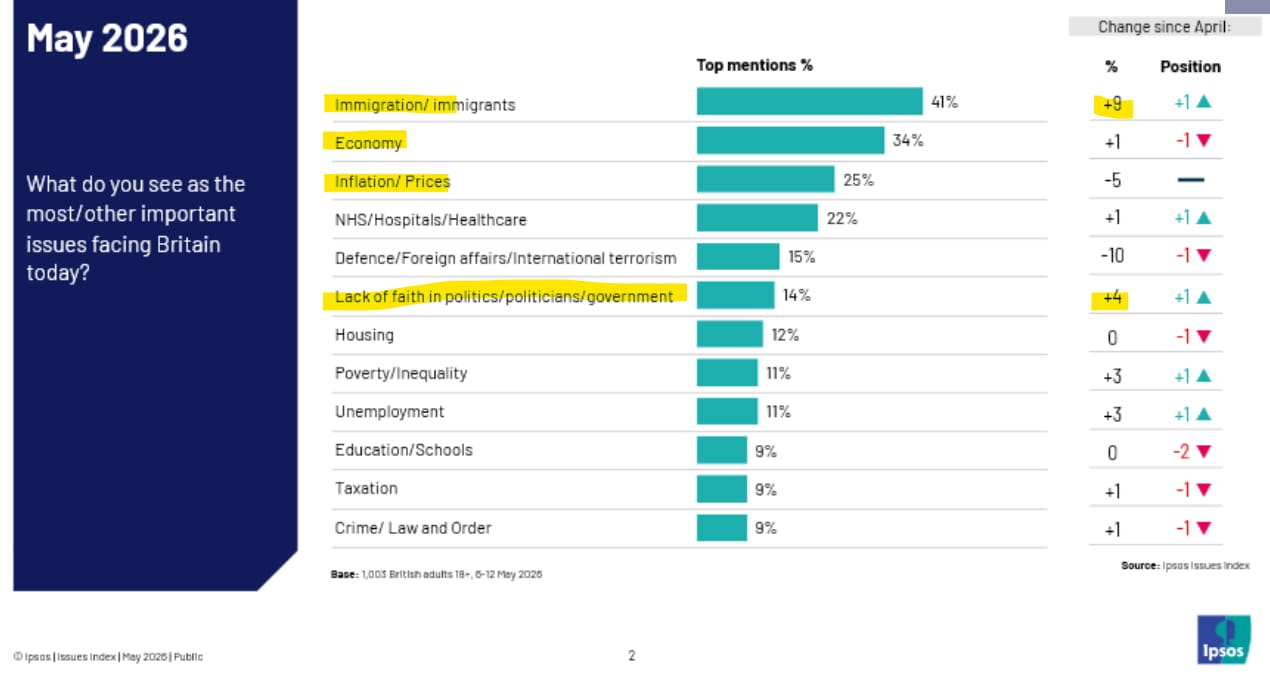
Britain’s political instability is not simply a story of changing prime ministers. It reflects deeper challenges facing the country from economic stagnation and pressure on public services to unresolved debates over immigration and the lasting effects of Brexit.
The next prime minister will inherit a parliamentary system that allows quick leadership changes, but also a public that is increasingly impatient for results.