Published on 6/22/2026
|
Last update: 14:01 (Mecca time)
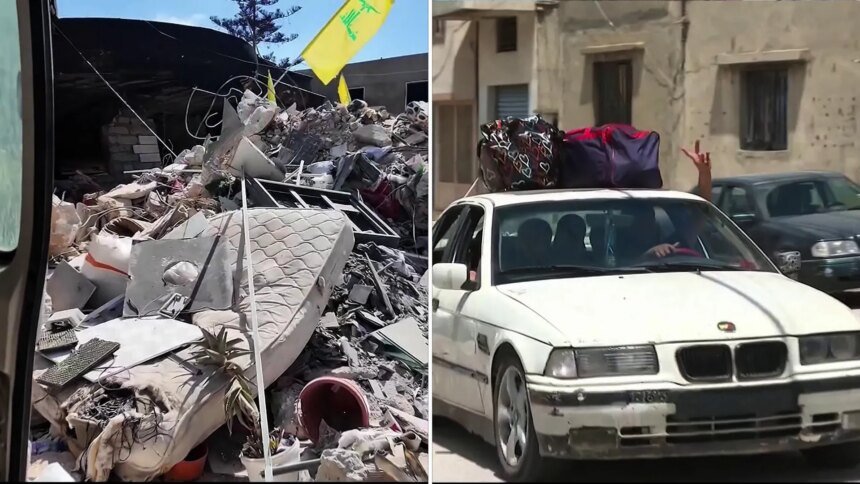
The town of Battle in the Tire district of southern Lebanon is trying to gradually remove the effects of the Israeli war with efforts to continue daily life.
In a field report by Al Jazeera correspondent Johnny Tanios, stories emerge from the townspeople who refuse evacuation orders, clinging to their homes, property, and sources of livelihood.
Among these stories, the cost of steadfastness is evident in the loss of the pharmacist Ahmed’s building that he had built for the purpose of expanding and moving to it, after he spent about 27 years providing treatment for the people of the town.
Despite the bombing and destruction, Ahmed insists on staying, saying: “Because of the bombing, the pharmacy and the building were destroyed, and despite these circumstances, we will rebuild it better than it was.”

Targeting residential homes
The towns of southern Lebanon are witnessing human losses as a result of the continuous bombing of residential homes, as the Talib family lost 8 of its members in an Israeli raid that targeted their home less than a month ago.
Relatives of the victims who refuse to leave the town point out the details of the raid that targeted the house without warning, explaining that a child died in the bombing, which indicates that civilians were targeted.

Displacement and return
In another side of town, Mother Fatima returned from the vicinity of the capital, Beirut, to stand amid the rubble of her house and receive mourners for her son Muhammad.
Muhammad had refused to leave the town with his family during the previous wave of displacement to protect his home. The mother said while holding a picture of her son: “I was asking him what he felt at that moment, and this is what hurt my heart so much.”
Between the security conditions and the aspirations of return, the lives of the residents of southern Lebanon remain linked to the path of regional and international understandings, in light of the continuing confrontations that have not yet led to a settlement that ends the crisis.

Cautious movement
The same scene extends to the main streets of Tyre; Its alleys summarize the reality of the field between the devastation of the Israeli raids and the ongoing restoration efforts.
The returning displaced persons immediately begin to restore their shops and homes, in conjunction with the work of technical crews to reconnect basic services and repair the electricity networks damaged by the ongoing bombing.
Despite the return of some signs of movement in the city, the scene of Tyre does not fully apply to the rest of the southern regions, specifically the Nabatieh region. The movement of citizens there remains somewhat cautious and timid, according to the report.
This anticipation is due to the people’s fear of Israeli violations, at a time when Hezbollah’s political positions affirm their rejection of any military movement or occupation presence within the borders, which puts the fate of the current truce at stake in the ongoing political talks and agreements.