Published on 6/21/2026
The fate and shocking transformation of livestock skins in Iraq from a national wealth to an environmental burden comes accompanied by an almost complete collapse witnessed by the tanning sector and local leather industries in recent years.
The Iraqi butcher, Abu Ibrahim, recalls the old days of this sector with much regret, saying: “In the past, hides were collected directly by specialized merchants, and they would even pay us advance sums (a deposit) to guarantee their supply, which reflects their high financial value at the time.” Today, the scene has completely changed, according to Abu Ibrahim. This trade activity declined almost completely, and the buyers who were competing for sheep skins disappeared.
In the same context, the butcher Muhammad Mahmoud from the capital, Baghdad, paints the final scene of this crisis, stressing that sheep skins no longer find anyone to buy them at all, and they often end up in landfills because there are no factories or tanneries to receive them.
The paradox lies in the fact that the raw material still maintains its qualitative value. The director of the small leather factory, Jamila Hussein, confirms that Iraqi leather is still classified among the best types in the world in terms of quality and durability.
Despite this competitive advantage, Jamila Hussein adds: Due to the invasion of the importer, the local product lost its competitive ability in the face of the influx of cheaper imported products, and the rise in local production costs also made national factories unable to withstand, which ultimately led to their cessation.
Testimonies from within the market reveal the extent of the collapse that has befallen the industry’s infrastructure. The closed factories amounted to about 100 tannery factories that closed their doors completely, a complete collapse of the chain starting from the butcher, through the tannery, and all the way to the craftsman, and an almost complete lack of demand for local leather (especially sheep skins).
The owner of a leather shop, Abdul Karim Abu Samer, commented on this decline, stressing that the closure of these factories was a “death blow” that completely severed the craft.
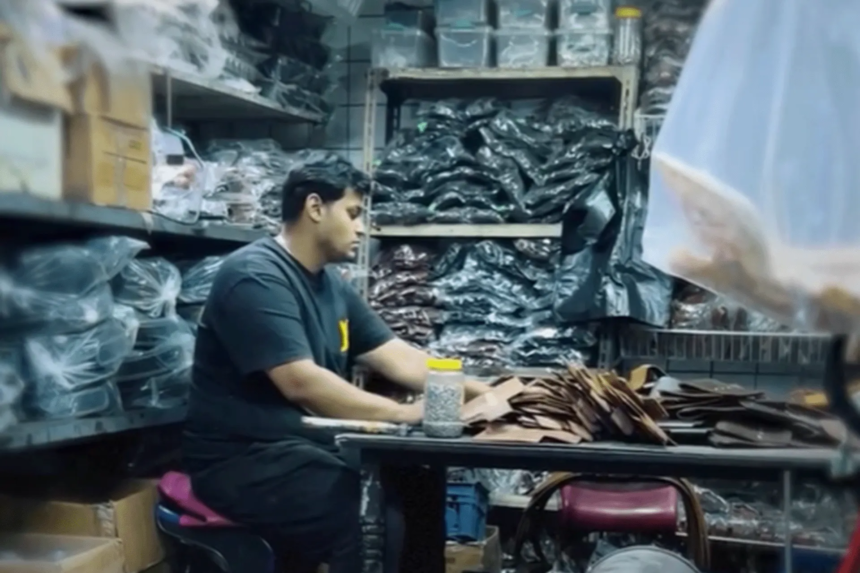
This recession is a direct blow to the handicrafts sector, which relied on local raw materials, as craftsman Mahmoud Abu Tabarak points out that sheep skins, which were the backbone of the manufacture of shirts and luxury wallets, are no longer in demand today.
Finally, the greatest reliance now is on cow hides or imported ready-made materials, causing the Iraqi craftsmanship to lose one of the most important elements of its authenticity, and wealth to turn from an economic engine into an environmental crisis searching for a solution.