Published on 6/20/2026
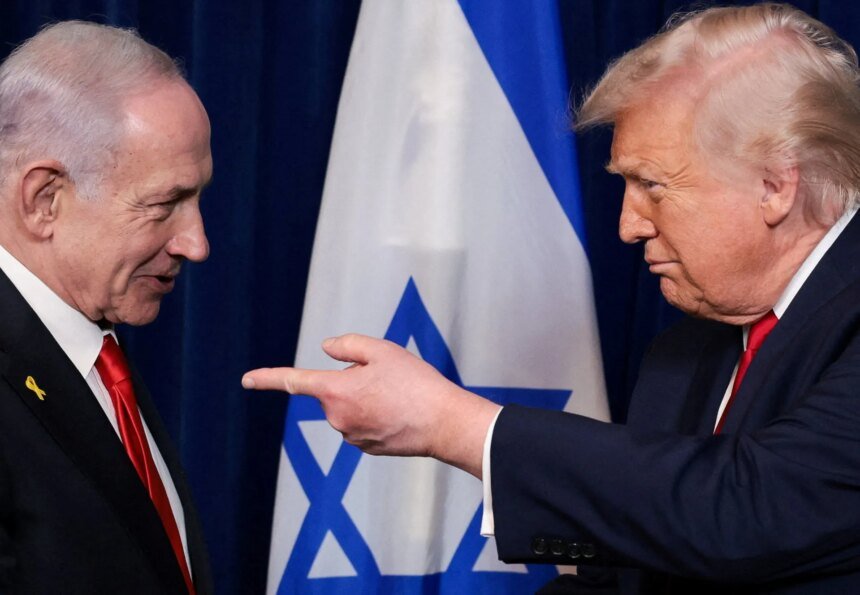
The Hebrew newspaper “Israel Hayom” published a prominent political analysis by the well-known Israeli writer, Amit Segal, in which he shed light on the behind-the-scenes and dimensions of the sudden American retreat towards Iran, and the future of relations between US President Donald Trump and Israeli Prime Minister Benjamin Netanyahu, in light of the rapid developments on the regional and international arenas in 2026.
The writer began his analysis by pointing out the nature of the recent phone call that took place between Trump and Netanyahu, describing it as surprisingly friendly. Contrary to media reports that spoke of a deep rift between them and the United States abandoning Israel for the sake of American interests.
Read also
list of 2 itemsend of list
He explained in his article that Israeli political circles were not surprised by the dimensions of the “American surrender” to the Iranian condition, but rather were shocked by its size and its astonishingly broad scope.
Segal wrote that Netanyahu was aware in his internal discussions that the agreement would not include stopping the financing of terrorism or dismantling the ballistic missile system, but the shock was the unexpected ease with which Trump, who always presents himself as an expert in negotiations, abandoned the basic strategic equation that required halting the nuclear program in exchange for lifting the economic blockade on Tehran.
The writer also saw that the criticism directed by Trump against Israel and Netanyahu during this stage came in the context of justifying the American trend towards ending the Iranian file, pointing out that the American president is still, according to him, recalling during his conversations with the Israeli Prime Minister the latter’s position on the American elections in 2020 when he took the initiative to congratulate Joe Biden on winning the presidency.
Injustice is less than sin
According to the article, Trump views this congratulation as an unforgivable sin, which the writer considered, in his personal opinion, “an injustice much less serious than trying to obtain illegal atomic weapons and killing many Americans.”
Regarding the Lebanese file, Segal quotes an Israeli official as estimating that about 80% of the ongoing talks with Washington focused on the northern front and the war with Hezbollah.
The writer considered that the party was going through a period of extreme weakness, strongly warning the American administration that linking the Gaza front to the Lebanon front might give it an opportunity to rebuild its capabilities and resume pressure on the northern regions of Israel.
Addressing the controversy surrounding the Iranian nuclear agreement, Segal rejected the criticism directed at Trump’s decision to withdraw from the agreement concluded by the Barack Obama administration in 2015.
He said that many critics of the resolution ignore that the basic restrictions imposed on uranium enrichment would have gradually ended during the current period, which would have allowed Iran to continue developing its nuclear program legally and with the support of the UN Security Council.
He added that Iran did not take the initiative to raise enrichment levels immediately after the US withdrawal from the agreement in 2018, but rather continued for a long period to adhere to its restrictions for fear of the Trump administration’s reaction.
According to his analysis, the real transformation occurred when Tehran was convinced that the American military threat no longer had sufficient credibility, which he saw as being consolidated during the term of former President Joe Biden as the possibilities of direct military confrontation declined.

Strange comparison
In the last part of his article, the writer returned to the memories of the Gaza War, recalling the details of the martyrdom of the head of the Political Bureau of the Islamic Resistance Movement (Hamas), Yahya Sinwar, and referring to the “Return to October” exhibition held at the Intelligence Heritage Center in central Israel, which includes collectibles and documents related to leaders and members of the Hamas movement.
He said that, from his point of view, the exhibition provides a reminder of the scale of the attack that Israel was subjected to and the circumstances that accompanied it, adding that the passage of time should not lead to a decline in interest in what happened or a reduction in its impact on discussions related to the future of the Gaza Strip.
The writer concluded that Gaza currently represents the calmest front, claiming that the residents of the Strip bear historical responsibility because they are the only ones in the Middle East who chose their leadership democratically and continue to support it.