The Ebola virus is no longer just a name associated with the fear of bleeding and rapid death. Rather, it has become one of the most important models with which the world has tested its ability to confront high-risk epidemics.
Since its first appearance in 1976, this virus has been revealing in every new outbreak that the battle with infectious diseases is not decided by laboratories alone, nor by hospitals alone, but rather by a delicate balance between science, early surveillance, community trust, and the strength of health systems.
Ebola belongs to the filovirus family, which are viruses that appear under a microscope as long, twisted threads. The disease causes acute hemorrhagic fever that may quickly develop into organ failure and internal or external bleeding, especially if diagnosis is delayed or the patient does not receive intensive supportive care in a timely manner.
The World Health Organization indicates that the average historical death rate for Ebola is around 50%, but it has varied greatly from one outbreak to another, ranging between 25% and 90% depending on the type of virus, the speed of intervention, the quality of medical care, and the extent of the health authorities’ ability to isolate cases and trace contacts.

A virus that changed the world’s understanding of epidemics
Ebola first appeared in 1976 in two nearly simultaneous outbreaks; One was in Nzara, in what is today South Sudan, and the other was in Yambuku, in the present-day Democratic Republic of the Congo, near the Ebola River, from which the disease takes its name.
Since that time, Ebola has ceased to be an isolated disease in a specific region, but rather has become a clear example of how a virus transmitted in a remote village can turn into a regional and perhaps global threat if it coincides with weak surveillance, delayed diagnosis, and a lack of trust between the population and health teams.
The West Africa outbreak between 2014 and 2016 represented a major turning point in the history of the disease. It infected more than 28,000 people, causing the death of more than 11,000, and spread mainly in Guinea, Liberia, and Sierra Leone, then cases linked to travel or secondary infection were recorded in other countries.
This outbreak was the largest in the history of Ebola, and revealed that the disease not only threatens the lives of individuals, but can shake entire health systems and affect the economy, education, mobility, and public confidence.
Multiple types and varying severity
Ebola is not a single virus in the narrow sense, but rather a group of closely related species. The most important types associated with human infection are:
- The Zaire virus, which is most closely associated with major outbreaks and is the most dangerous, is also the type against which the most important vaccines and treatments currently approved have been developed.
- Sudan virus, which first appeared in 1976, has a history of outbreaks in Uganda, Sudan and South Sudan, and remains a challenge because vaccines and treatments approved against Zaire do not necessarily provide proven protection against it.
- Bundibugyo virus, which was discovered in 2007, has been associated with fewer outbreaks than in Zaire, but it remains capable of causing severe illness and mortality, especially in environments with poor health or delayed containment.
These species differ in their genetic composition, degree of virulence, and associated mortality rates. They also differ in their response to available vaccines and treatments. Therefore, the medical question today is no longer: Do we have a vaccine against Ebola? Rather: Against what kind of Ebola? In what epidemiological context? For what category of population?

How is Ebola transmitted?
The Ebola virus is transmitted primarily through direct contact with the blood or body fluids of a person infected or deceased due to the disease. These fluids include vomit, feces, urine, saliva, sweat, blood, semen, and other body secretions.
Ebola is not transmitted in the same way as respiratory viruses such as influenza or COVID-19; It does not usually spread through the air or simply by walking next to an infected person in a public place. The real danger begins with direct contact with the patient’s fluids, or contact with contaminated tools such as needles, clothes, or bedsheets, or unsafe handling of the bodies of the deceased during funeral rituals.
Transmission of infection from animals to humans may be the beginning of some outbreaks, especially when dealing with infected or dead wild animals such as bats, some primates, and wild antelopes. After the virus enters the community, its transmission from one person to another becomes the decisive factor in the extent of the outbreak.
Normal symptoms turn dangerous
The difficulty of Ebola is that its onset may appear similar to many diseases widespread in Africa, such as malaria, typhoid, or influenza. Symptoms usually begin after an incubation period of between two and 21 days, and often appear within 8 to 10 days of exposure to the virus.
In the first stage, the infected person feels sudden fever, extreme fatigue, headache, muscle and joint pain, and sore throat. These symptoms alone may not seem sufficient to arouse suspicion, especially in areas where other febrile diseases are common.
But as the disease progresses, more serious signs appear such as vomiting, severe diarrhea, abdominal pain, rash, and severe dehydration. In advanced cases, bleeding from the nose or gums may occur, bruises and bleeding may appear under the skin, or blood may come out in vomiting or stool, in addition to disturbed liver and kidney functions, low blood pressure, and neurological disorders such as confusion and irritability.
Here the importance of early diagnosis becomes clear, because the patient in the first days may be able to benefit more from fluid and salt replacement and targeted treatment, while delay leads to the body entering a cycle of dehydration, shock, and organ failure.
Confirmed diagnosis of Ebola relies on direct detection of the virus in the blood, often using a polymerase chain reaction test, known as PCR. This test is essential because it distinguishes Ebola from other diseases that may have similar symptoms.
Accompanying tests also help estimate the severity of the condition, such as low platelets, high liver enzymes, impaired kidney function, and changes in indicators of inflammation and clotting. These indicators alone are not sufficient to confirm the disease, but they give doctors a clearer picture of the course of the condition and the risk of its deterioration.
Medical guidelines stress isolation of the suspected case immediately upon the appearance of symptoms with a history of possible exposure, and not waiting for the final result if the suspicion is strong. Because any delay in isolation may allow the virus to spread within the family or health facility.
From supportive care to targeted therapies
For a long time, Ebola treatment was based mainly on supportive care: replacing fluids and salts, controlling blood pressure, treating dehydration, supporting breathing when needed, monitoring kidney and liver function, and treating secondary bacterial infections if they develop.
This care is not a simple or secondary matter. Clinical experience has shown that providing adequate fluids and salts and correcting body disorders can significantly improve the chances of survival, especially if started early.
But the turning point came with the development of targeted therapies based on monoclonal antibodies. In the PALM trial conducted during the 2018-2019 Democratic Republic of the Congo outbreak, several experimental treatments were compared, and the results showed that some antibodies, such as REGN-EB3 and mAb114, were better than other treatments at reducing deaths, especially when used early.
Subsequently, the US Food and Drug Administration approved two treatments against the Zaire virus: Inmazeb, a combination of three antibodies, and Ebanga, a monoclonal antibody. In the Ebanga approval data, for example, death within 28 days was 35.1% among those who received treatment, compared to 49.4% in the comparison group, which reflects the importance of moving from supportive treatment alone to targeted treatment when the viral type is appropriate and the treatment is available.
However, the image should not be exaggerated; These treatments do not cover all types of Ebola, and are not a substitute for isolation, surveillance, and infection control. They also require qualified centers, precise protocols, and supply chains capable of reaching outbreak areas.
Vaccines…the greatest achievement in the modern Ebola story
The development of an effective vaccine against Ebola was one of the most important achievements in the history of combating the virus. The rVSV-ZEBOV vaccine, known commercially as Ervebo, showed strong results in a ring vaccination trial conducted in Guinea during the West Africa outbreak. The idea of ring vaccination is based on vaccinating the contacts of the confirmed case and the contacts of the contacts, with the aim of creating a circle of protection around the virus that prevents its expansion within society.
The trial data indicate that those who received the vaccine immediately within the vaccination sessions did not develop Ebola cases after a sufficient period had passed for protection to develop, which made this vaccine a pivotal tool in responding to outbreaks associated with the Zaire virus.
In 2019, Ervebo received international regulatory recognition and became the first Ebola vaccine to be pre-qualified by the World Health Organization for use in high-risk countries. This vaccine is given in one dose, and is especially useful in outbreak conditions when speed is a crucial factor.
There is also another two-dose vaccine regimen, known as Zabdeno and Mvabea, which involves a first dose and then a second dose about 8 weeks later. This system may be more suitable for proactive prevention in groups most at risk, such as health workers or residents of exposed areas, but it is not the ideal choice for rapid response in the heart of an outbreak; Because building protection takes longer.
The most important point remains that the available vaccines are mainly concentrated against the Zaire virus, while the need still exists to develop effective vaccines against the Sudan, Bundibugyo, and other types.
Why does control sometimes fail despite the existence of knowledge?
The Ebola experiences demonstrate that the availability of a vaccine or treatment does not automatically mean the outbreak is under control. The virus often wins when several factors combine: delayed detection of cases, weak confidence in health teams, lack of beds and protective equipment, difficulty reaching affected areas, the presence of armed conflicts, or the continuation of unsafe burial practices.
In many outbreaks, the problem was not only the lack of medical knowledge, but the gap between knowledge and society. If people refuse to isolate, hide sick people for fear of stigma, or treat response teams as a threat, chains of infection continue even if scientific tools exist.
That is why community trust has become part of the treatment. Health awareness, engaging local and religious leaders, respecting the dignity of the deceased during safe burial, and communicating in an understandable language are all elements that are no less important than gloves, masks, and vaccines.
Preventive measures…one package
International guidelines confirm that controlling Ebola does not depend on a single measure, but rather on an integrated package that includes:
- Rapid isolation of suspected and confirmed cases in designated places.
- Tracing contacts and monitoring them daily throughout the incubation period, i.e. up to 21 days.
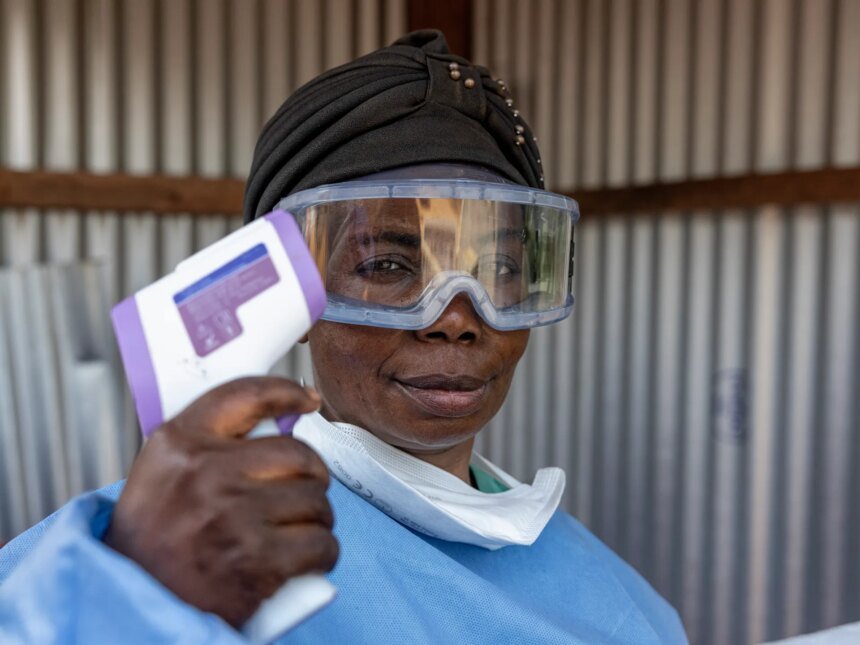
- Use personal protective equipment inside health facilities, especially when dealing with blood, vomit, feces, or any bodily fluids.
- Sterilize surfaces and medical tools, and safely dispose of contaminated waste.
- Safe and humane handling of the bodies of deceased people, because the virus may remain in body fluids after death.
- Educating the community about the real methods of transmission, to avoid panic on the one hand, and prevent underestimation on the other hand.
- Use approved vaccines in appropriate areas, especially in Zaire virus outbreaks.
- Strengthening laboratories and epidemiological surveillance, so that cases are detected early and limited infections do not turn into a widespread outbreak.
Ebola in the balance of global health security
Ebola changed the way the world thinks about health security. It showed that infectious diseases are no longer a local problem for a particular country, and that a weak health system in a limited area can become a global test if intervention is delayed.
It also proved that investing in scientific research is not a luxury, but rather a strategic line of defense. The difference between past and present outbreaks is not only that we have vaccines and treatments, but rather that the world has learned how to develop its tools during the crisis, and how to conduct clinical trials in complex epidemiological conditions without abandoning scientific and ethical standards.
However, the battle is still open. The emergence of new outbreaks, the persistence of some viral types without an approved vaccine or treatment, and the intersection of epidemics with conflict, migration and poverty are all factors that make Ebola a present threat that does not belong to the past alone.