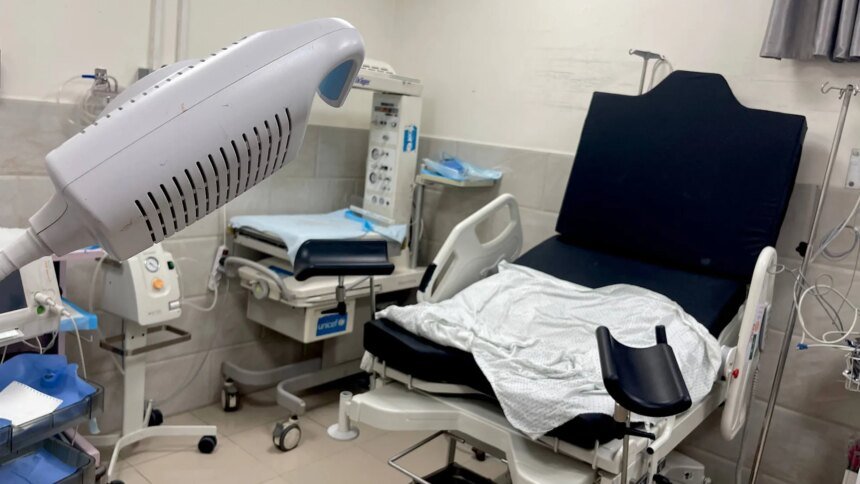
Gaza- After a long journey of focused medical follow-up that spanned 9 years, the pregnancy that Mrs. Sahar Khader had long awaited was achieved, beginning a new phase of caring for her first fetus.
Only two months had passed since Sahar and her husband were happy with her pregnancy, when she suffered a medical setback that led to her miscarriage, despite her keenness to adhere to all medical and nutritional advice to keep her fetus healthy.
Sahar (30 years old) is one of 921 pregnant women in the Gaza Strip who aborted their fetuses last April, according to special statistics obtained by Al Jazeera Net from the Ministry of Health in Gaza. Doctors attribute the reasons for the high number of miscarriages and fetal deformities to the Israeli war of genocide on the Gaza Strip, which recorded the direct killing of fetuses or provided the factors for their death.

Killing fetuses and declining births
A special report by the Ministry of Health in Gaza documented 460 abortions per 1,000 live births last April, while the rate before the war was 140 cases per 1,000 live births.
The report, a copy of which was obtained by Al Jazeera Net, was titled “Abortions during wartime and their disastrous repercussions.” The report documents the epidemiological and demographic collapse in the Gaza Strip between (January 2025 and April 2026), which confirms a sharp deterioration in the ability of the uterine environment to support the life of the fetus.
According to the health report, the average rate of anemia among pregnant women in Gaza is 57%, which is twice the global rate, warning that anemia embodies the collapse of food security, as mothers are biologically exhausted before they lose their fetuses.
The report also records a decline in the number of births in the Gaza Strip. While their number reached 6,076 births last November, in April 2026 they decreased to 2,004 births, a decline of 67%. Pointing to the state of fetal exhaustion, where the regime is no longer able to compensate for human losses, and abortion has become the main drain on population growth.
The report monitored 385 cases of congenital malformations in fetuses, attributing this increase to the war, the starvation to which the Strip was exposed, displacement in tents, and polluted water sources.
He stated that there is an expected increase of 70.7% in abortion cases during 2026, warning that this June will break the barrier of 500 abortions per 1,000 births, while about half of the pregnancies in Gaza will face complications, which will deepen the crisis of irreversible population decline.

Live testimonials
Obstetrics and Gynecology Consultant, Dr. Suhail Abu Mustafa, remembers the harsh details he experienced throughout his shift in Gaza City hospitals over the course of two years of war. He still remembers the scene of a six-month-old pregnant woman who was injured by shrapnel that penetrated the abdominal wall and uterus, leading to the death of the fetus and severe internal bleeding that threatened her life. However, he was able to perform urgent surgical intervention to save the mother’s life, despite the lack of blood and medications and the difficult medical conditions.
In an interview with Al Jazeera Net, Abu Mustafa tells the story of another woman who became pregnant with twins before the war after a long treatment journey that lasted about 15 years, during which she underwent medically assisted fertilization. After reaching the fourth month of pregnancy, she was forced to flee to southern Gaza to complete medical follow-up after the occupation forces destroyed hospitals in the northern Gaza Strip.
While the woman was heading to the south of the Gaza Strip, according to Doctor Abu Mustafa, she was exposed to gunfire, causing her to bleed, causing the loss of her twins, after she arrived at the hospital in critical condition.

Rescue from death
The midwife, Raja Yassin, who was at work throughout the war, recalls one of the cases she supervised during the war. It concerns a woman who was besieged in the Al-Zaytoun neighborhood, south of Gaza City, for nearly a full month. During that period, she was forced to drink water that was not suitable for human consumption due to the lack of water sources. She subsequently gave birth to a premature baby girl weighing only approximately 600 grams, in one of the most difficult cases she experienced.
She told Al Jazeera Net: “Despite the difficulty of the situation and the weakness of the capabilities available at the time, the necessary care was provided to the child using primitive means, and she was able to survive, which we considered to be exceptional in light of the circumstances that the health system was going through.”
During the war, Rajaa witnessed – according to her confirmation – many cases of miscarriages, premature births, and congenital deformities, noting that some women were exposed to bombing or experienced intense moments of fear during pregnancy, which affected the health of the fetuses and led in some cases to the loss of pregnancy or the birth of children suffering from various health problems and deformities.
Pregnant women without care
Health care for pregnant women begins before pregnancy occurs, according to Obstetrics and Gynecology Consultant Dr. Suhail Abu Mustafa, as women need a balanced diet and essential nutritional supplements, most notably folic acid, which contributes to the prevention of many birth defects.
He said that the war and harsh living conditions in the Gaza Strip deprived women of the most basic elements of health care and proper nutrition, especially during periods of famine and food shortages, which led to their bodies losing nutrients and vitamins necessary for the normal growth of fetuses.
He explained that the fetus depends during pregnancy on the mother’s stock of nutrients, and when a pregnant woman suffers from a deficiency in essential vitamins or minerals, this is directly reflected in the process of formation of the fetus’ various organs, including the heart, blood vessels, digestive system, and urinary system, which may lead to the cessation of the growth of some organs or the occurrence of birth defects.
Doctor Abu Mustafa pointed out that the harsh conditions that pregnant women live in, including physical exhaustion, malnutrition, constant fear, and exposure to toxic gases and emissions due to bombing, in addition to the inability to sleep in a safe and comfortable environment inside tents, greatly raise the risk of miscarriage and pregnancy complications.
He added, “Pregnant women live in an unhealthy environment, with the spread of insects and rodents and the accumulation of waste, which increases the possibility of contracting various diseases and infections, which may cause the death of the fetus inside the womb or serious complications of pregnancy.”

The most dangerous period
Obstetrics consultant Abu Mustafa stated that the first three months of pregnancy are the most sensitive, during which the chances of miscarriage increase as a result of psychological pressures, malnutrition, and difficult living conditions, while the middle months witness cases of pregnancy loss linked to extreme fear and direct exposure to bombing or inhaling smoke and gases resulting from explosions.
He stressed that pregnant women sometimes arrive at hospitals suffering from severe bleeding or after the fetus has stopped beating inside the uterus, while the risks increase during the last months of pregnancy, as severe bleeding may threaten the lives of both the mother and the fetus.
Abu Mustafa also pointed out that the accumulation of risk factors, such as repeated displacement, malnutrition, and psychological and physical stress, often leads to premature birth, especially in the seventh month of pregnancy. These cases require specialized medical care and advanced incubators to save premature babies.
He added that the health sector currently lacks many of the equipment and supplies needed to care for premature babies, which limits their chances of survival in some cases.
The rise in abortion…the reasons and what is required
Doctor Abu Mustafa stressed that the number of abortion cases witnessed a significant increase after the outbreak of the war on Gaza, through his daily professional observations, as before the war he supervised one or two abortions during his shifts throughout the week, reaching 10 cases.
He called on international institutions and competent authorities to send specialized medical and research teams to study the real reasons behind the high rates of miscarriage and birth defects, and to work to reduce their health and humanitarian impacts.
In the context, the midwife explains hope The severe overcrowding inside displacement camps and shelter centers, the lack of public hygiene, water pollution, and the spread of unpleasant odors, rodents, and insects are all factors that directly affect the health of pregnant women and increase the risks they are exposed to during pregnancy.
The deteriorating economic situation and lack of nutritional support provided to pregnant women prevent women from obtaining their basic needs, including healthy food and nutritional supplements necessary for a healthy pregnancy.
Yassin points out that the acute shortage of family planning methods and contraceptives has led to an increase in unplanned pregnancies, which in turn raises the possibility of miscarriage, especially in light of the harsh conditions in which women live.
The same speaker confirmed that the psychological factor constitutes one of the most prominent causes of pregnancy loss during the war, explaining that the constant fear of bombing and assassinations, and the state of terror that women experience, negatively affects the stability of the pregnancy and the chances of its completion naturally, indicating that pregnant women have become preoccupied with thinking about the place of birth and how to obtain health care, food, and clothing necessary for the newborn, at a time when health services are suffering from a major decline.
Yassin noted that the difficulty of reaching health centers due to the lack of transportation constitutes an additional burden on pregnant women, as many are forced to travel long distances on foot to continue their pregnancy or receive medical care, which increases physical exhaustion and increases the possibility of exposure to complications that may lead to miscarriage.
She concluded that many women have been exposed to severe psychological trauma as a result of the loss of husbands or family members during pregnancy, which are conditions that directly affect the psychological health of the pregnant woman and increase the possibility of losing the fetus.