In the midst of the electronic signing of the US-Iranian memorandum of understanding yesterday, Wednesday, the two parties put an end to a war that lasted more than 100 days, but its repercussions are still extending regionally and internationally, not only in the areas of energy, food, and supply chains, but also extends to regional strategic files.
The “Hezbollah file” advances to the forefront of the regional equation as the last knot that confuses the “larger agreement.” The ongoing Israeli war on Lebanon, which US President Donald Trump described from France as a “small” versus the “major war with Iran,” has turned into an actual obstacle to preserving the “deal,” after Tehran imposed the inclusion of stopping the aggression against Lebanon as an integral condition of any final understanding.
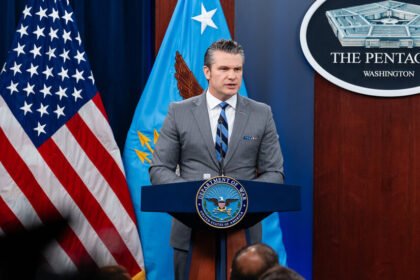
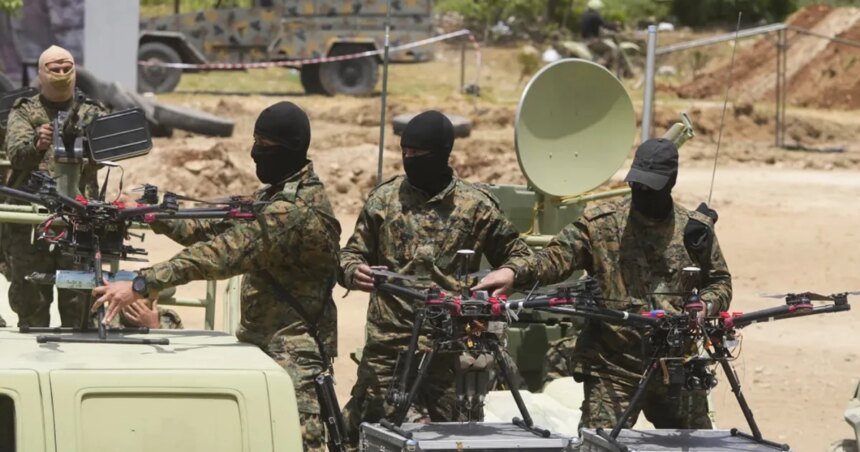
In the heart of this anticipation and desire to reach an end to the war, Trump surprised the world the day before Tuesday with the idea of referring “the file of dealing with Hezbollah” to Syrian President Ahmed Al-Sharaa, as he is the most capable, according to Trump’s vision, of “accomplishing what Israel was unable to do.”
In this context, the rebuke directed by the American President to Prime Minister Benjamin Netanyahu in the same statements comes, not out of concern for peace and security in the region, but rather with the aim of arranging the strategic priorities of his administration: “The deal is with Iran first, and there is no place in it for a Lebanese front that confuses Washington’s calculations.”.
However, Damascus clarified its strategy in dealing with neighboring countries days before Trump’s statements. The Syrian President denied any intention to interfere in Lebanese affairs, and even postponed talking about the border demarcation file, making way for stability priorities.
The readings of researchers and analysts – in statements to Al Jazeera Net – intersect at one conclusion: Trump’s statements are a negotiating tool with multiple messages targeting the party, Israel and Damascus at the same time, indicating that the new Syria does not have the luxury of sliding into a proxy war, and Netanyahu is the only party threatening to undermine Trump’s agreement with Iran by insisting on continuing his aggression against Lebanon.
With the signing of the memorandum of understanding, “dismantling Hezbollah” turns from a paper that can be postponed to an actual test of Trump’s ability to impose his will on his Israeli ally before his Iranian opponents.

Dismantling Hezbollah and the “Grand Agreement” equation
What Trump announced from the French city of Evian during his participation in the G7 summit was more than a passing comment on the Lebanon War. It represents a loud rearrangement of his priorities; By describing Israel’s war on Hezbollah as a “small” versus the “major war with Iran,” Netanyahu was faced with an equation that cannot be interpreted: any additional escalation in Lebanon may explode the Geneva process from within, and threaten the “big agreement” that represents the title of his regional strategy.
Writer and political analyst Ahmed Al-Haila, in an article published on Al Jazeera Net entitled “Is Lebanon wasting its last chance?” This rebuke is read as the product of a moment that Iran cleverly exploited to hold Washington responsible for controlling Israeli behavior. After the attack on the southern suburbs, two hours before the announcement of the memorandum of understanding, Trump urged Tehran through mediators not to be drawn into the response in order to preserve the course. Then he returned to publicly admonish Netanyahu. Some Israeli circles even quoted Trump as describing Netanyahu as “unwise.”
This position reveals – in reading the trick – an explicit American desire to proceed with the agreement, contrary to the Israeli desire.
Political writer Bechara Charbel adds another explanatory dimension: Trump is good at shuffling the cards, but he simplifies issues due to his distance from the history of the region, and deals with chronic structural crises as if they were issues that could be solved in hours of negotiation.
What he said in Evian does not amount to a “superpower strategy,” but rather it is closer to ideas that are said today and the opposite will be said tomorrow, a method that confuses even the American administration itself in Washington, according to what Charbel told Al Jazeera Net.
Authorizing Syria to deal with Hezbollah
The most dangerous sentence in Trump’s statements yesterday, Tuesday, was about what he expected from the Syrian government, when he suggested that “Israel leave it to Syria to take over Hezbollah,” because “it will do a better job.”
According to analysts, Trump provides a model for his contractual approach to crisis management: dismantling threats by delegating local actors instead of fighting costly wars, but the idea – despite its tactical temptation – collides with layers of military and political complexity.
The military and strategic expert, Brigadier General Hassan Jouni, places Trump’s statements within the framework of a “multi-message threat” and not a precise strategy, as the idea – in his estimation – stems from Trump’s tendency to believe that he is able to control the strategic options for the new Syria, but it remains a fleeting idea that may dissipate without effect.
What is more dangerous – according to Brigadier General Johnny’s statements to Al Jazeera Net – is that implicating Damascus in a problem with Lebanon contradicts what is supposed to be the responsibility of the American president, who says he seeks peace. That is, “by rebuilding healthy relations between Beirut and Damascus, and not inciting old rivalry.”
On the practical level, Johnny deconstructs the equation: any Syrian move will appear to be obedience to Trump’s orders, and will be read as agreement with Israeli military action against Lebanon, which will embarrass Damascus in front of the Arab countries and Turkey, which considers its national security to extend to Damascus and Beirut. Moreover, Syria, with its internal problems, does not have the luxury of allocating a large force to a mission of this kind, while Hezbollah will fight an “existential battle in its environmental depth,” according to him.
Researcher and political analyst Wael Alwan completes this reading by pointing out that Trump uses statements “as part of negotiating tools,” and that what he declares does not necessarily express an actual approach.
Alwan added – in statements to Al Jazeera Net – that the Syrian authorization statements fall within a system of pressure on three parties at the same time:
Hezbollah, official Lebanon, and Netanyahu, without this entailing American-Syrian coordination for intervention.
Syrian President: No authorization and no interference
Several days before the US President’s statements about assigning the task of dealing with Hezbollah to Syria, Syrian President Ahmed Al-Sharaa met with a delegation of notables from the Damascus countryside, and in clear words, he spoke a speech in which he explained his country’s policy with Lebanon, and denied what he described as “rumors” about his country’s interference in Lebanese affairs.
Al-Sharaa announced – in that meeting – the postponement of the detailed dialogue on demarcating the border with Lebanon in the interest of “promoting stability, developing economic connectivity, and supporting development,” warning that opening the files of the border villages now may spark new conflicts at a time when the region needs calm.
Even the Syrian President, when he dealt with the “Shebaa Farms” file, said that he did not want the region to be dragged into a maze, as “it is illogical to open a discussion about dependency before liberating the land from the Israeli occupation.”
Here, researcher Wael Alwan precisely defines the ceiling of the possible Syrian role: Syria cannot intervene militarily in Lebanon and drag the region into more confrontations except within the framework of maintaining security and stability, and through a supportive role for the Lebanese government and army, and with full coordination and a legal umbrella. Without an explicit Lebanese request, there is no Syrian intervention.
Charbel adds the regional dimension absent from Trump’s speech, saying that even if we assume acceptance of Sharia, he needs an Arab and Gulf umbrella, and the approval of Turkey, a strategic ally of Damascus, in addition to the fact that Iran will resist the idea and may threaten to bomb Damascus if necessary. In his reading, the “new Syria” “wants to rebuild itself, and has no regional ambitions,” and is concerned with “healing the open wounds” with Lebanon, not with opening a new front.
Lebanon’s position in the Iran deal
The most important position for Hezbollah in this round is that Lebanon is no longer a side file, but rather has turned into one of the pillars of the negotiating table between America and Iran. Iranian Foreign Minister Abbas Araqchi announced that ending the war in Lebanon is an “integral part” of ending the war on Iran, and that it includes Israel’s withdrawal from Lebanese territory.
Dr. Al-Hila describes this development as a “paradigm shift in the conflict.” Iran imposed the Lebanese file on Washington and pushed it to be a guarantor of Israel, which allows Beirut to reposition itself in negotiations, cutting off Israeli efforts to expand the occupation in the south.
The welcome of Lebanese Parliament Speaker Nabih Berri, followed by President Joseph Aoun’s praise, reflects an implicit acknowledgment that the “Islamabad” path accomplished what the Lebanese government was unable to do, according to Al-Hila.
Netanyahu is in the corner
The other side of Trump’s statements about the Hezbollah equation shows the Israeli predicament in which Netanyahu finds himself. Israel, which inflicted heavy losses on Hezbollah, is unable to date to translate its military achievement into political gain, amid complaints within the security establishment about an excessive bet on Trump that Netanyahu did not take despite the warnings.
Analysts say – in their statements to Al Jazeera – that Israel, even if it appears to be handcuffed in the face of the framework agreement signed between America and Iran, will work to separate Iran and Lebanon, and will use the centers of power and pressure in Congress and the White House to evade any commitment to stop the aggression.
Therefore, Netanyahu is preparing for a possible visit to Washington, seeking to dissuade Trump from conceding. This trend finds its expression in the words of Israeli Defense Minister Yisrael Katz that Israel “will not withdraw from Lebanon, Syria and Gaza,” and that Netanyahu informed Trump that he will not withdraw “under pressure now or in the future.” Here, the war in the south turns – in reading the trick – into an ideological translation of expanding the borders, and into an electoral lever before the upcoming Knesset elections.
And the bottom line.. Between the signing of the memorandum and the examination of its implementation, 60 days of negotiations will open, determining whether the dismantling of the party through proxy war is feasible, or whether the Israeli rebellion – and with it the personality fluctuations of Trump himself – will return the region to the brink of confrontation.
Syria announced its strategic policy in the region early, and Iran imposed a condition on Lebanon within the agreement, and the question remains about Washington’s ability to restrain its ally before he disrupts its grand deal.