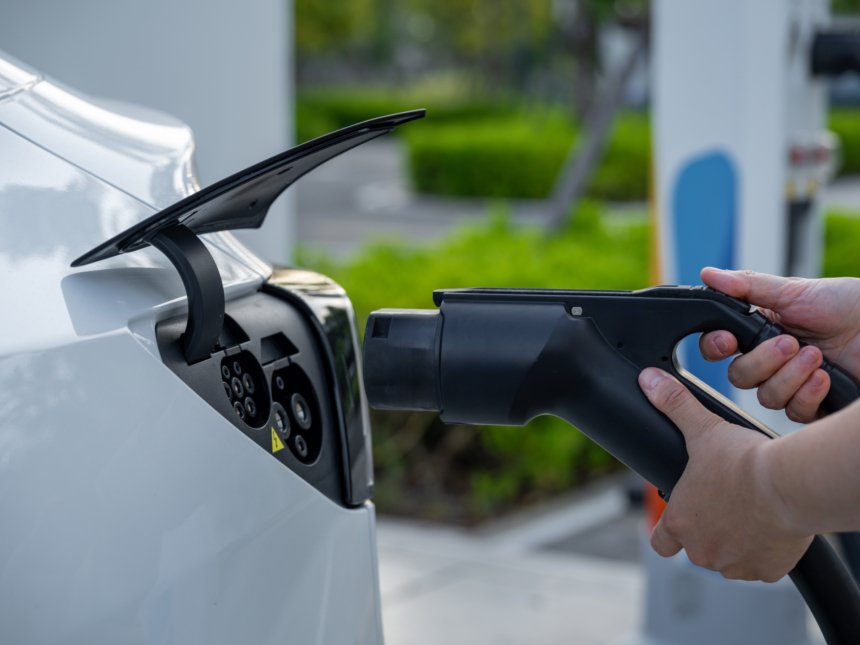
The power of an electric car is no longer measured only by the range of the battery, but by the time it takes the driver to recharge it and get back on the road. Every minute of waiting in front of the charging station turns into a real test of the ability of these cars to compete with conventional fuel cars in daily life.
With the expansion of the spread of electric cars, fast charging has become one of the most important fields of competition between automobile and energy companies, not only because it reduces time, but also because it determines the extent of the user’s confidence in relying on his car within cities and on long roads.
That is why companies today are racing to develop more efficient and flexible technologies, from home charging and high-speed stations, to wireless, dynamic and two-way charging, in an attempt to make the electric car a practical option and not just an environmental promise for the future.

The waiting complex…the biggest challenge facing drivers
Waiting time represents one of the most prominent challenges facing electric car users, as the charging duration varies greatly depending on the type of charger, battery capacity, and technology used.
Slow charging, which often relies on alternating current, may take several hours, while fast charging can significantly reduce the period. However, in many cases the charging experience is still longer and less convenient than refueling in a conventional car.
Therefore, reducing charging time has become a strategic goal in the electric car industry, not only to improve the user experience, but also to remove one of the most important psychological and practical obstacles to the spread of these vehicles on a wider scale.
The most famous international shipping standards
As the electric vehicle market develops, several charging standards have emerged that vary depending on markets, companies and infrastructure. Despite this diversity, a group of standards stands out that are most widespread and influential globally.
Common Shipping Standard (CCS)
It is one of the most widespread charging standards globally, as it allows combining slow charging with alternating current and fast charging with direct current through a single socket. It is characterized by a high degree of reliability and safety, and is adopted by many companies in the European and global markets.
North American Standard (NACS)
Developed by Tesla, it gradually became an influential standard in the North American market, thanks to its efficiency, ease of use, and the spread of the charging network associated with it. Its adoption by major companies has strengthened its position as one of the most important shipping standards in the near future.
Japanese Standard (CHAdeMO)
It is one of the first fast charging systems in the world, and it appeared in Japan in 2010. Despite its historical importance and spread in the Japanese market, its global presence declined relatively with the expansion of the use of the CCS and NACS standards.
Chinese Standard(GB/T)
It represents the national standard adopted in China, the largest electric vehicle market in the world. It is widely used within the Chinese market, making it one of the most important standards in terms of volume of use, even if its spread outside China is less than some other standards.

The difference between home charging and station charging
Home charging differs from charging at public stations in terms of speed, cost, and nature of use. Home charging often relies on alternating current, which is less expensive and more suitable for daily use, but it requires a longer time to recharge the battery.
As for public charging stations, they often rely on direct current fast charging, which allows the battery to be charged within a shorter period, but it is more expensive and is usually used when traveling or when a quick charge is needed outside the home.
Hence, one of the two options cannot be viewed as a complete alternative to the other; Home charging provides comfort and stability in daily use, while public stations give drivers greater flexibility on long trips and sudden movements.
Fast shipping challenges
Despite the great development in charging technologies, fast charging infrastructure still faces a number of challenges that limit its widespread spread.
The first of these challenges is the high cost of establishing charging stations and their equipment, especially those capable of providing high capacities in a short time. The spread of stations is still unbalanced between major cities, peripheral areas or long routes.
The problem of crowding at stations during peak times also arises, especially if the number of charging points does not keep pace with the growth in the number of electric cars. In addition, there is a lack of complete unification of charging standards globally, which may cause confusion for users and increase the complexity of the infrastructure.
Fast charging stations also impose additional pressure on electricity networks, especially in areas that already suffer from high loads. Even with the availability of a powerful charger, the capacity of the battery itself remains a decisive factor, as not all cars can receive energy at the same speed.
-

Global charging standards reflect technology standardization efforts to keep pace with the significant expansion of electric vehicles (Getty)
The future of charging… from cable to smart road
With the acceleration of development in the electric vehicle industry, the future of charging is no longer limited to traditional stations. Companies and research centers are working to develop new technologies that may completely change the way drivers deal with energy.
Fixed wireless charging
It depends on charging the car without using a cable, by stopping it above a plate installed in the ground that transmits energy through an electromagnetic field. This technology provides greater ease of use, but it still requires special equipment and a higher cost, and its efficiency is affected by the accuracy of the car’s positioning on the charging plate.
Dynamic charging
It represents one of the most ambitious future visions, as it allows the car to be charged while on the road. The idea is based on installing energy transmission systems under the surface of the road or on its sides, so that the car receives energy as it passes. If this technology succeeds on a large scale, it could reduce the need for frequent charging stops.
Super fast charging
This trend focuses on supplying the battery with large amounts of energy within a few minutes, making the charging experience closer to traditional refueling. However, its success requires batteries capable of withstanding these speeds, and electricity networks qualified to handle high loads.
Solar charging
There are already vehicles that use solar panels to help charge the battery, but they are still far from being a major source of energy. This technology is currently used to increase driving range on a limited basis or operate some internal systems, while work continues to raise its efficiency and make it more useful in practical use.
Two-way shipping
It is one of the most promising technologies in the future of energy, as it allows the electric car to draw energy from the grid, and then pump a portion of the stored energy back into the home, appliances, or even the public grid when needed. Thus, the car does not remain just a means of transportation, but rather turns into a mobile energy storage unit, similar to a huge battery on wheels.

Slow or fast charging?
The trade-off between slow and fast charging cannot be decided absolutely, because each has its appropriate use. Slow home charging remains the best option for daily use, especially as it is less expensive and more gentle on the battery when used regularly.
As for fast charging, it remains an important option on long trips or in cases where the driver needs to recover a large portion of battery power within a short time.
Accordingly, a balanced use of the two methods represents the most practical solution; Regular home charging to maintain battery efficiency, and fast charging when flexibility and speed are needed.
A smarter future
With continued investment in infrastructure and the development of batteries, the electric vehicle charging experience is expected to become easier, faster and more efficient. In the future, the charging process may transform from a task that the driver plans in advance to an invisible part of daily life, whether through smart home charging, high-speed stations, or roads capable of supplying cars with energy while in motion.
The future of electric cars will not be determined by the battery alone, but by the world’s ability to build a reliable, broad and fast charging system. As charging becomes easier, electric cars get closer to becoming an alternative option to a daily reality on the world’s roads.