Published on 6/16/2026
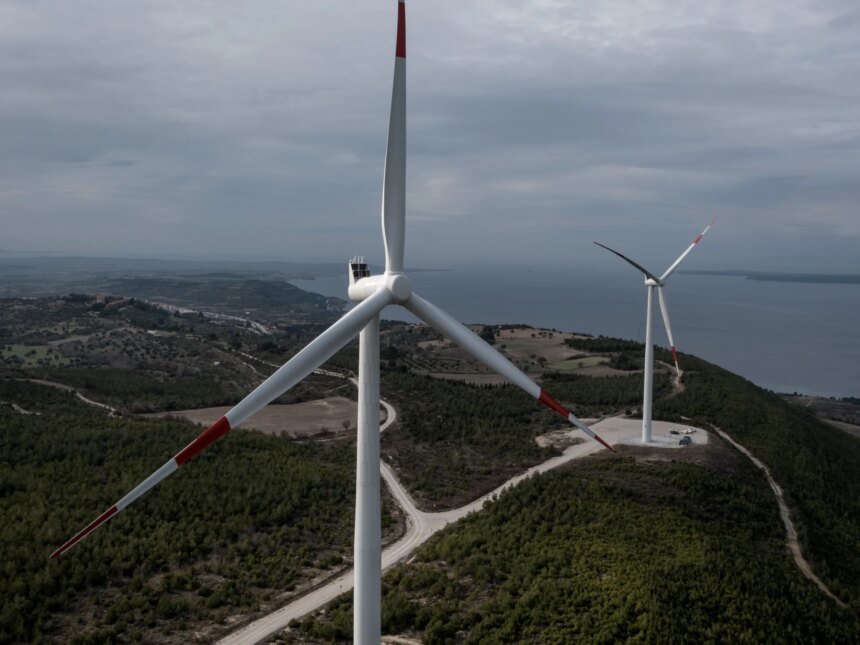
At a time when countries around the world are racing to reduce carbon emissions and promote clean energy sources, the features of a new energy map are taking shape in North Africa, led by Egypt and Morocco, which within a few years have become the main center of gravity for wind energy on the African continent.
According to a survey conducted by the Washington-based Energy Research Unit, the installed capacity of wind energy in Africa rose to 11.49 gigawatts during 2025, compared to 9.58 gigawatts in the previous year, an increase of nearly 20%.
But what is noteworthy is that the bulk of this growth came from two Arab countries that were able to impose their presence in a sector that has become described as one of the pillars of the global green economy.

Egyptian story
In this regard, Karim El-Guindy, Executive Director of the Carbon Institute, an independent research center specializing in energy and climate issues in the Middle East and North Africa, said that the year 2025 witnessed an important shift in the ranking of African countries operating in the wind sector, after Egypt crossed the barrier of 3 gigawatts of installed capacity, ahead of Morocco, which has a production capacity of about 2.6 gigawatts.
This progress is due to the rapid expansion in the Gulf of Suez region, according to Al-Jundi’s statement to Al-Jazeera Net, as the wind speed there exceeds 10 meters per second, which makes electricity production more economically feasible compared to many other regions.
The Executive Director of the Carbon Institute continued that Egypt strengthened its position by opening the Red Sea wind power plant with a capacity of 650 megawatts, which has become the largest wind farm in Africa and the Middle East, adding that the presence of international financing with developers from the Gulf countries was a reason for the acceleration of the pace.
Strong Moroccan presence
Despite Egypt’s progress in terms of installed capacity, Morocco still maintains a more important indicator in the eyes of energy experts, which is the percentage of renewable energies’ contribution to electricity production.
This percentage exceeded 46% of the total electricity produced in the Kingdom, which is one of the highest percentages in Africa and the Arab world, which reflects success in integrating clean energy into the national electrical system.
Karim says that the Moroccan experience differs from others because it was based on a long-term institutional vision, not on separate projects. He stressed that Morocco did not focus only on increasing production capacity, but rather worked on developing an integrated industrial and regulatory system that includes planning, financing, infrastructure, and local manufacturing, which made wind energy the second largest source of electricity in the country.
The same expert pointed out that one of the most prominent tests that revealed the maturity of the Moroccan experience came in April 2025, when the Iberian Peninsula witnessed a widespread power outage.
At that moment, Morocco was able to pump about 900 megawatts into the Spanish network through the electrical interconnection lines between the two countries, and practically demonstrated the seriousness of its role as an energy bridge between the two shores of the Mediterranean.
Is building wind farms enough to achieve the energy transition?
Despite the rapid expansion in the construction of stations, the biggest challenge, Karim says, is in the network’s ability to bear these new loads. This is why Egypt is moving to expand high-voltage networks and introduce electricity storage systems with batteries, to reduce the waste of wind and solar production, while Morocco continues to develop internal and external interconnection networks to accommodate larger amounts of renewable electricity.
Karim believes that the natural resources and political ambitions are available in both countries, but future success will depend on another, more decisive factor, which is the ability to implement.
He says that the real challenge is building electrical networks, securing long-term purchasing contracts, and converting announced memorandums of understanding into funded and implementable projects.
He adds: “If Africa is on the verge of a clean energy revolution, then Egypt and Morocco are candidates to lead it, but the condition for maintaining this superiority is neither resources nor ambition, but rather discipline in implementation. The locomotive is there, but the railways are not fully ready yet.”