Published on 6/18/2026
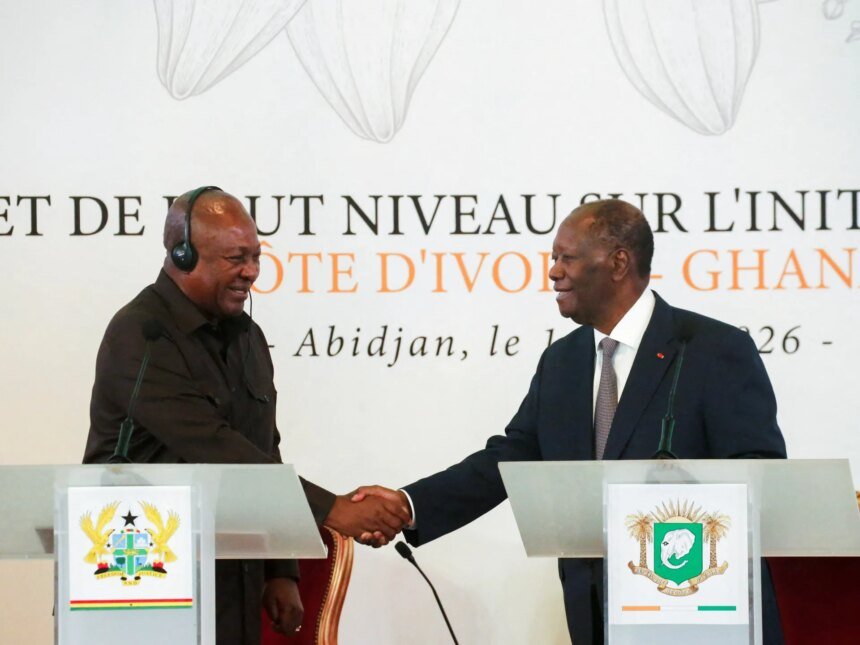
The Presidents of Cote d’Ivoire, Alassane Ouattara, and Ghana, John Dramani Mahama, renewed their joint commitment to developing the cocoa sector and making farms at the core of its governance priorities and sharing its value, at a high-level summit held in Abidjan yesterday on “The Future of the Cocoa Economy,” according to the joint statement issued by the summit. This commitment, according to the statement, is based on the “Abidjan Declaration” signed on March 26, 2018, which forms the basis of cooperation between the two countries in this sector.
Together, the two countries produce about 60% of global cocoa production, which gives them “shared leadership and special responsibility” for the future of the sector, according to the text of the statement. The statement indicated that Africa produces about 80% of the world’s cocoa, but it still receives a “marginal share” of the value within the cocoa and chocolate chain.
The two presidents agreed to harmonize farm-gate cocoa price policies, with the aim of improving producer returns, achieving market stability, and enhancing trade cooperation, through measures that include “market synergy,” harmonizing bonuses, and unifying agricultural season calendars, according to the joint statement. The Ghanaian newspaper The Business & Financial Times reported that this step would reduce unhealthy cross-border competition and strengthen the negotiating position of the two countries in the global market.
The two countries also agreed to ensure “fair and decent returns” for farmers and place them at the heart of the cocoa value chain, enhance scientific cooperation to combat cocoa diseases, increase value added by raising transformation capabilities and encourage regional and continental trade and consumption of cocoa products, according to the statement.
The two presidents also agreed to expand the “Côte d’Ivoire-Ghana Cocoa Initiative” to include other African producing countries, with the aim of enhancing regional cooperation, harmonizing sector policies, strengthening collective bargaining power in global markets, and coordinating the response to emerging challenges, according to the joint statement. The statement did not name the countries concerned with this expansion.

Production crisis and structural challenges
The statement acknowledged that the sector is still exposed to major challenges, including price volatility, illegal gold mining, the negative effects of climate change, the growing use of cocoa substitutes and equivalents, and stringent international sustainability requirements.
The summit comes in light of a long supply crisis in West Africa. Ghana’s production fell to about 531 thousand tons in the 2023/2024 season, while Côte d’Ivoire’s production fell to about 1.76 million tons from about 2.3 million tons a year ago, according to data from the US Department of Agriculture. The authorities in both countries attributed this decline to weather, agricultural diseases and structural challenges, while the Ghana Cocoa Board reported that illegal mining destroyed about 30,000 hectares of cocoa farms.
The initiative was established in 2018 to enhance the negotiating power of the two countries in global markets, and its most notable achievement was the introduction of the “living income premium” in 2019, which is an allowance of $400 per ton applied to the two countries’ exports with the aim of improving farmers’ returns, according to the Ecofin agency.