Published on 6/16/2026
|
Last update: 10:37 (Mecca time)
The oil and gold markets witnessed a state of anticipation today, Tuesday, as investors continued to evaluate the repercussions of the initial agreement announced between the United States and Iran to end the war in the Gulf, amid the absence of full details regarding implementation mechanisms and the future of the outstanding issues.
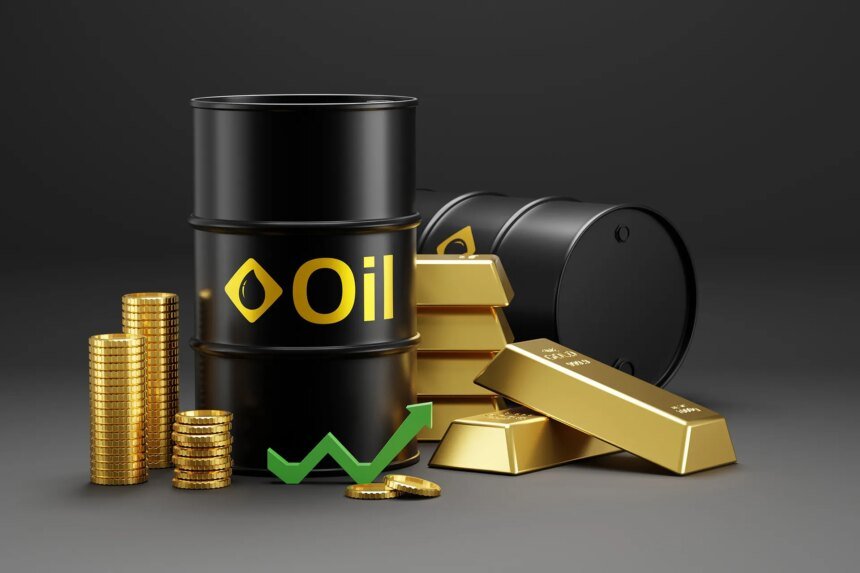
Oil prices fell for the second session in a row, as Brent crude futures fell 45 cents, or 0.54%, to $82.72 per barrel, while US West Texas Intermediate crude fell 25 cents, or 0.31%, to $80.51 per barrel at the time of preparing the report.
Read also
list of 4 itemsend of list
Oil had fallen by about 5% in yesterday’s session, Monday, recording the lowest closing level since March 4, after US President Donald Trump announced the signing of a memorandum of understanding to end the war on Iran, without revealing its full details.
Traders believe that the prospects of resuming the flow of supplies through the Strait of Hormuz, through which about 20% of global oil and liquefied natural gas supplies passed before the war, are putting pressure on prices, despite the continued uncertainty regarding the timing of the full restart of the sea lane.
“The resumption of tanker flows will likely take several weeks,” Morgan Stanley analysts said in a note to clients. “We expect 50% of production to return by September, and 80% by December, slightly faster than before.”
Analysts pointed out that the weakness of the spot oil market is not only related to geopolitical conditions, but rather that “the rise in American exports and the decline in Chinese imports are the main drivers, and it appears that they will not end in the near term.”
In this context, data showed a decline in China’s crude oil imports by 29% in May to their lowest levels in 8 years, with expectations of an additional decline in Saudi crude imports during July.

Gold stability
On the other hand, gold prices stabilized after a strong rise driven by geopolitical concerns. Gold rose slightly in spot transactions, by 0.21%, to reach $4,317.02 per ounce, after jumping 3.6% in the previous session, recording its highest level since June 5, while US gold futures contracts fell 0.33% to $4,337.10 per ounce.
“Gold prices have seen a good rise since late Thursday thanks to news related to Iran,” said Marex analyst Edward Meier. “I think this euphoric rise may continue for a few more days and culminate in the signing ceremony on Friday.”
Investors are also awaiting the US Federal Reserve’s monetary policy decision and the statements of its Chairman, Kevin Warsh, tomorrow, Wednesday, in light of widespread expectations to keep interest rates unchanged.
Mayer added: “If Warsh indicates the possibility of at least one cut later this year, the dollar may decline further and we could see another rise in gold,” but he warned that any more stringent approach on rates may put pressure on the precious metal.
As for other precious metals:
- Spot silver fell 1% to $69.29 per ounce.
- Platinum fell 0.9% to $1,751.55.
- Palladium fell 1.6% to $1,327.27.