Published on 6/13/2026
|
Last update: 21:29 (Mecca time)
As international concern continues over the outbreak of the Ebola virus in the eastern Democratic Republic of the Congo, new scientific indicators are emerging that give a glimmer of hope about the possibility of developing more effective vaccines and treatments, after discovering the ability of some infected people to form antibodies that help scientists identify future targets to confront the virus.
Professor Ali Fattoum, a professor of immunology and vaccinology from Michigan in the United States, said in an interview with Al Jazeera that the existence of the possibility of recovery from the Ebola virus represents an important development, because it allows understanding how the immune system deals with the virus, and opens the way for the development of drugs and vaccines that target it more precisely.
Fattoum added that there are two vaccines under development that could constitute an important step in confronting the virus, noting that one of them was produced by Merck, the company that developed the original vaccine against the Ebola Zaire strain, and its effectiveness reached about 80%, which he considered a good level.
He explained that there are also efforts by AstraZeneca, in cooperation with the Indian Serum Institute, to develop a vaccine targeting the new “Bundebugyo” strain, which is the strain associated with the current outbreak, explaining that knowing the antibodies that the body produces after recovery helps scientists determine the immune target on which the next vaccine should be based.
This comes at a time when the World Health Organization is expressing grave concern about the rapid spread of the virus in the eastern Democratic Republic of the Congo, after recording hundreds of suspected cases and dozens of deaths, with fears extending to neighboring Uganda and raising the level of health alert in the region.

Virus outbreak
The outbreak is concentrated in the Ituri region in northeastern Democratic Congo, a border region that is witnessing widespread population movement due to displacement, armed conflicts, and mining activities, which makes monitoring and containment operations more difficult.
The sensitivity of the current outbreak lies in the fact that the virus belongs to the “Bundebugyo” strain of Ebola, which is a rare strain that differs from the “Zaire” strain for which well-known vaccines have been developed, which prompted health authorities to carefully study the available options before adopting any broad interventions.
Regarding the period that separates the world from the arrival of new vaccines for use, Fatoum said that the main challenge at the current stage is to prevent the spread of the virus, by intensifying examination operations, isolating cases, and preventing the transmission of infection from areas where the virus appears to other areas.
He pointed out that one of the main sources of danger is the ritual handling of the bodies of those who died due to the disease, as relatives and those responsible for preparing the dead could be exposed to infection if the necessary preventive measures are not taken.
The professor of immunology and vaccines stressed that quarantine and health control measures at the borders represent two essential elements in reducing the transmission of the virus between countries, explaining that some countries have already begun imposing screening procedures for those arriving from the affected areas.
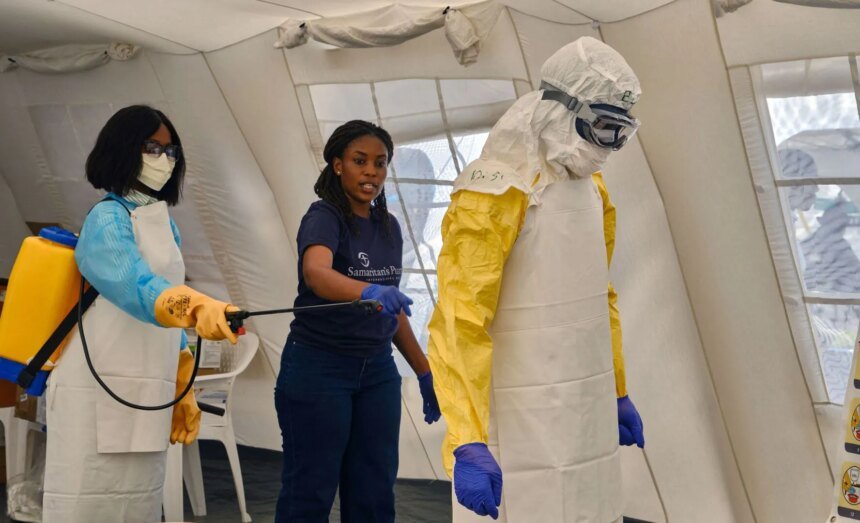
The Ebola virus is a very dangerous virus, as it is transmitted through contact with an infected person’s body fluids, and may lead to severe complications and death in many cases, especially in the absence of early medical care that includes replacing fluids, monitoring vital functions, and treating complications.
While the current outbreak still represents a major health challenge, experts believe that progress in understanding the body’s response to the virus and developing vaccines directed at its various strains may change the future of dealing with Ebola, and move the confrontation with it from the stage of emergency containment to more effective prevention.