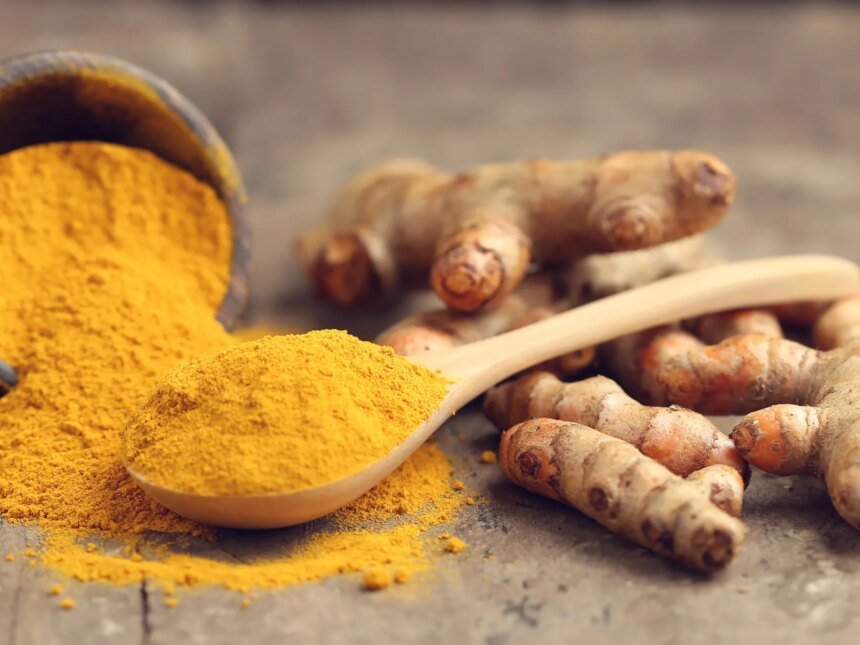
In recent years, a simple tip like “add black pepper to turmeric” has turned into one of the most popular recipes among health and nutrition enthusiasts. Almost every publication about inflammation, joint pain, or digestive problems does not contain talk about this duo, as a natural combination capable of boosting immunity, soothing pain, and helping the body confront chronic inflammation.
But the most important question is: Are we facing an exaggerated popular recipe, or do studies give turmeric and black pepper a real place in the scientific debate?
The answer is not completely conclusive, but it is promising. Laboratory and clinical research indicates that the active ingredient in turmeric, known as curcumin, has anti-inflammatory and anti-oxidant properties, while piperine, the active compound in black pepper, helps improve the absorption of curcumin within the body.
However, this does not mean that turmeric is an alternative treatment for medications, but rather it may be an auxiliary factor that requires more extensive experiments before it is definitively approved medically.

Why doesn’t turmeric work at its full strength alone?
Turmeric contains a group of active compounds known as curcuminoids, the most famous and most studied of which is curcumin. This compound has attracted the attention of researchers because of its potential effects on the pathways of inflammation and oxidative stress, which are pathways involved in many chronic diseases, from joint and digestive system disorders to some skin and immune diseases.
However, the main problem with curcumin does not lie in the lack of effectiveness, but rather in the weakness of its access to the body in the required form. Curcumin is poorly soluble, breaks down quickly, and is not absorbed by the body very efficiently when taken alone. Therefore, scientific attempts have emerged to improve its absorption, including using nanoparticles, concentrated extracts, or combining it with materials that enhance its bioavailability.
Here the role of black pepper comes into play. The piperine compound found in it helps increase the absorption of curcumin, and studies have indicated that it may increase its bioavailability to significant degrees that vary depending on the dose and method of preparation. This is why the combination of curcumin and piperine has become a frequent focus in studies trying to test the effect of this combination on inflammation, pain, and some chronic diseases.
How does curcumin calm inflammation?
Inflammation is not just visible pain or swelling, but a complex series of vital signals within the body. The process usually begins with inflammatory stimuli, to which cells then respond via intrinsic receptors and pathways, before producing mediators such as cytokines, which are compounds that contribute to amplifying the inflammatory response.
Laboratory studies indicate that curcumin may intervene at more than one point within this chain, including reducing the activity of some inflammatory pathways and influencing a compound known as NLRP3, which is one of the elements associated with activating the inflammatory response within immune cells.
This mechanism is still being researched, but it explains why scientists are studying curcumin in diseases where immunity and inflammation intersect, such as inflammatory bowel disease and psoriasis.
Chronic pain…encouraging but limited results
In a randomized, cross-over clinical trial conducted in the United States and published in 2026, researchers tried to test the effect of turmeric alone or with black pepper on chronic pain. The experiment included 30 participants aged 40 years and over, who were suffering from chronic pain of moderate intensity, and lasted 21 days.
The researchers relied on daily follow-up via text messages sent to the participants 3 times a day, which included questions about the level of pain they felt. The results showed that consuming normal dietary amounts of turmeric, either alone or with black pepper, was associated with a significant improvement in average pain scores.
However, what is noteworthy is that adding black pepper did not make a clear difference in this experiment, nor did any significant differences appear between the different doses. Although the result seems encouraging, the study alone is not sufficient to make a final judgment, due to the small sample size, the short duration of the experiment, the lack of a control group receiving a placebo, in addition to problems with some participants’ commitment to collecting data throughout the study period.
In other words, it can be said that turmeric has shown a positive signal in relieving pain, but this signal needs larger and more controlled studies before it can be turned into a general therapeutic recommendation.
Chronic inflammation…a comprehensive review that opens the door
In May 2026, Frontiers in Nutrition published a systematic review examining curcumin supplementation with piperine, aiming to evaluate its effect on conditions related to inflammation, metabolism, immunity, or heart and lung conditions.
The review included 19 randomized controlled trials, published between January 2000 and January 2026. Trial numbers ranged from 8 to 117 participants, and intervention periods ranged from 1 to 12 weeks. The doses were often between 500 and 1,500 mg per day of curcumin, and 5 to 15 mg per day of piperine.
The review concluded that curcumin supplementation with piperine showed improvement in markers of inflammation, oxidative stress, and metabolism in a number of trials, especially in groups with low-grade inflammation or metabolic disorders such as metabolic syndrome, type 2 diabetes, non-alcoholic fatty liver disease, and heart disease.
However, the researchers stressed that the results still require caution, as many studies relied more on laboratory indicators than on direct clinical results felt by the patient, and the sample size was limited, the periods were short, and the geographical diversity was insufficient. Therefore, there remains a need for longer and broader trials to determine the optimal doses and the extent of safety in the long term.
Hope for Crohn’s and ulcerative colitis patients
Inflammatory bowel diseases, most notably Crohn’s disease and ulcerative colitis, are chronic conditions in which immunity and inflammation are intertwined. In these diseases, the intestinal barrier is damaged and bouts of inflammation recur, causing pain, digestive disorders, and constant fatigue, and may profoundly affect the patient’s quality of life.
That’s why curcumin has attracted the attention of researchers. In laboratory studies and experiments on animal models, curcumin has shown an ability to reduce the severity of colitis and reduce some indicators of inflammation associated with the NLRP3 compound. It has also been associated in mouse models with an improvement in indicators such as weight loss and shrinkage of colon length resulting from inflammation.
But human experiments are more complex. In a randomized, double-blind clinical trial conducted in Brazil between 2021 and 2023, researchers studied the effect of curcumin with piperine in patients with inflammatory bowel disease.
The trial included 51 patients over 18 years old, divided into 3 groups: a group received 1,000 mg of curcumin with 10 mg of piperine daily, a group received 1,000 mg of curcumin alone, and a third group received a placebo, and the follow-up lasted 12 weeks.
The results, published in the journal Pharmaceuticals in 2024, showed that the group of curcumin with piperine recorded an improvement in some indicators of antioxidant defense, especially with regard to oxidative balance within the body. However, the inflammatory indicators themselves did not record clear differences compared to the control group.
This means that the combination may help improve some aspect of oxidative imbalance in patients with inflammatory bowel disease, but it has not yet been proven to be conclusively able to suppress inflammation clinically. Therefore, curcumin and piperine can be viewed here as a promising adjuvant option, not as a substitute for approved medical treatments.

Psoriasis… when inflammation spreads to the skin
Psoriasis is not just a superficial skin problem, but rather a chronic autoimmune inflammatory disease that affects millions of people around the world. There is a disturbance in immune activity that leads to the secretion of inflammatory cytokines, followed by accelerated growth of skin cells and their accumulation in the form of thick layers and annoying crusts.
In a laboratory study published in 2020, researchers from Greece examined the effect of curcumin in cells taken from 34 psoriasis patients, and compared them to samples from 15 healthy people. The results showed that exposure to curcumin led to a clear decrease in some inflammatory cytokines, and that this effect increased as the dose increased in the laboratory experiment.
Animal studies also supported this hypothesis. In an experiment conducted on a mouse model of psoriasis, published in 2016, curcumin was able to reduce the levels of a number of inflammatory factors in the serum of mice by more than 50%, including TNF-α, IFN-γ, and IL-23.
But despite these strong signals, there is still a long way to go before curcumin can be said to be a treatment for psoriasis. Most of the available evidence is still in vitro or on animal models, while psoriasis needs extensive clinical trials in humans, measuring real improvement in disease severity and quality of life, not just changes in inflammatory markers in the laboratory.
Can turmeric and black pepper be relied upon?
Studies so far suggest that curcumin, especially when added to piperine, has promising potential in calming inflammation and improving some indicators of oxidative stress. But these capabilities do not mean that it is a stand-alone treatment, nor that it is suitable for all patients or all cases.
The doses used in studies are usually much higher than the amounts a person obtains from daily food. Concentrated supplements may also interfere with some medications, especially blood thinners and some heart, diabetes, and immune medications, and may not be suitable for pregnant women, liver patients, or those preparing for surgery, except after consulting a doctor.
Therefore, the most balanced conclusion remains that turmeric and black pepper are not a “miracle cure,” nor are they just a nutritional myth. They are a natural combination that is supported by increasing scientific evidence, but it is still in the area of research promise rather than therapeutic certainty. They can be included in food as part of a balanced, healthy diet, but their use as supplements in high doses must be under medical supervision, especially for those with chronic diseases.