Published on 6/15/2026
Pursuant to the investment license issued on May 24, 2026, Talaat Mustafa Baghdad Company intends to establish a residential and commercial complex on an area estimated at approximately 5,800 dunams in the Al-Radwaniyah area within the capital’s belt to establish a huge residential and commercial project, while parliamentary and tribal demands have escalated for the necessity of reviewing the procedures for granting this license and verifying its legality.
The total cost of the project exceeds 13 trillion Iraqi dinars (about 9.9 billion dollars), and it is to be completed within a period of time extending over 16 years. This project comes as an extension of a memorandum of understanding signed on May 25, 2025 between the National Investment Authority and the Egyptian “Talaat Mostafa Holding Company for Real Estate Development” to develop part of the economic city known as “Al-Rafail City” west of the capital, as a joint investment project. (Iraqi-Egyptian-Saudi).
In an exclusive statement to Al Jazeera, Iyad Al-Jubouri, representative of the Al-Azm Alliance, revealed the background of the crisis, noting that its roots extend to 2019 when the authorities stopped renewing agricultural contracts for farmers in the Baghdad Belt in favor of the “Al-Rafail City” project, and despite previous official pledges to address the issue, the issuance of the recent approval has reignited the controversy.
Al-Jubouri explained the most prominent points of objection and violations observed in terms of the financial value of the land, which estimates the financial value of the granted areas at about 14 trillion Iraqi dinars (about 10.7 billion dollars).
As well as the administrative and legal violations that were monitored and accompanied the granting of the license, which included the “dismissal and replacement” of legal officials within the Investment Authority after they objected to the project.
He also refuted allegations that the lands are not exploited, stressing that they include populated areas, service institutions, and active agricultural fields.
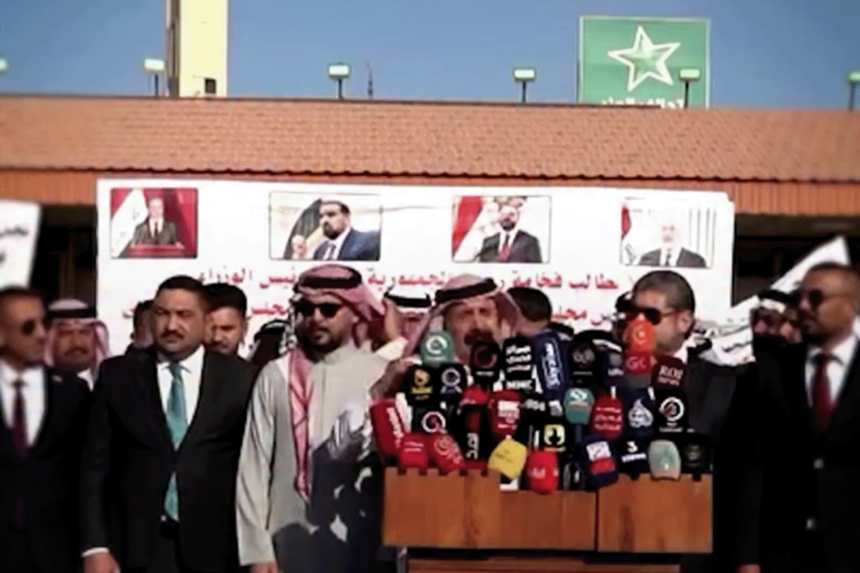
On the local side, anxiety prevails among the people of the Radwaniyah area and the Baghdad belt. Residents believe that the project threatens their social stability and inherited property.
Hamid Al-Hamdani (one of the notables of Al-Ridwaniyah, Hamid Al-Hamdani, pointed out that the current project is a fragmented part of the larger “Al-Rafael City” project, which was met with previous objections, warning that dividing the project into stages may be a ploy to seize additional lands in the future, stressing that the tribes consider these lands as their historical areas of stability.
The tribal leader, Sheikh Muhammad Al-Zubaie, in turn, denied that the targeted lands were “barren or empty,” stressing that they were inhabited and agriculturally invested, and demanded that the government provide urgent official clarifications about the project’s true boundaries and its societal impacts.
In the face of all this rejection, a parliamentary team is moving to officially escalate the situation through three paths:
First: A legal move by several representatives to challenge the legality of the investment license.
Second: Addressing the Integrity Commission and the competent regulatory authorities to investigate the administrative mechanisms that passed the project.
Third: Activating the constitutional tools within the House of Representatives to interrogate and hold relevant officials in the Investment Authority and related parties accountable.